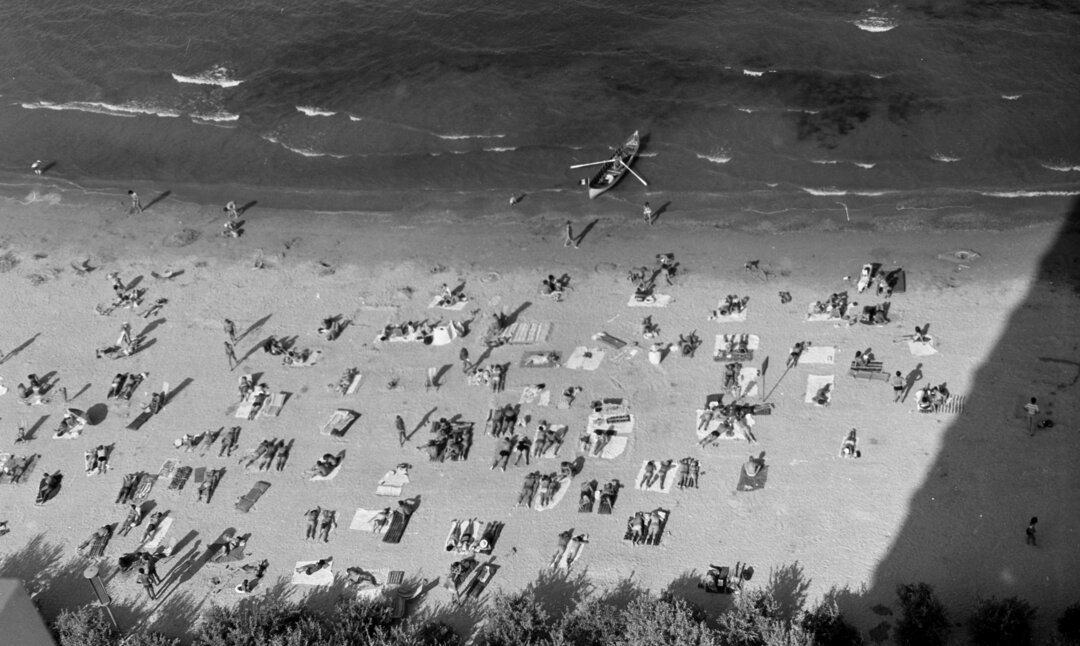
Seaside. A published chronology

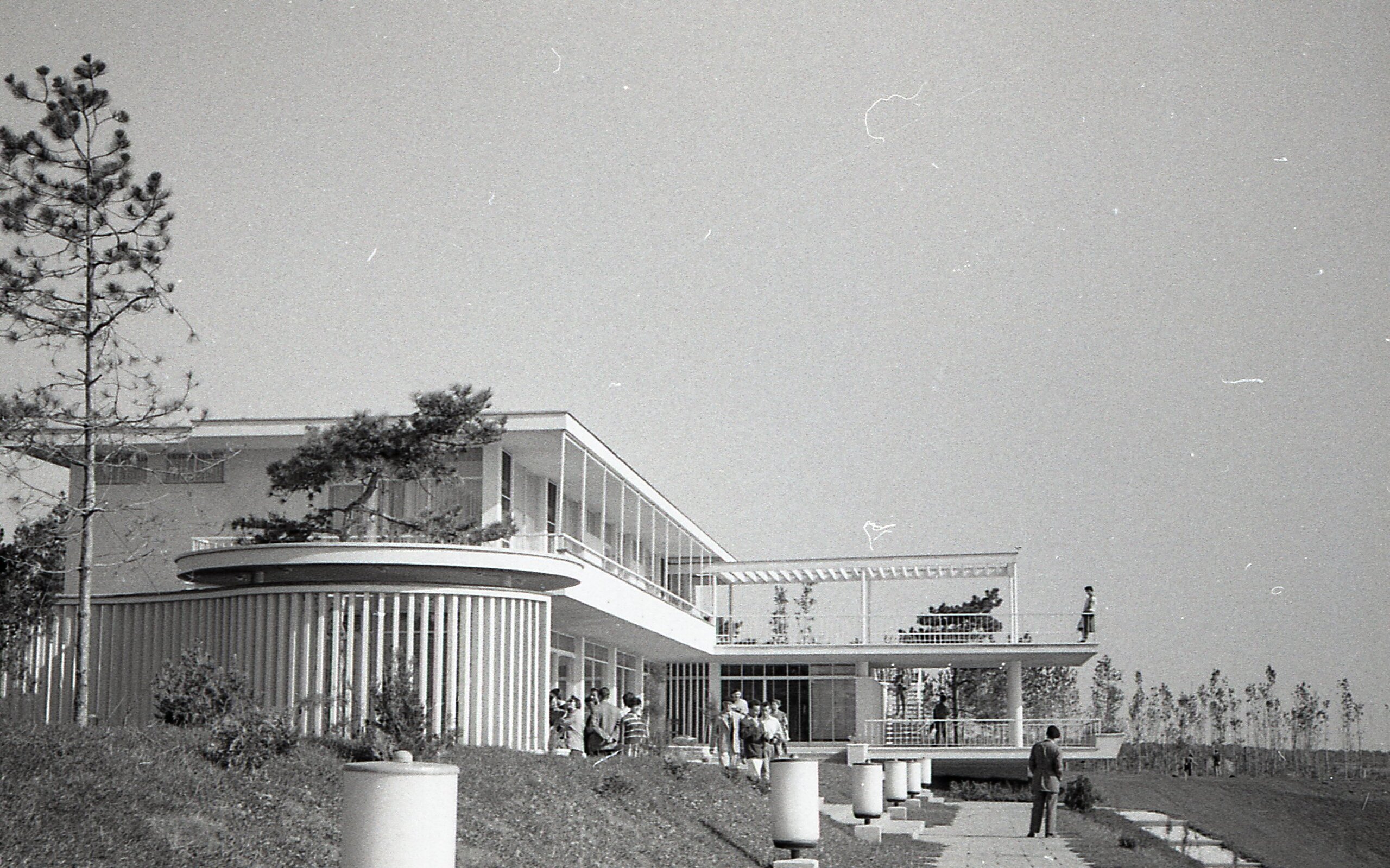
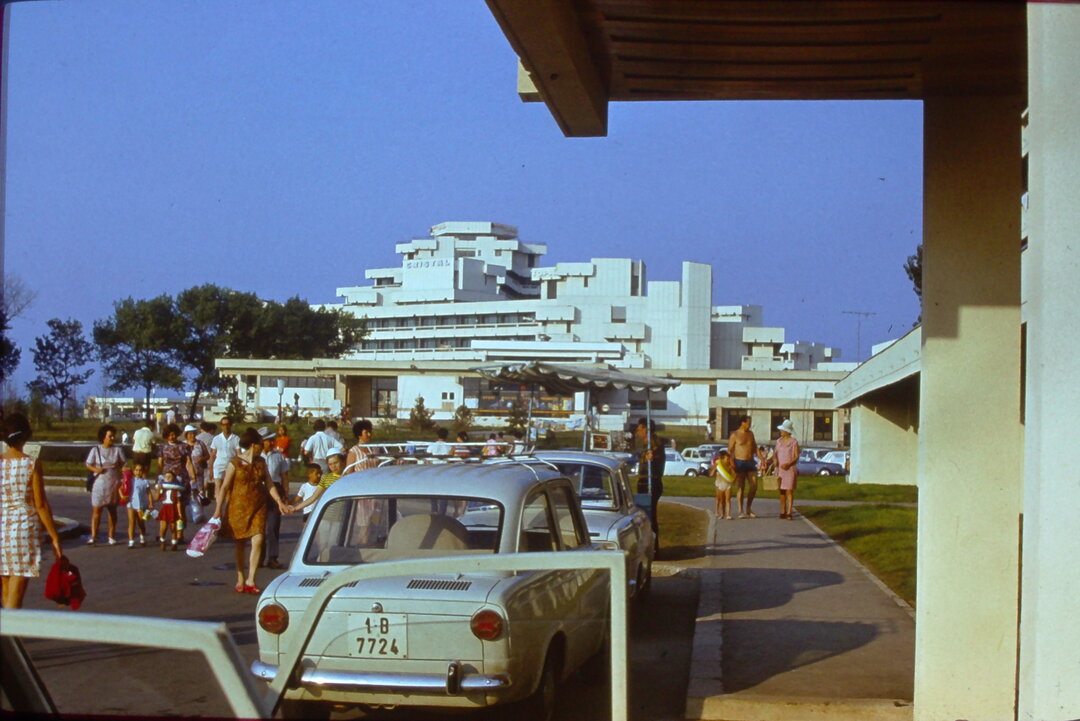
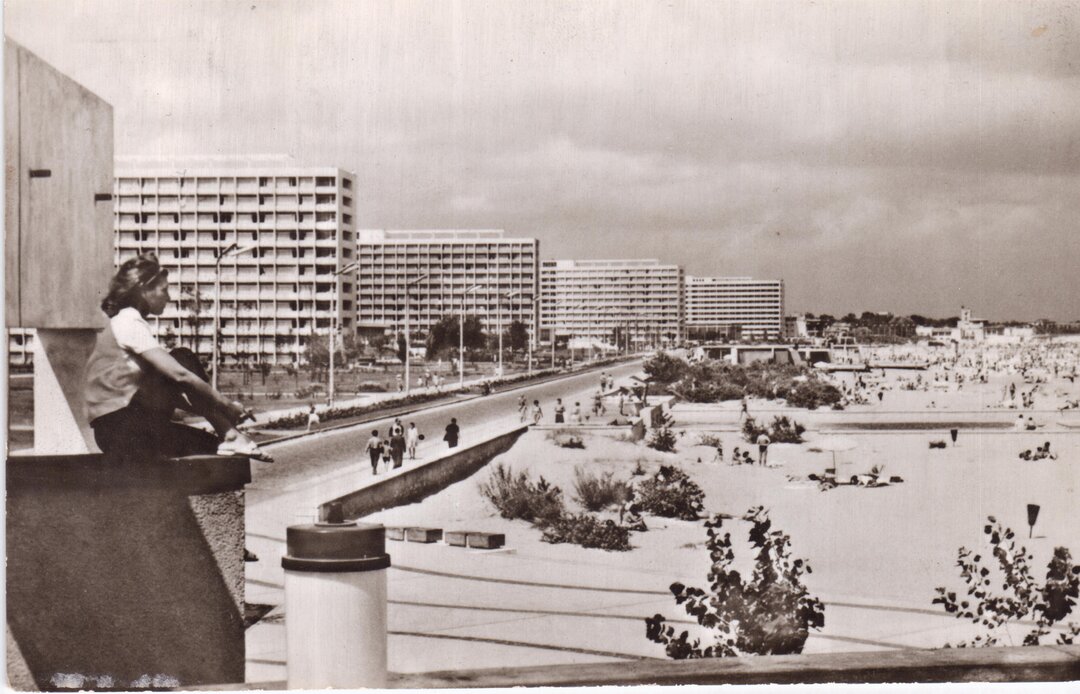
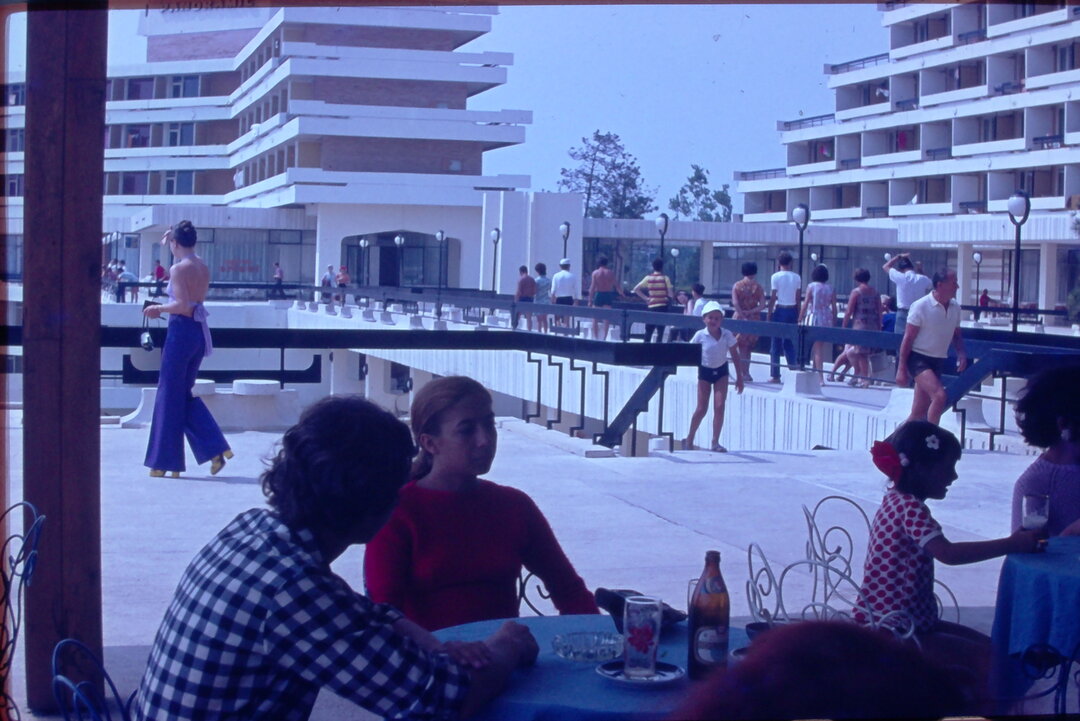
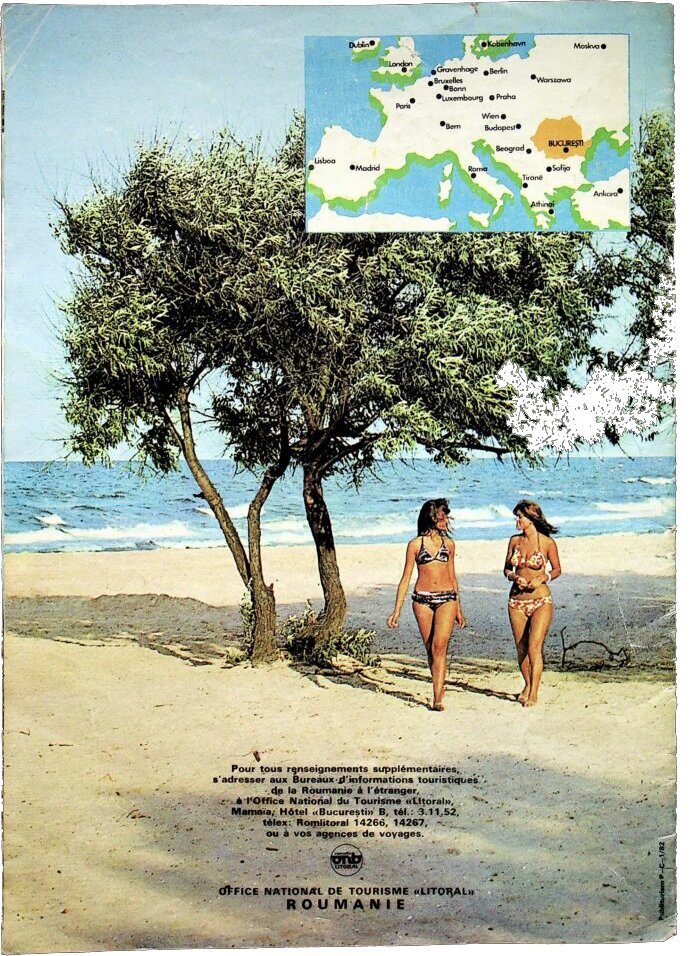
The post-war revival of programs for architecture for tourism and seasonal housing was closely linked to state intervention. The revival of tourism themes after 1947 in important state programs for the development of seaside resorts and the creation of new ones began with the seaside resorts. The nationalization and centralized reorganization of the economy did not bypass the tourist sector either. In parallel with the abolition of private tourist associations, the National Tourist Office was transferred to the General Confederation of Labor1 in 1949. The transfer to the "trade unions" indicated very clearly the direction in which domestic tourism for the general population was to take - that of mass tourism. In practice, however, with the transfer of tasks to a trade union, tourism initially manifested itself mainly in the reorganization of the operation of the existing assets of the "spa resorts, to be used as far as possible throughout the year to improve the care of working people"2. This model corresponded to a large extent to what was happening in the Soviet Union, where, under Stalin's leadership, tourism was organized by the Komsomol3 or trade union unions. Anne Gorsuch4 noted that it was strictly domestic tourism, geared towards ideological outdoor activities or recuperation and rest in resorts.
In April 1955, "a resolution of the Soviet Central Committee introduced the possibility for Soviet citizens to cross the borders of the Soviet Union and experience foreign countries in person"5. This opening up corresponded with the coming to power of Nikita Khrushchev, as a similar resolution had been adopted in 1954, only for foreign tourists to visit the Soviet Union6. International tourism was to be handled by Intourist7. Also in 1955, but in July, in response to the opening of international tourism in the USSR, the National Carpathian Tourist Office8 was set up in Romania. This enterprise was to deal with the visits of foreign tourists to Romania and organize visits of Romanian tourists to the countries of the Communist Bloc. The revival of international tourism in the Eastern European socialist area also coincided with the reintroduction of modern architecture as the official style approved by Moscow in the countries of this area. If the intention of modernity, both in terms of tourism and architecture, was present from the beginning, its realization in Romania was instead gradual. In the first phase, the state tourism project envisaged the preservation and systematization of existing resorts9. Cezar Lăzărescu noted that there are "great difficulties in the realization of general compositions of the localities and it cannot lead to courageous, radical solutions"10, referring to the case of projects that continued the inter-war development. But the latter had also been designed according to the modernist architectural model.
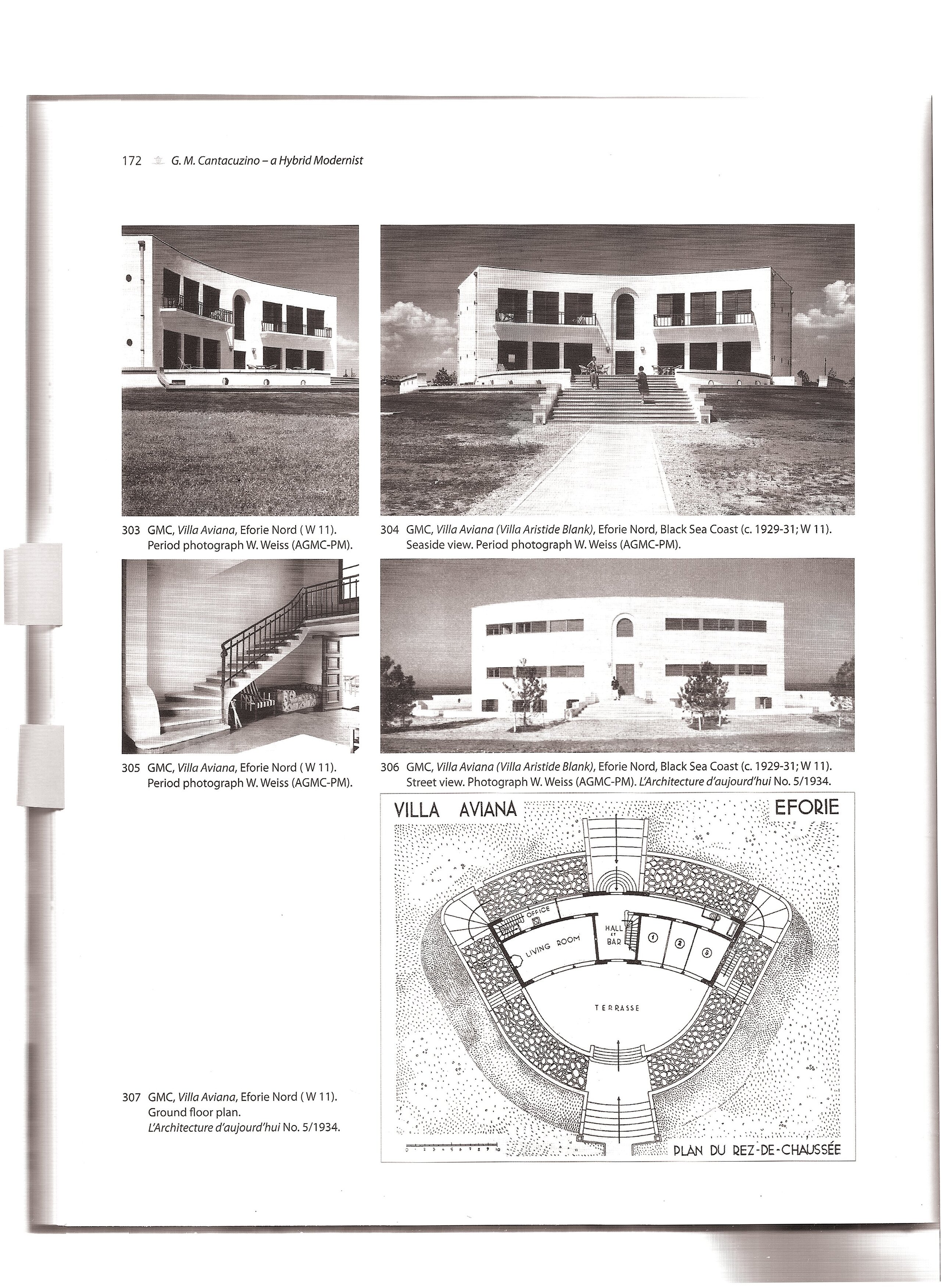
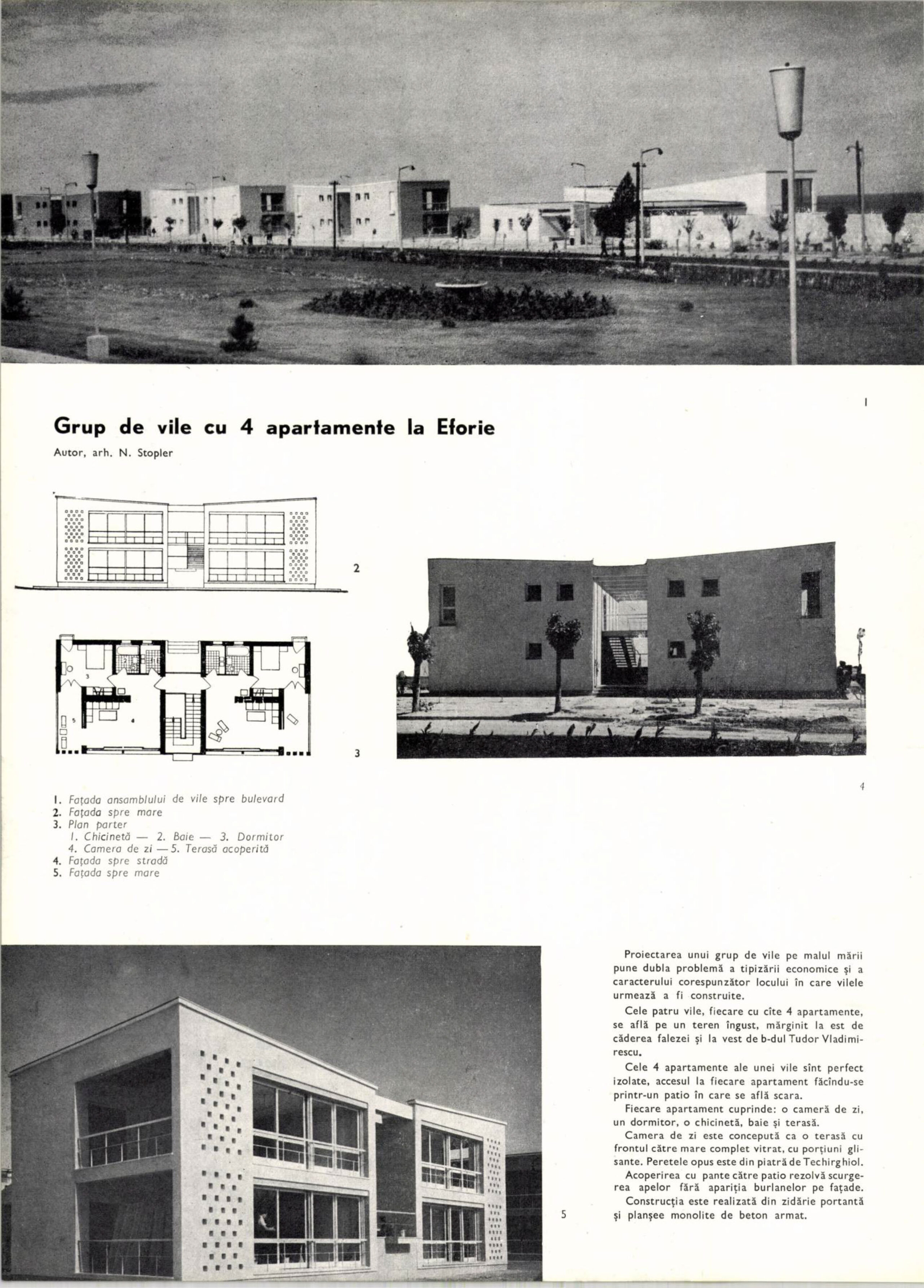
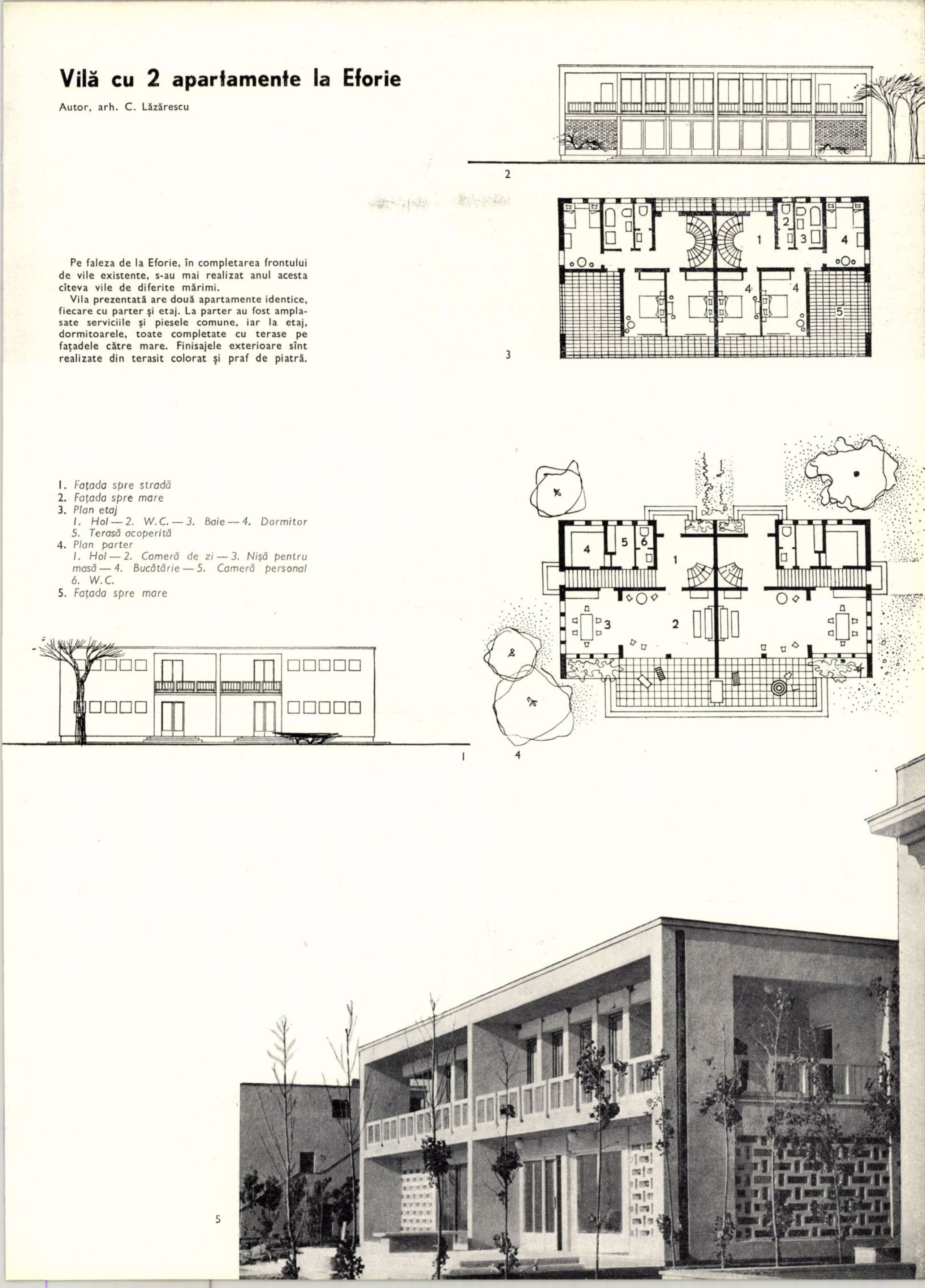
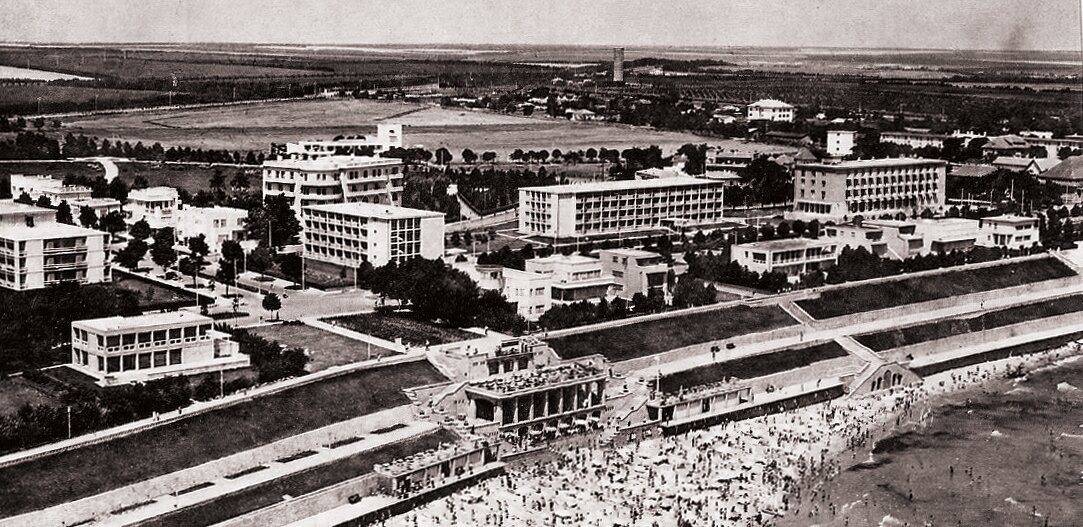
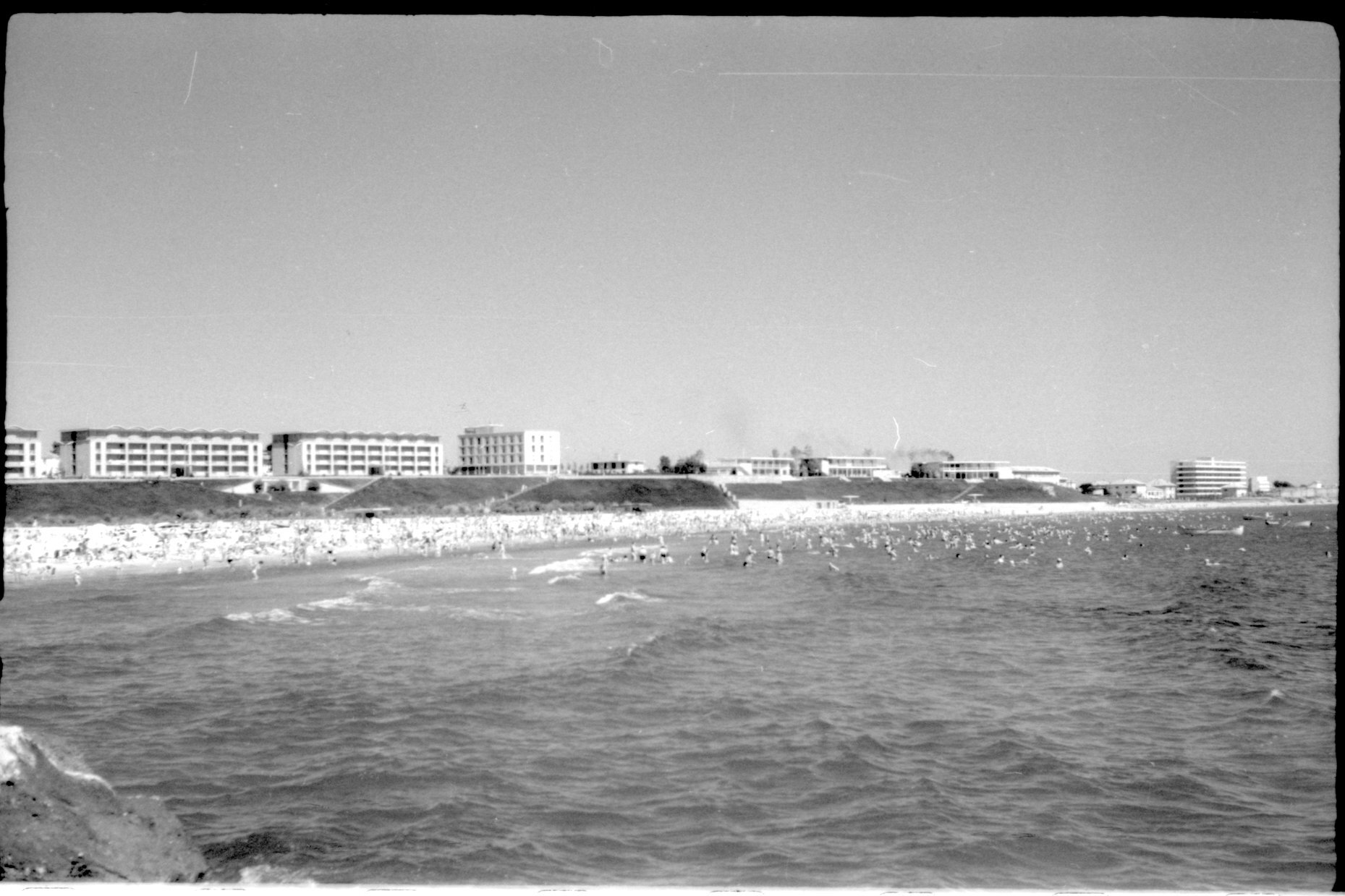
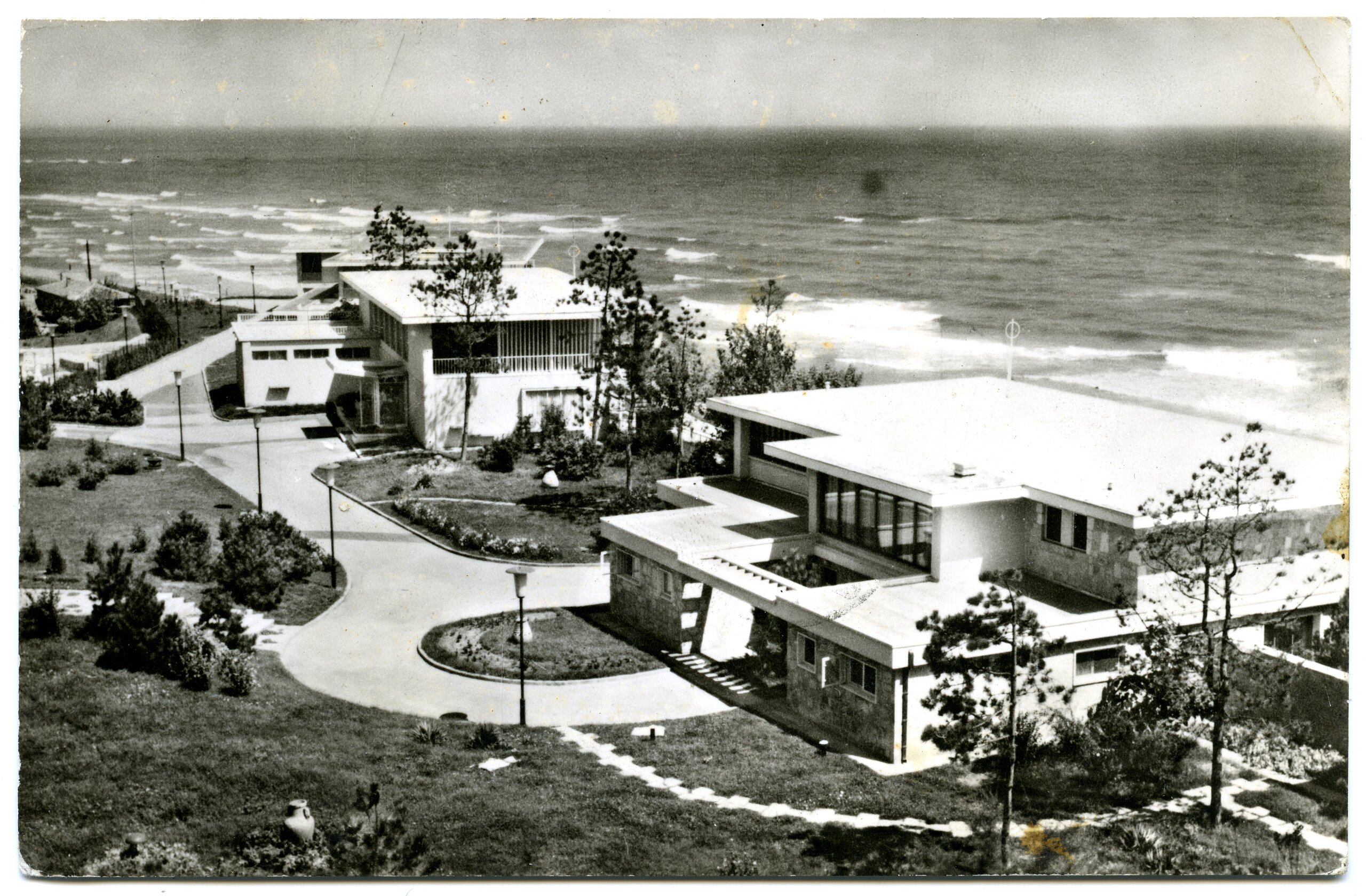
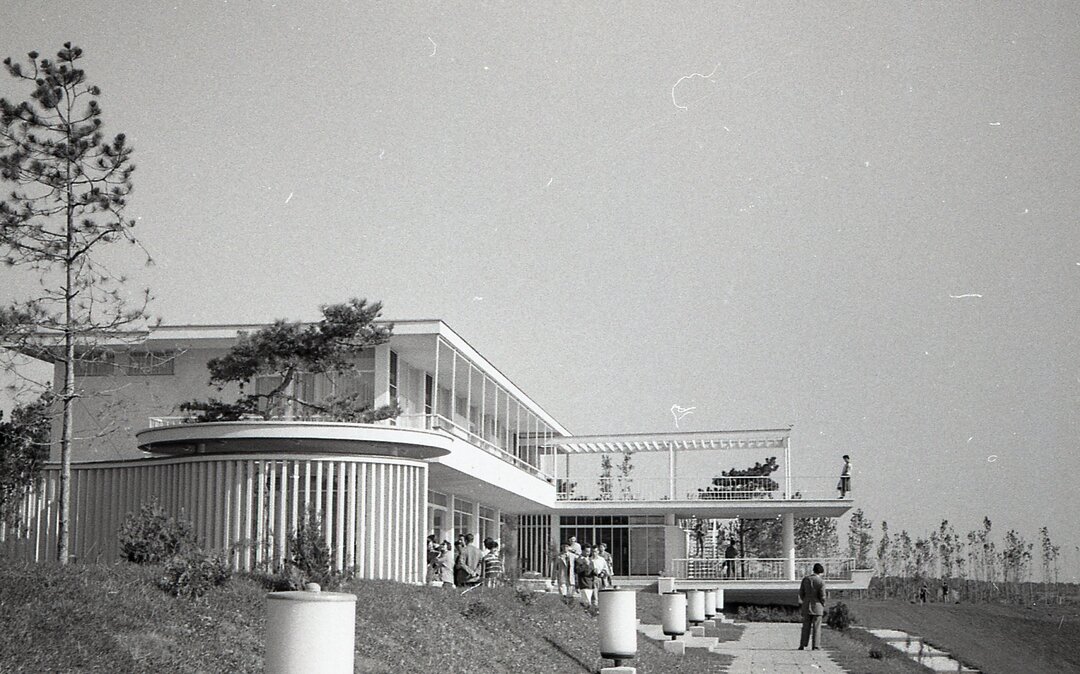
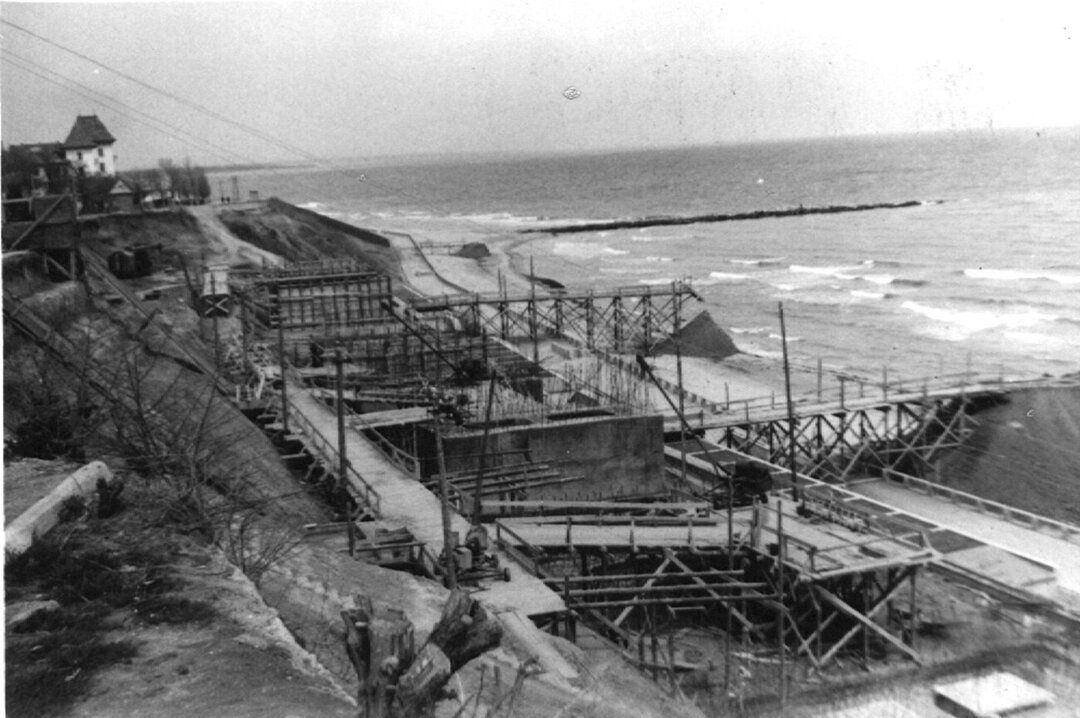
It is precisely this pre-existing inter-war reality that is of interest for the study of individual housing, in the context of the new tourism projects that began in 1955. Could it be the beginning of the completion of the Eforie Nord cliff with villas or the realization of a small complex of such villas in Mangalia an opportunity that the leaders of the time used in the idea of building more luxurious complexes? What is certain is that on July 2, 1955, therefore before the establishment of the Carpathian N.T.O., the Council of Ministers issued Decision 1222 on the approval of "Spa development works on the Vasile Roaită cliff"11, the old name of the town of Eforie. Compared to Mangalia's cliffs, where there were few modern achievements in the inter-war period, the cliffs of Eforie (North and South) had a significant number of secondary residences, inter-war villas, laid out in a coherent manner along the cliffs and in the streets of the villages. The projects published in issues 8-9 of the 1958 issue of Arhitectura, exemplifying realizations in Eforie Nord, are characteristic of the new idea of tourism and its correlation with interwar achievements. The published projects of villas on the seafront, designed by arch. Nicolae Stopler and arh. Cezar Lăzărescu, realized between 1955-1959, were inserted among the villas designed mainly by G. M. Cantacuzino. A comparison with the projects realized in the 1930s, in particular with Villa Aviana, with which they are adjacent, shows that the apparent similarity between certain projects hides, in fact, a complete change of content both in terms of spatial-functional organization and in the idea of architectural expression.
The two villas published in Arhitectura magazine were designed on a principle of specular symmetry. In contrast to Villa Aviana, the symmetry of the buildings constructed in 1958 comes from other sources, the most obvious of which is the symmetrical, coupled house model that defines the architecture of the individual dwelling imported after the Second World War. The example of the villa with four apartments designed by arch. Nicolae Stopler's example is clearly inspired by the architecture of the Aviana villa, whose curvature is imitated in the image by the slopes of the roof that converge towards the central staircase, which is open-air. The apparent resemblance between the two buildings conceals a reversal of concept in terms of the interior. While the central staircase space marked by an arched window brings the interior of the building together, the staircase of the villa designed by Nicolae Stopler is merely a functional connector between the four apartments. On the inside, each apartment is identical (and mirror symmetrical), and the interior arrangement of the spaces is based solely on functionality. Each apartment is independent and drawn on a square plan, unable to spatially express the horizontality of the whole.
Continuing the comparison with Vila Aviana, the villa designed by Cezar Lăzărescu is a duplex; the center of the building is not represented by a void, but by the wall separating the two "apartments". The floor plans are still reminiscent of extended inter-war villas, with separate service circulation on the ground floor. The staircase and its hallway quote the inter-war example of the Aviana villa in a functionalist register. The main staircase falls into the category of servants' quarters, no longer the main space of the house; these spaces are still facing the street, clearly separated by a longitudinal wall from the living spaces and the upstairs rooms. Note the upstairs room next to the bathrooms, which is also a service room. It opens to the side and to the street, not to the generous terrace facing the sea.
The analysis of the villas shows the slippage of the significance of certain spatial and formal principles in architecture in the post-war (communist) period. In the present case, the architecture of the 1958 projects can also be seen as an example of integration into an established site and they remain key examples of post-World War II modern architecture.
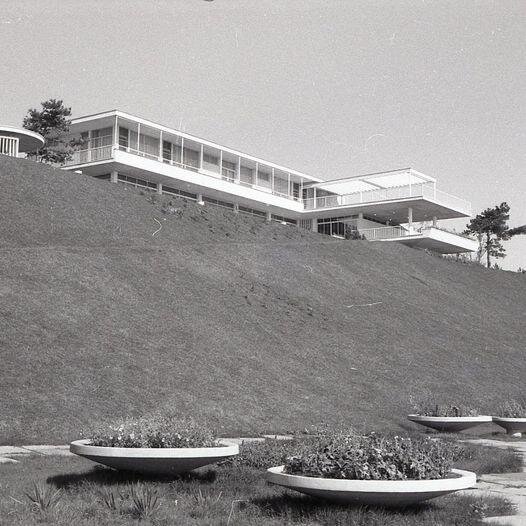
Compared to the examples from Eforie Nord published in Arhitectura RPR, the villa located in the northern part of the Eforie Nord cliff and the villas in Mangalia were not published together with the rest of the assemblages built on the cliff, which puts them in another category, that of "special villas", realized for the CC members of the PMR. The 'special' villas that began to be built on the seaside, in Eforie Nord, Mangalia and later in other seaside resorts, such as Timișul de Jos, in the current county of Brasov, Snagov, etc., although hidden from the general public, became a model for those projects in the country that were accessible to the public and featured in specialized magazines.
The subject of the special villas built between 1947-1989 for the private use of political leaders is perhaps the most difficult to analyze in relation to the rest of the private or state architectural production due to the secrecy that still hangs over these achievements. If immediately after the Revolution of 1989 most of the "special villas" were ostentatiously opened to the general public12, they were also immediately closed and returned to the use of the new political leaders. Their architectural value was not an open subject, even though they were the only buildings which, at that time, marked by the economy of materials, benefited from the latest technologies and finishes, and were designed by collectives of selected architects and engineers. This has resulted in buildings whose quality we can guess that they should be of good quality, although speculative information is much more extensive than documented. Their inclusion in the recent and public history of architecture must happen soon, in order to move these buildings from the category of mythology into the category of architecture seen and commented on.
If before 1989 "special mansions" were the subject of much fabulation, the way in which these buildings were managed after 1989, whether through privatization, transfer to county authorities or other measures, has added even more mystery to these examples of post-war architecture. A first question to open the argument would address the number of constructions, and in particular "special villas" . In order to answer this question, we investigated the legislation of the functioning of the Autonomous Regie of the State Protocol Patrimony Administration from 1990 to the present.
On July 6, 1990, the patrimony and the enterprises of the Party Household13 came under the administration of the "Romanian Autonomous Tourism and Services Company DACOREX amp; CO"14 which took over 30% of the shares of the subordinated enterprises, according to an unpublished annex, which was communicated only to the interested units. Only a few months later, on November 21, 1990, DACOREX amp; CO was disbanded and its assets were taken over by the "Administration of the State Protocol Assets - Autonomous Regie"15. This explains the short period in the summer of 1990 when people had access to visit some of the "special villas". The new autonomous regie had a list of 8 enterprises under its subordination and a short list of several real estates under its management, including 27 villas in Bucharest, Eforie Nord, Neptun, Predeal, Sinaia, Snagov, Săvârșin. In 1993, the activity of the State Property Administration was reorganized through 9 companies16.
Under Law No 213 of 17 November 1998 on public property and its legal regime, Regia Autonomă Administratia Patrimoniului de Stat was reorganized and renamed Regia Autonomă "Administratia Patrimoniului Protocolului de Stat" by Decision No 854 of 28 September 200017. The Decision also provided for its reorganization into 18 branches, and for the first time a "long" list of the buildings and properties owned by the 18 branches was published. The two appendices - 3 and 4 - included both the real estate under the administration of the Autonomous Regie "Administration of the State Protocol Patrimony" and that under the administration of the R.A.P.P.S.18 which pass from the public to the private domain of the state, 91 properties remained in the public domain of the state administered by the R.A.P.P.S., some of which included, like the one in Scroviștea forest, several villas and annexes. The list of properties administered by the regie that passed into the private domain of the state numbered 366 properties - hotels, agricultural land, greenhouses, residential blocks and apartments, tourist complexes and villas.
After several reorganizations and changes of the regulation19 between 2002-2005, in 2020 the list of the public domain administered by R.A.P.P.P.S. numbered 84 properties, and the list of the properties in the private domain of the state administered by R.A.P.P.P.S. numbered 904 properties, 247 of which had been sold (they appeared as repealed). Following the lists of buildings, the annexes related to the 2002 reorganization contained the most buildings. The list counted 77 buildings in the public domain of the State and 921 in the private domain of the State under the administration of the R.A.P.P.P.S..
The list would thus contain more than 1,000 buildings, as some buildings contained several buildings. And if agricultural properties, administrative buildings, collective housing buildings are removed from the above lists, 432 villas remain, which fall within the scope of the current research. Although the list is impressive at first glance, it does not include many of the country's protocol villas, such as the one in Gura Văii, Mehedinți County, or the one in Micești, Argeș, which belonged to county organizations or were later managed by county councils. As there were several such complexes in each county, one could add to the list several dozens of other buildings used as villas, guest houses, cottages, etc. The large number of such buildings is evidence of a critical mass of constructions that can be considered typical or extraordinary examples in the history of recent architecture, in terms of the residences of Romanian heads of state before 1989 and after.
The phenomenon of building special villas for political leaders was not inaugurated immediately after 1947. The change compared to the inter-war period was the contrast between the extreme measures taken at all levels (political, social, economic) in order to achieve a utopian social egalitarianism and the personal needs and desires of political leaders who would also have needed new forms of housing. Were the new ministers or heads of state to live on an equal footing with the peasantry or the (emerging) proletariat? Were they to occupy the former residences and seats of power? And in what way, in what style were they to live?
After the choice, in the first years, of residences resulting from the modern searches of the 1940s, the realization of new villas for the members of the CC of the RCP began to take place in the context of the "obligatory" international style20. There is also a direct correlation between tourism and "special villas", since the Party Household was in charge of both "providing accommodation [...] for the workers of the Party bodies and apparatus of the CC of the PMR"21 and "organizing the rest of Party workers in the rest centres and balneal-climate sanatoriums managed by the sector"22. Mangalia and Eforie (Vasile Roaită) were the starting points for the construction of new tourist resorts in the country, as well as for the construction of villas for the party apparatus of the CC of the PMR. And in this sense, the rest villas preceded the construction of service villas for the members of the political structures of the PMR and later the PCR.
Picking up the thread on the villas on the coast, in the volume dedicated to Cezar Lăzărescu23, the villas in Mangalia are dated 1958 and are listed before the six special villas in Eforie Nord in the chronological list of the works designed and executed. So, if the sites were already completed in 1958, the design and commissioning for them was earlier. I dated the idea of this commissioning sometime in early 1955, contemporaneous with the Council of Ministers Decision no. 1222, which I mentioned earlier in the article, with reference to the villas in Eforie Nord.
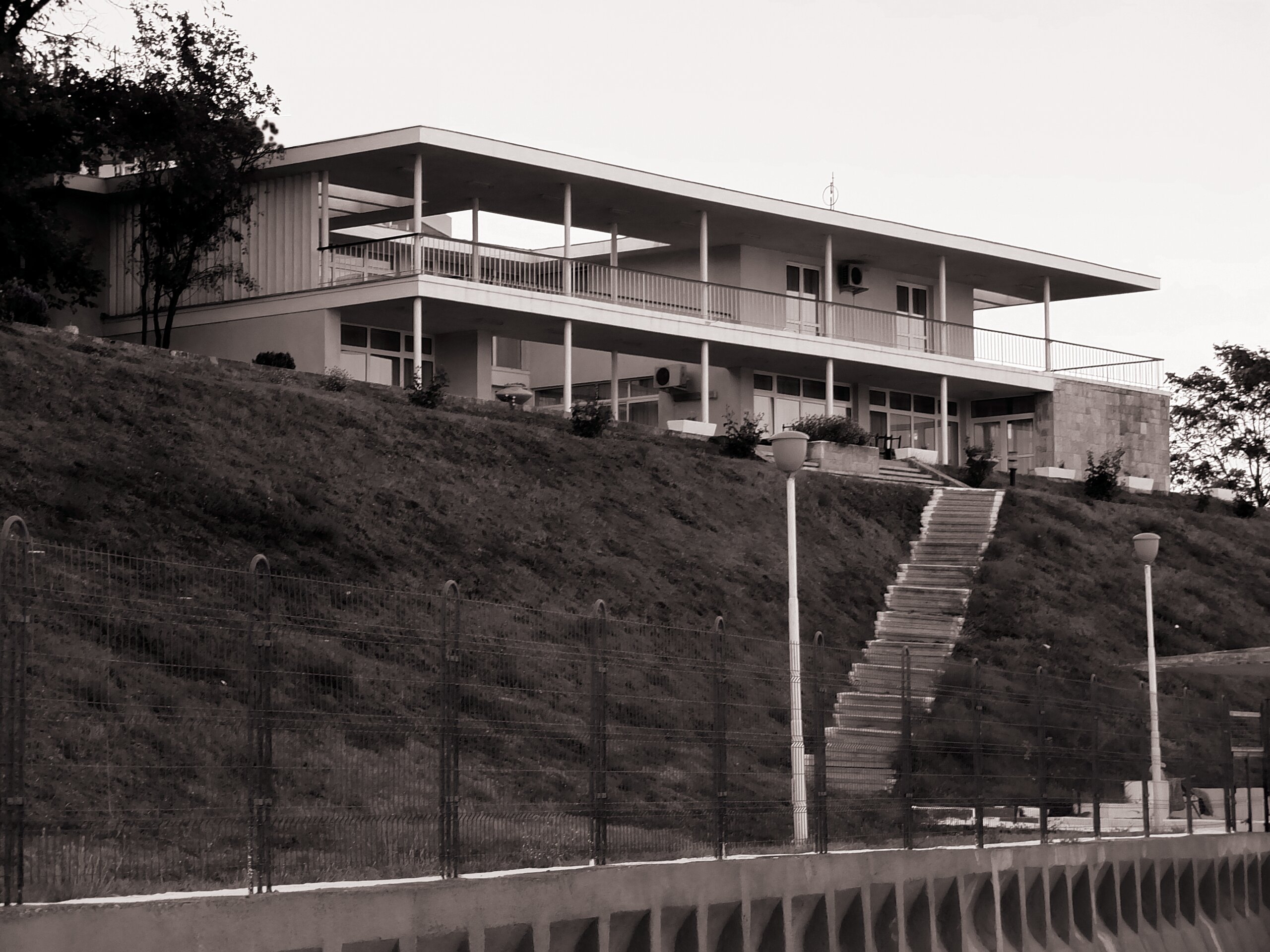
Compared to the examples from Eforie Nord published in the magazine, the villas in Mangalia and the villa enclosing the northern cliff of Eforie Nord have some distinct characteristics. The first difference is the fact that nothing has been published about the Mangalia villas24, which places them squarely in the area of "occult architecture"25 as defined by Ana Maria Zahariade, but also in that of architecture realized without regard to the principle of economy26. The Mangalia villas also completely distance themselves from any previously imposed model and develop in the purest "international" style. They are not "semi-detached houses", but large, highly developed villas. From a cost point of view, Constantin Stanciu, a carpenter involved in the construction of the villas, stated that the site of the villas was a cavity which was filled with concrete in order to build on top of it, which may indicate that the villas were built without regard to cost27.
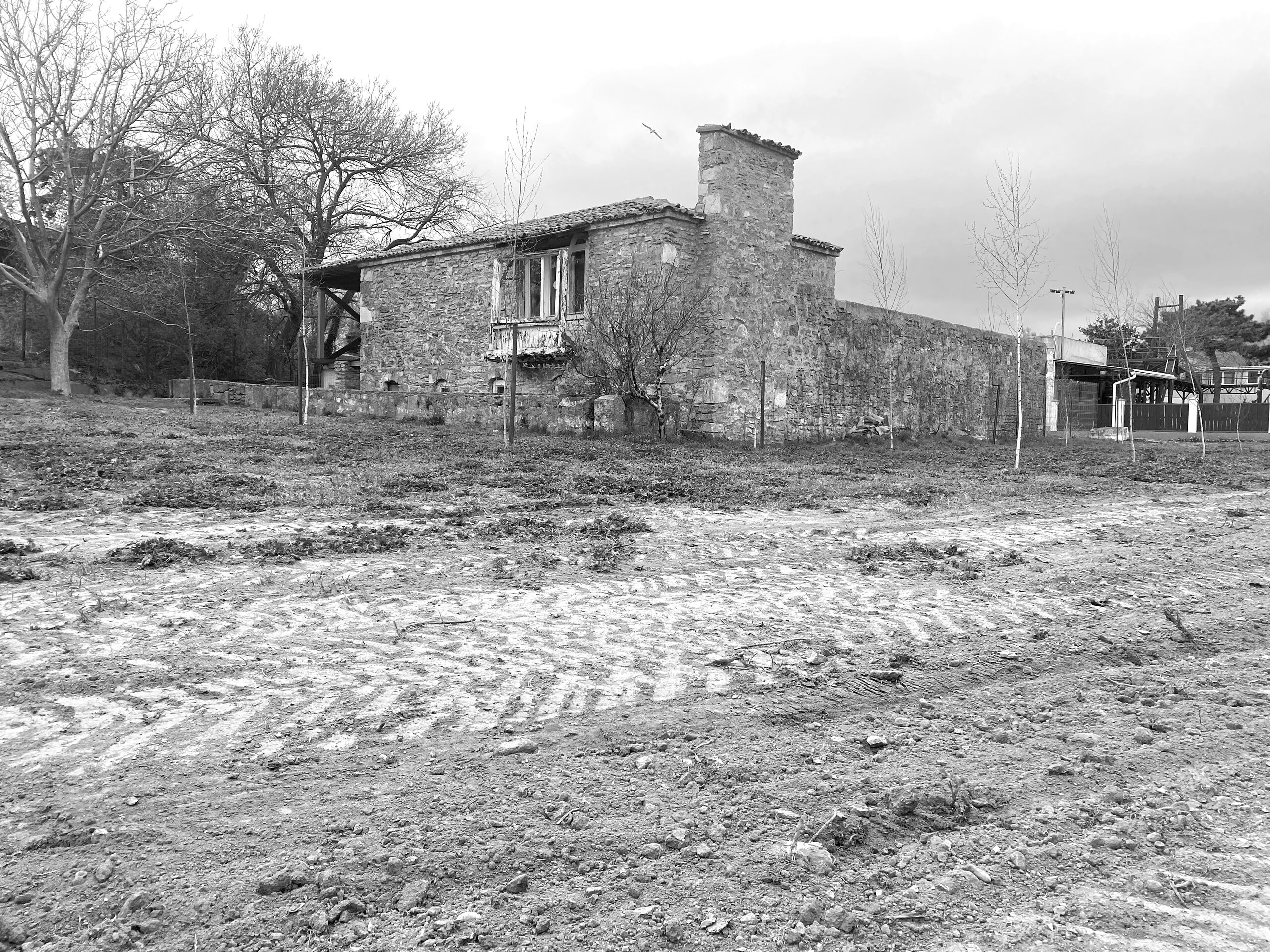
The Mangalia villas were located next to an inter-war example: the Dan Hurmuzescu villa, designed by arch. Haralamb Georgescu in 1946 and built in 1947. In the new villas some elements, probably inspired by the Hurmuzescu house, such as the inner courtyard, the stone facing of some walls, are very easily suggested. The juxtaposition of the interwar villa with the functionalist villas suggests some of the mutations that were taking place. The new architecture did not reconnect with the inter-war modernism which, already in the 1940s, showed signs of regional fusion such as the Hurmuzescu house. The reconnection was with a generic, international modernism as a model for building a better world. The reconnection (critical or ideological) with regional or national aspects would come later. In the case of the villas in Mangalia, the architects took elements from inter-war architecture only in the adjoining villa, which denotes, on the one hand, a certain respect and, on the other hand, an exclusively localized, neighborhood contextualization. The "new" modernism referred to the "old" modernism as a historical architecture belonging to a conclusive moment.
Cezar Lăzărescu is the name to which the activity of the design workshop of the Party Household is linked, from its foundation until Dej's death, at least. Even if it is not known exactly how Cezar Lăzărescu became Gheorghe Gheorghiu-Dej's favorite architect28 , according to his colleagues, he "was an intelligent architectural manager who knew how to attract the best young architects to the numerous projects he managed"29. Gabriel Cristea, Dinu Gheorghiu, Anca Borgovan, Ileana Neicu, Ileana Murgescu, Zoltan Takacs and others were part of his team.
The list of works attributed to Cezar Lăzărescu includes the Marina villa in Mamaia, completed in 1966. This example demonstrates that the works produced in the design studio of the Party Household are larger than those already circulated in previous research and a listing of the works as well as the desecretization of the archives (if they still exist) would make a very important part of the architectural production in Romania known to the general or specialized public30. The architect Anca Borgovan defined as "lucky" the fact of being accepted in that collective, where she could design in an almost normal way, where there were beneficiaries who wanted their own personalized house, where there were much better financial and technical resources than the rest of the production. Almost normal because the workshop had a special regime, like a military unit. Everything they designed was secret and remained within the institute; for execution, the plans also went to the construction companies of the Party Household, where they worked under the same regime31.
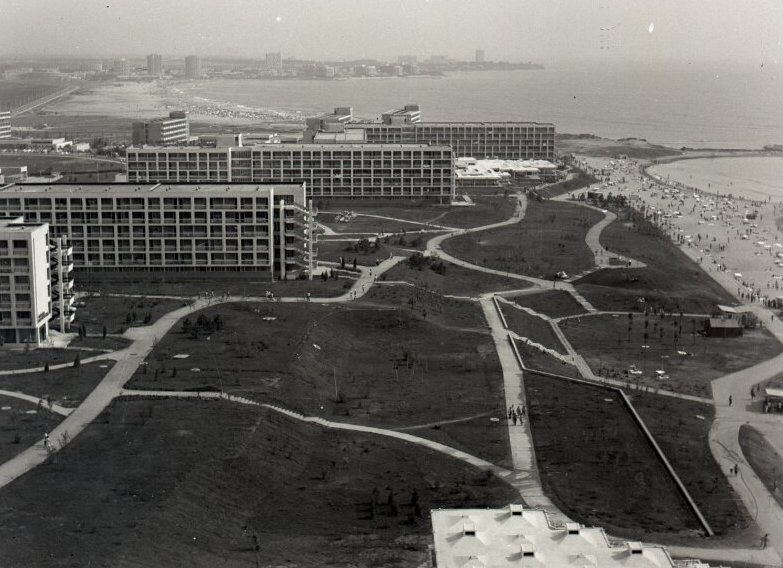
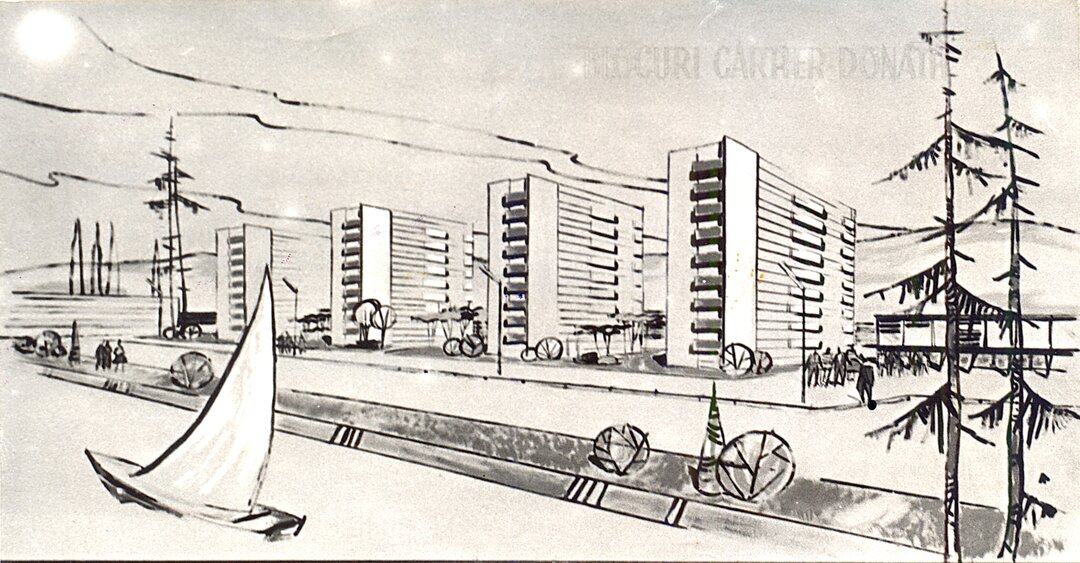
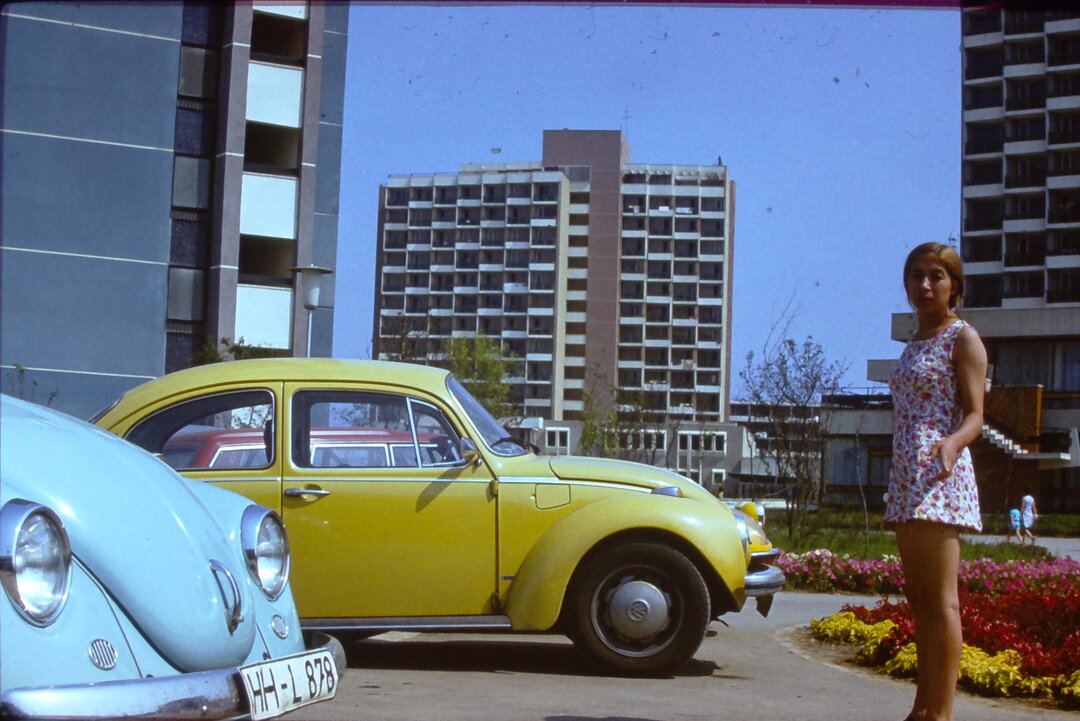
About 10 years after the realization of the first wave of villas on the seaside, at the end of the 1960s, several projects of villas for seaside tourism appeared in the newly planned resorts in the south of the coast - Saturn, Venus, Cap Aurora, Jupiter, Neptun and Olimp. Constant Săvescu and Sebastian Moraru designed for the Institute for Systematization, Housing and Communal Housing (I.S.L.G.G.C.) several villas in the resort of Neptun32.
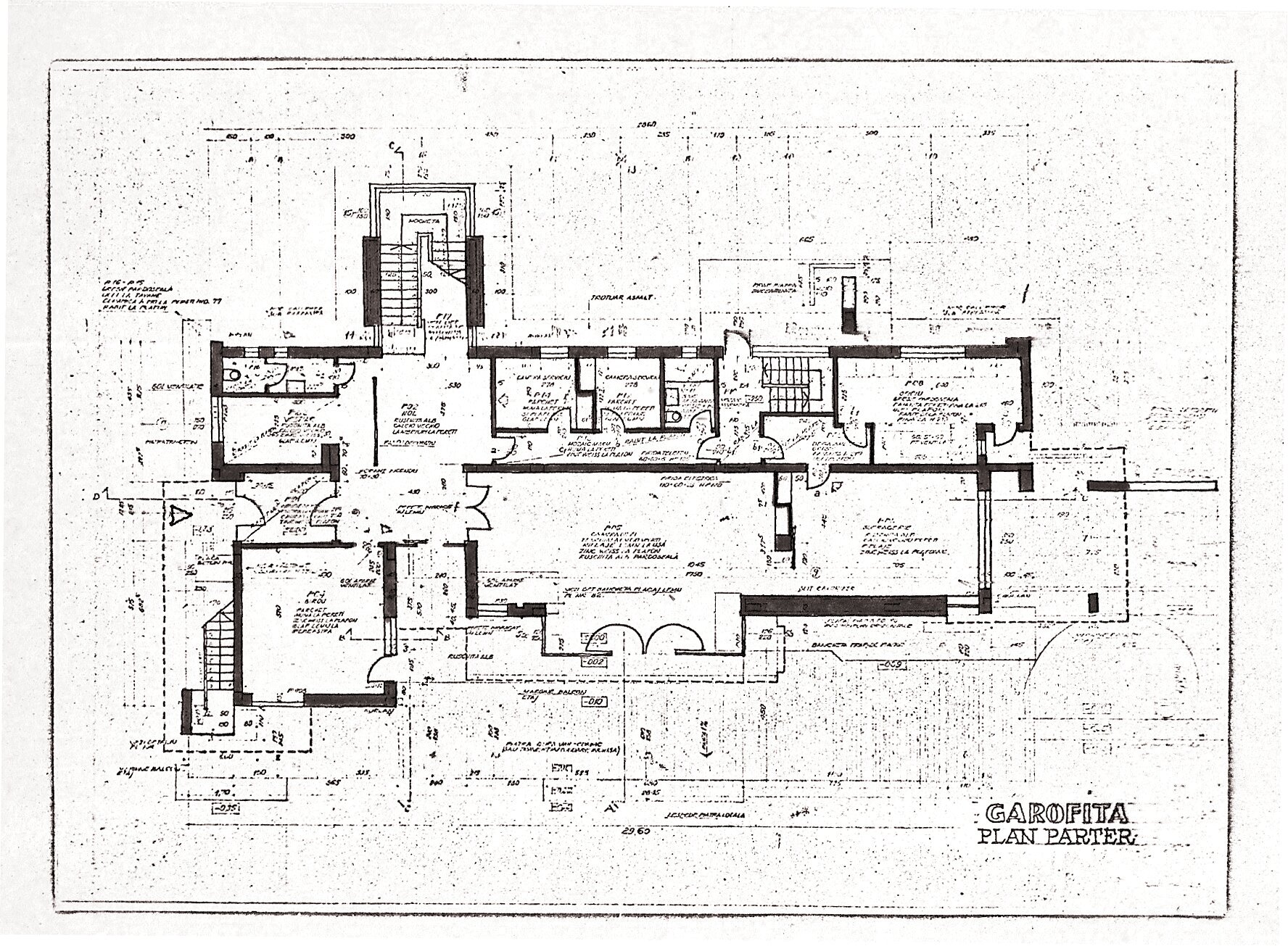
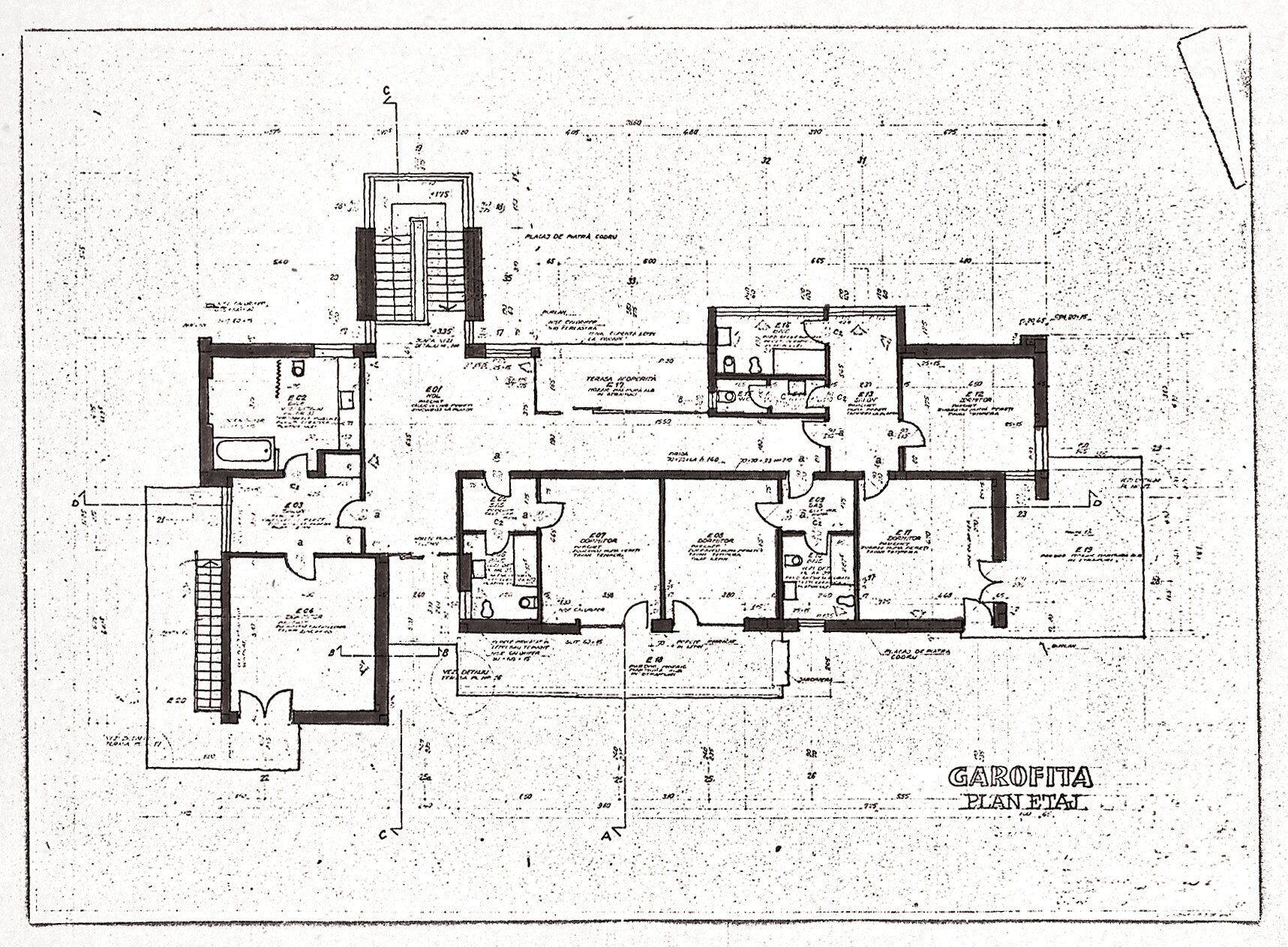
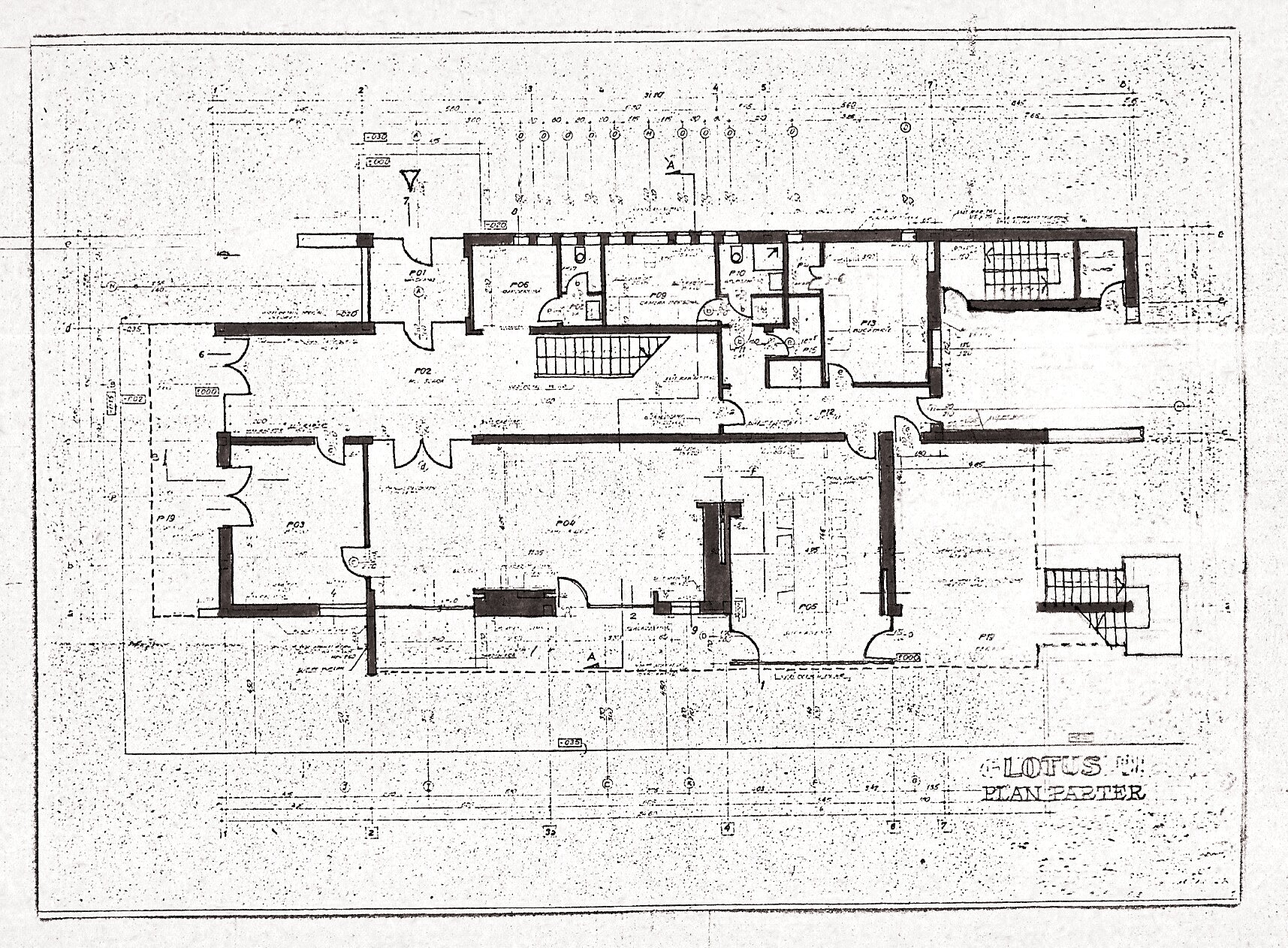
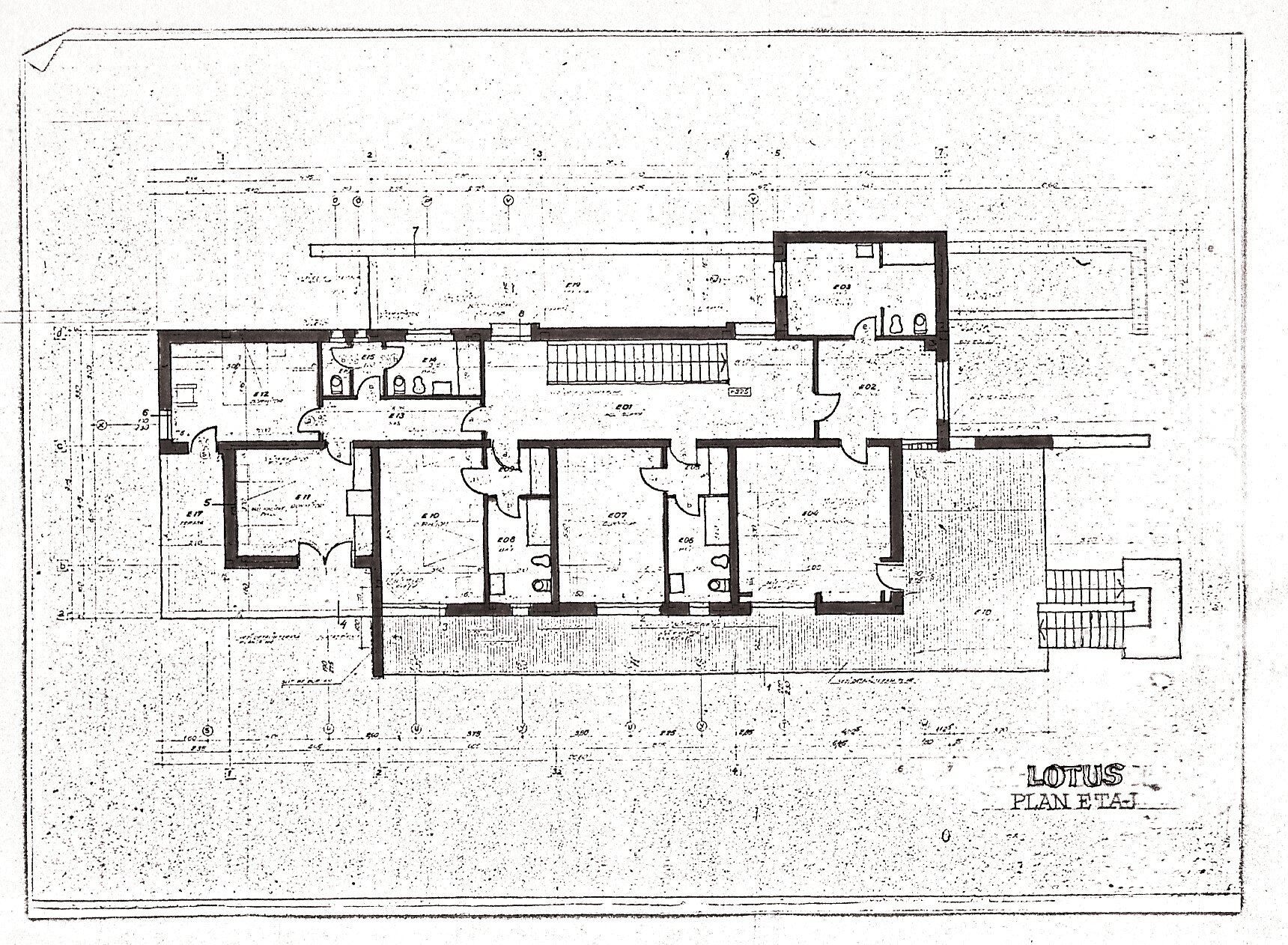
From the large number of designed typologies, we have chosen two developed villas that fit within the subject: villa Garofița and villa Lotus. The buildings have the configuration of individual luxury villas, with the living area on the ground floor and the night area upstairs. The suite of rooms upstairs could also have been used to accommodate several families, but the overall concept denotes the design of these villas for the private use of a family.
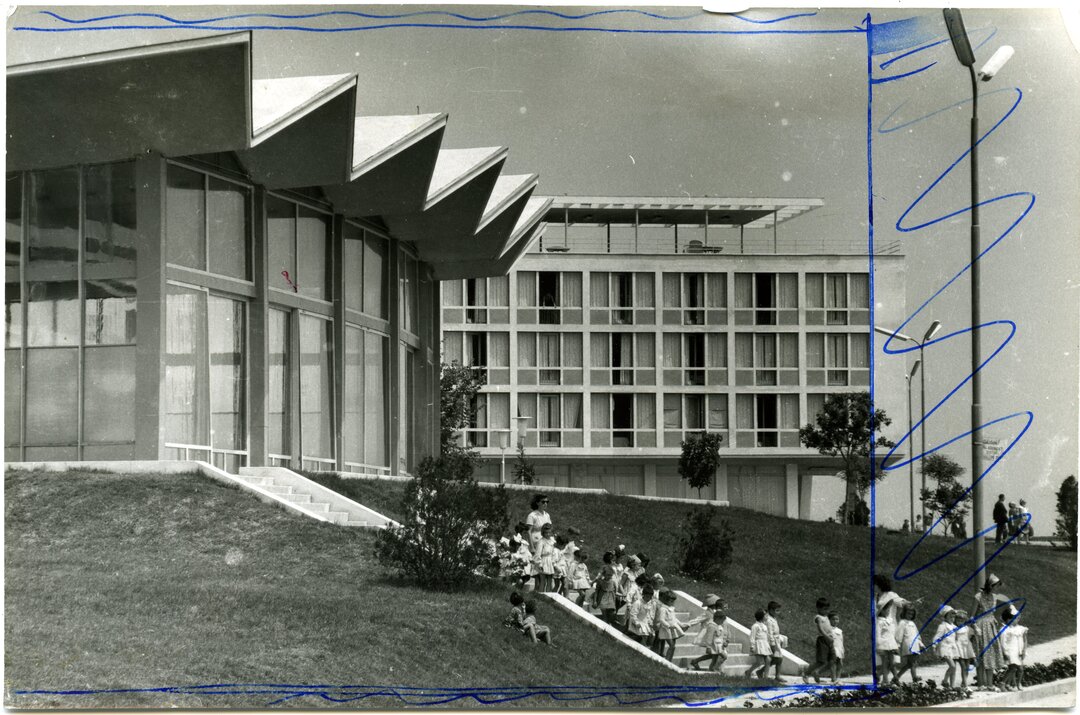
The design and construction of the new resorts in the southern part of the seaside was, or led to the transformation of the Party Household Section of the CC of the PCR. The design workshop of the Party Household was transformed into the Carpathian Design Institute, equipped with its own construction trust, at that time one of the best in the country. On July 1, 1970, "under the subordination of the Central Economic Office Carpați, the Carpați Construction Trust was established, with headquarters in Mangalia"33. The Carpați Construction Trust had "as its object of activity the execution of constructions for tourism such as: hotels, restaurants, commercial, cultural and leisure facilities, leisure and treatment complexes, as well as unique constructions with special program"34. The formation of this trust in connection with the explicit development of tourism and special program buildings emphasizes the close relationship between the two. Both resorts for tourism and residential areas for nomenclature closed to the population are mutations in themselves of the territory of architecture belonging neither to the rural nor to the urban. In the volume Mutations in the architecture of individual housing in Romania 1947-1989, which will appear in the second half of this year, I have developed the subject of which vacation villas and nomenclature villas are also part, from which the present article for the magazine Arhitectura was extracted and composed.
NOTES
1 Decree No. 88 of March 8, 1949, for the transfer of the attributions of the National Tourist Office (O.N.T.) to the General Confederation of Labor.
2 The State Plan of the Romanian People's Republic for 1949, Address to the Great National Assembly, December 27, 1948, speech delivered by Gheorghe Gheorghiu-Dej, in "Scînteia" no. 1311, December 28, 1948.
3 Komsomol - Communist Youth Organization in the USSR.
4 Anne E. Gorsuch, All This is Your World, Soviet Tourism at Home and Abroad after Stalin, Oxford University Press, 2011, p. 16.
5 Idem, p. 10.
6 Petre Opriș, "The Carpathian National Tourist Office and the situation on the Romanian Black Sea coast, analyzed by an Austrian tourist (1955-1964)", in contributors.ro, Sunday, April 18, 2021, https://www.contributors.ro/oficiul-national-de-turism-carpati-si-situatia-de-pe-litoralul-romanesc-al-marii-negre-analizata-de-un-turist-austriac-1955-1964/.
"The political context in Moscow was marked by the removal of Georgy Malenkov from the head of the government (February 1955) [...] In that very complicated domestic and international political context, V. V. Kuznetsov (deputy minister of foreign affairs), Ivan G. Kabanov (minister of foreign trade) and Anastas I. Mikoian (first deputy prime minister) took turns in April 1955 to consider a document with 14 main ideas on granting permission for some 1,500 Soviet citizens to visit only countries of people's democracy."
7 Intourist - An organization founded in 1939 to promote visits to the USSR by tourists from abroad. From the 1950s onwards, Intourist also became the intermediary for Soviet tourists' visits around the world.
8 Decision of the Council of Ministers no. 1781 of August 18, 1955 for the establishment of the Carpathian National Tourist Office, accompanied by two annexes, ANIC, CC of the PCR Fund - Chancellery Section - Decisions of the Council of Ministers, inv. no. 3362, quota 914/1955.
9 Carmen Popescu, "O mecanică eficace: Litoralul românesc în anii socialismului", in Vederi încântătoare: Urbanism and architecture in Romanian Black Sea tourism in the 1960s-70s, pepluspatru Association, Bucharest, 2015.
10 Cezar Lăzărescu, "Studii pentru sistematizarea localităților de pe litoralul Mării Negre", in Arhitectura RPR, nr. 11-12/1955: 32-46.
11 Decision of the Council of Ministers no. 1222/1955 on the approval of the "Works for the bathing arrangement of the Vasile Roaită cliff", in the systematization sketch phase, and of the design tasks for the "Longitudinal breakwater and the arrangement of the Vasile Roaită cliff", Central Committee of the Romanian Communist Party - Chancellery Section - Decisions of the Council of Ministers. No. 479 / June 2, 1955. The document is classified, but it certifies the beginning of works for tourism on the seaside.
12 In the summer of 1990, I went with my parents to the seaside to see "Ceausescu's villas". There was a very long queue; just like in the old days at the orange market. It was also sunny and after a while my parents told me to go from there. I realized, thanks to them, how ridiculous the moment was. The next year the villas were back under guard for the new rulers.
13 The law doesn't use the name Party Household or some other name of a pre-existing structure that the new form of organization takes over. We have given this general designation to express the totality of enterprises and real estates managed by enterprises directly subordinated to the CC of the RCP. with the purpose of providing permanent or temporary accommodation for members, and designing, fitting out and supplying their housing.
14 Decision No 763 of July 6, 1990 of the Romanian Government on the establishment and functioning of the Romanian Autonomous Tourist and Service Agency "DACOREX amp; CO.", published in the Official Gazette No 101 of August 24, 1990.
15 Decision No 1217*) of the Government of Romania of November 21, 1990, on the disbanding and establishment of certain economic units for representation and protocol, published in Official Gazette No 109 of May 27, 1992.
16 Decision No 567 of 15 October 1993 ***Republished on the organization and functioning of the Autonomous Regie "Administration of the State Protocol Patrimony", published in Official Gazette No 280 of 4 October 1994.
17 Decision No 854 of 28 September 2000 on the organization and operation of the Autonomous Regie 'Administration of the State Protocol Patrimony', published in Official Gazette No 492 of 9 October 2000.
18 Regia Autonomă "Administrația Patrimoniului Protocolului de Stat".
19 Decision No. 533 of 30 May 2002 on the organization and functioning of the Autonomous Regie "Administration of the State Protocol Patrimony", published in Official Gazette No. 391 of 7 June 2002.
Regulation of 30 May 2002 on the organization and functioning of the Autonomous Regie "Administration of the State Protocol Patrimony", published in the Official Gazette no. 391, of 7 June 2002.
Decision No. 60 of 21 January 2005 on the organization and functioning of the Autonomous Regie "Administration of the State Protocol Patrimony", published in the Official Gazette No. 105 of 1 February 2005.
Regulation of 21 January 2005 on the organization and functioning of the Autonomous Regie "Administration of the State Protocol Patrimony", approved by Decision No. 60 of 21 January 2005, published in the Official Gazette No. 105 of 1 February 2005.
20 We have used this phrase - international style - because it refers to modernism as defined by Henry-Russel Hitchcock and Philip Johnson in the 1932 New York exhibition. It was now becoming an international style again in the countries of the Soviet Union's sphere of influence, where the Cominform, the successor after 1947 of the Communist International, the Comintern, had just been dissolved.
21 Regulations on the functioning of the Party Household Section approved by the CC Secretariat of the PMR, p. 5.
22 Ibid.
23 Ileana Lăzărescu, Georgeta Gabrea, Vise în piatră / in memory of prof. dr. dr. arh. Cezar Lăzărescu, București: Capitel, 2003.
24 In the magazine Arhitectura no. 6 of 1959 an article entitled "Reconstruction of Mangalia" is published in which a situation plan is shown in which the three villas can also be seen. The situation plan is only revealed to a connoisseur because it only graphically differentiates between the existing and the planned buildings. At that time, most of the reconstruction project of the city center - including the three special villas - was built. The general planning and coordination was done by arch. Cezar Lăzărescu; the collective of the elaboration of the housing projects was composed of architects I. Novițchi, Ileana Lăzărescu, Alice Florea; the design collective for the rest center was composed of architects D. Gheorghiu, C. Ionescu, M. Laurian, C. Lăzărescu, S. Meier, Marcela Mateescu, N. Sulescu, E. Wiener.
25 The author defines three indicators to define "occult architecture": the absence of a written architectural theme, the financial nonchalance applied to these constructions and the absence of this architecture from current publications - after Ana Maria Zahariade, op. cit., p. 112.
26 Ibid.
27 Interview, August 2009.
28 I reproduce below a testimony by arh. Constantin Jugurică, describing how Cezar Lăzărescu became Gheorghe Gheorghiu-Dej's favorite architect, "1956-1957. He worked at ISPROR - project architect, at the same time he was also an assistant at the Department of Urbanism. He was considered a "lăbos" with verve and quickness in presenting sketches. ISPROR received the task from Dej to systematize and build Mamaia resort.
Proposals were made - many of them using new architectural-urbanistic solutions, but very expensive. Cezar Lăzărescu made a separate opinion, proposing simple, industrialized and low-cost solutions compared to the others.
Dej appreciated this and called him for discussion. Cezar Lăzărescu, who excelled in diplomacy, managed to get under the skin of this lonely socialist-communist socialist-communist "nabob" - without a family life and whose main concern were the two daughters with whom God had blessed him. And so, discussing very often how the "Black Sea pearl" would be realized, Cezar Lăzărescu became a regular in the Dej household. He was constantly called in for advice", testimony published in Ileana Lăzăzărescu, Georgeta Gabrea, op. cit. p. X.
29 Idem, p. 10.
30 In a text published in the monograph Vise în Piatră (Dreams in Stone), Constantin Jugurică lists the villas designed for Gheorghe Gheorghiu-Dej: villas in Snagov for each of Dej's daughters, villas in Predeal, on the shores of Lake Tei in Bucharest. The number of works that he realized or just coordinated in the design workshop of the Party Household could be higher than those marked in the monograph published in 2003.
31 Interview with Anca Borgovan, August 2012.
32 Interview with Vasile Țelea, August 2012.
33 Decision of the Council of Ministers No. 843 of June 24, 1970, on the establishment of the Carpathian Construction Trust under the Central Economic Office Carpathian, and the change of name of the Carpathian Construction Design Office, art. 1, ANIC, CC of the PCR Fund - Chancellery Section - Decisions of the Council of Ministers, 554/24 June 1970.
34 Ibid.