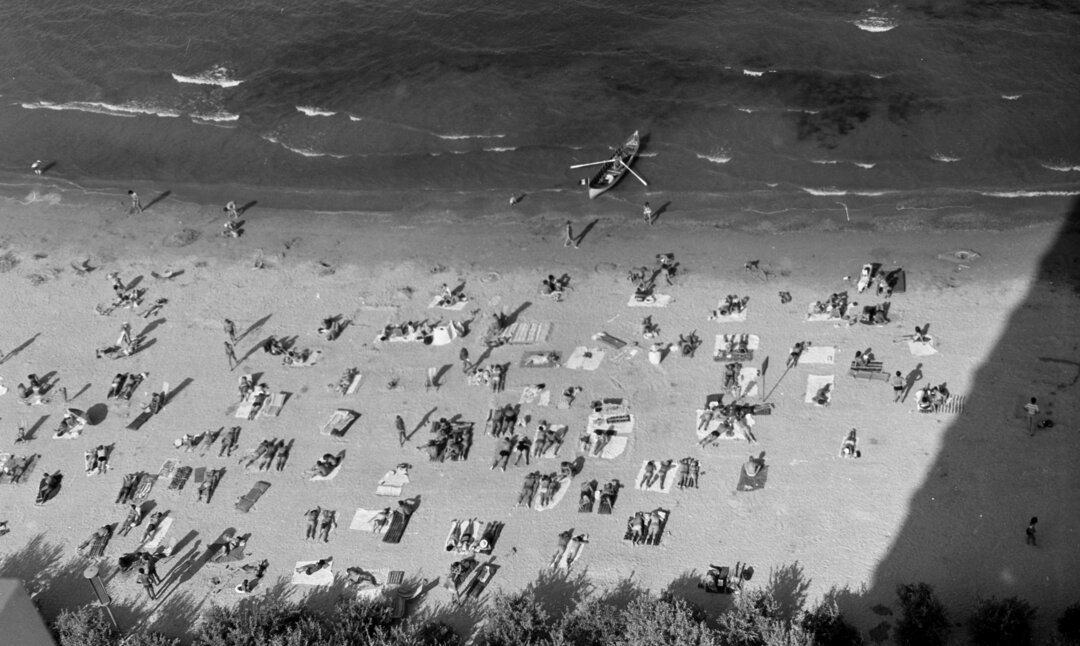
Seaside. A published chronology

"Functional and constructive rationality, economy and speed of execution meant that the seaside complexes played an important role in the stylistic renewal of architecture in the 60s. The unitary and complex nature of the intervention places the systematization of the Romanian seaside at the forefront of contemporary European architecture."1
Cezar Lăzărescu: "How gratifying it is to learn that the footsteps of a Romanian architect have traveled across four continents and over 70 cities! It is a contentment that goes beyond the satisfaction of coming into possession of written pages or messages of communication; it is that contentment of imagining an atmosphere, a space, that you find yourself, a moment of real professional fulfillment, in the moments when you are free from any feeling of alienation"1.
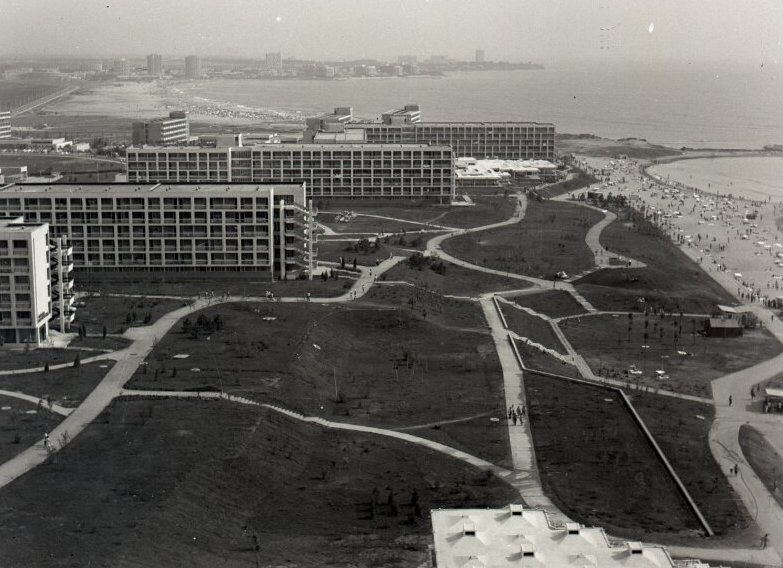
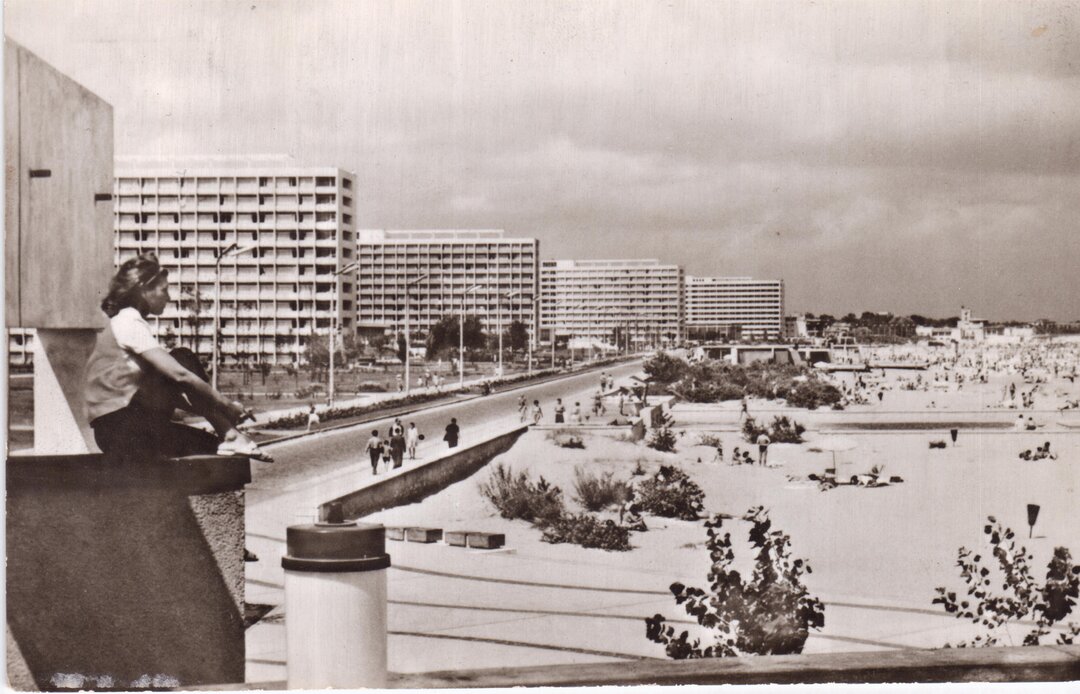
The architect Cezar Lăzărescu was, at the time, one of the most recognized professionals. Later, he would publicly motivate his choices and his creation, also marking the personality of the new resort. The lines below reproduce a significant excerpt from an article signed arh. Cezar Lăzărescu. "I was recently looking at some photographs of Miami-Beach, one of the largest seaside resorts in the United States. A strip of land washed on one side by the warm waters of the ocean, on the other by a river. A road in the middle and lots on either side. On each, a small or large hotel, according to the owner's purse. Each with a different exterior design, an expression of the architect's imagination, but above all of advertising, the "soul of commerce", an important weapon in the battle against competitors. I have given this example because a large hotel complex with a simultaneous capacity of 10,000 beds is currently being built on a site similar in terms of geographical configuration, in Mamaia. Spread over an area more than 2 km long, it forms a harmonious, harmoniously composed complex, conceived and built all at once. Tall hotels of 10-12 floors alternate with low restaurants, yacht clubs, shops, sports and entertainment areas, all woven into a large park running along the beach on the shores of Lake Siutghiol.
A composition of simple volumes, with harmonious relationships between them, set in large green spaces, making the most of the natural beauty with separate vehicular and pedestrian traffic, with all the facilities located as close as possible to the visitors, with a unique administrative and housekeeping organization - these are some of the urban planning principles that we apply. /.../ Today's hotel is no longer an end in itself, but one of the elements of the material basis of tourism organization. Set in a beautiful landscape, in a new town, or on a beach, it shelters those who come to get to know them; it is not for the hotel that today's tourists come, but for what created the need for that hotel. /.../ On the Black Sea coast, large complexes have been built, with the various functions separated into separate buildings, with cultural, commercial and service facilities grouped together without any loss of control, but with a significant reduction in cost and maintenance. But this is only possible in the case of mass tourism"2.
"A Spa Satellite for Mangalia" was the title of the architect's diploma project by the great Mangalia-born artist Stephan Eleutheriadis. In one sentence, the author of the work defined the state of his native town in 1948: "In Mangalia everything is expressed in silence; forms, time, the sea itself; here you see the transparency of the world and infinity, here you are talking to God"3.
The urban planning solution proposed by the young architect was to preserve the original town, preserving its history, with the new satellite to the north, with all that was modern, but without departing from the specific Dobrogean style: small stone houses with pottery. Unfortunately, destiny willed otherwise.
The socialist reconstruction of the cities was decided at the "advice" and command of the great Soviet Union, on 13 November 1952, by a party and state decision, adopting, among other things, the cvartal as a form of organization of residential complexes. This measure required ground-floor commercial premises, the creation of squares with openings to the outlook, significant buildings in the city center4. A few years later, the Plenum of the CC of the PCR analysed the shortcomings in the construction sector and called for a reduction in the cost of housing, standardization and industrialization.
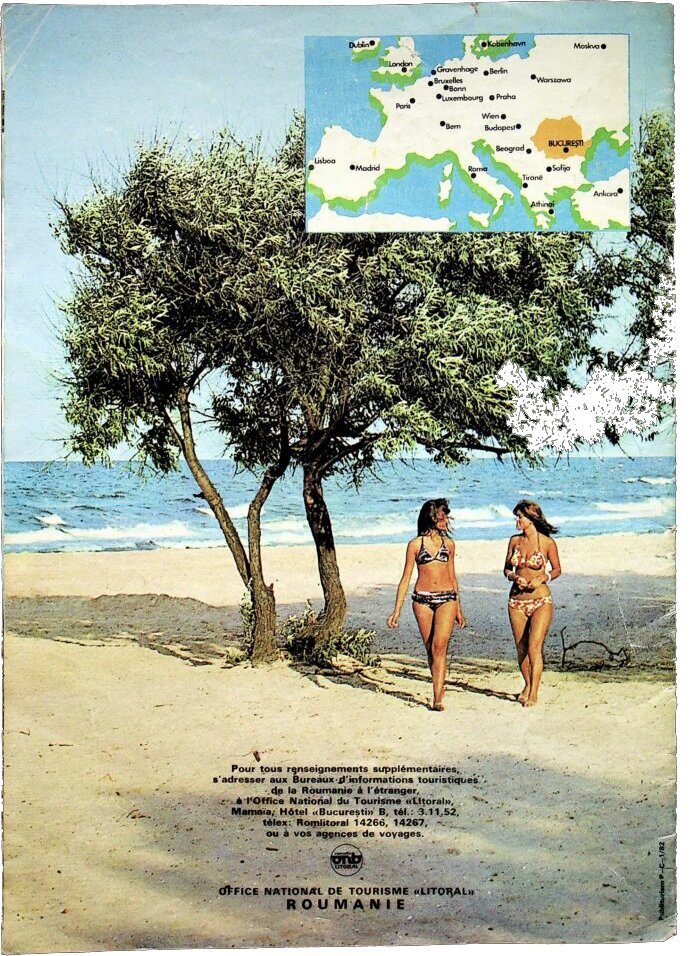
It is in this context that the urbanistic changes that took place in the south of Dobrogea, with particular reference to Mangalia and its surroundings, during this first phase of reconstruction, should also be seen. The harnessing of the exceptional natural resources of the seaside led to the macro-systematization of the coast, a key moment in the history of Romanian architecture. A unique, unitary, continuous creation, a new language that included nature in its composition, the introduction of daring technologies, adapted to the local industry, so weak after a devastating war.
Prof. univ. dr. arh. Grigore Ionescu, author of a massive history of Romanian architecture, had a different interpretation: "In Mangalia, the almost total reconstruction, sometimes not without brutality, of an ancient settlement, rich in archaeological vestiges and picturesque corners, has given us a new town, largely for permanent habitation, whose buildings - hotels, restaurants, clubs, villas, houses and sanatoriums - reveal a variety of plastic combinations, unfortunately not entirely original and harmonized. The expressive and comfortable hotels, slightly different in appearance from those of Eforie Nord, and the seasonal facilities are arranged in a line along the seafront (architects Cezar Lăzărescu, Dinu Gheorghiu Gheorghiu, C. Ionescu, N. Sulescu, M. Mateescu and E. Wiener). Behind the line of hotels, the access street to the town has been furnished with small blocks of permanent housing and a few administrative buildings (architects: I. Novițchi, A. Florea and V. Morariu). The major link with the access street to the town at the cliff is made through a wide square, open to the sea, which has as a background the opaque wall covered by a large mosaic of the house of culture (arch. Nicolae Vlădescu)"5.
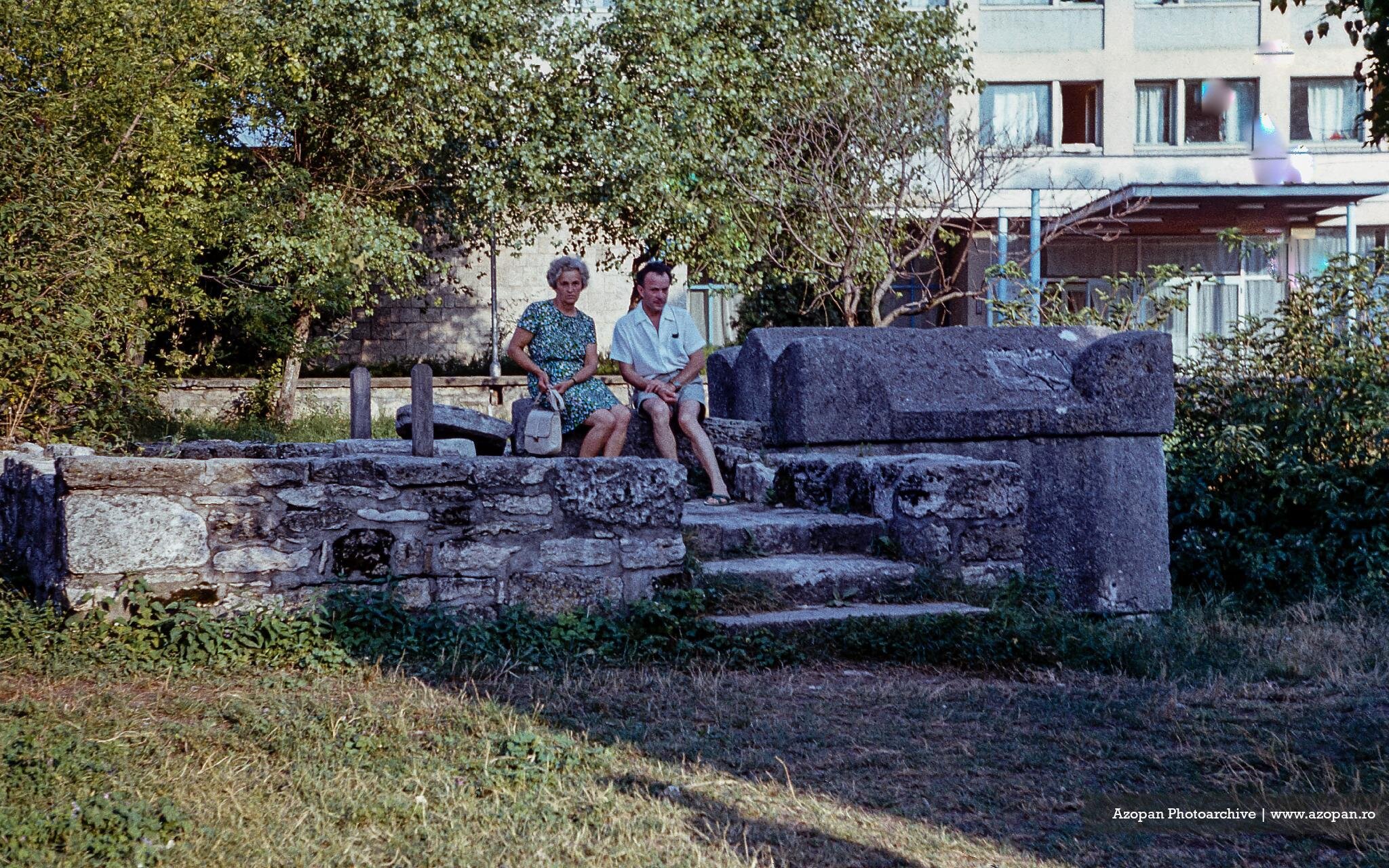
Another point of view belongs to the archaeologist Valeriu Georgescu, former director of the Callatis History Museum: "Unlike other ancient settlements superimposed by modern cities, Callatis is in a much better situation, the small-scale constructions erected during the Turkish and modern periods have not affected the layers of ancient culture. The only major disaster to the historical monuments of Callatis occurred between 1956-1960, with the construction of special villas and four hotels on the seafront in the middle of the Roman-Byzantine fortress. The entire urbanization plan of the city in the years that followed took into account the existence of these monuments placed under the protection of the law, and the entire city was declared an archaeological reserve. An eloquent fact is the design and construction of the M blocks in the perimeter of Stefan cel Mare, Ștefan cel Mare, Șoimului and Mircea cel Bătrân streets. Here, after the emergence of the sacred area (temple area) in the 1st century BC, the design of two blocks, M6 and M9, was modified, even though they were approved by presidential decree"6.
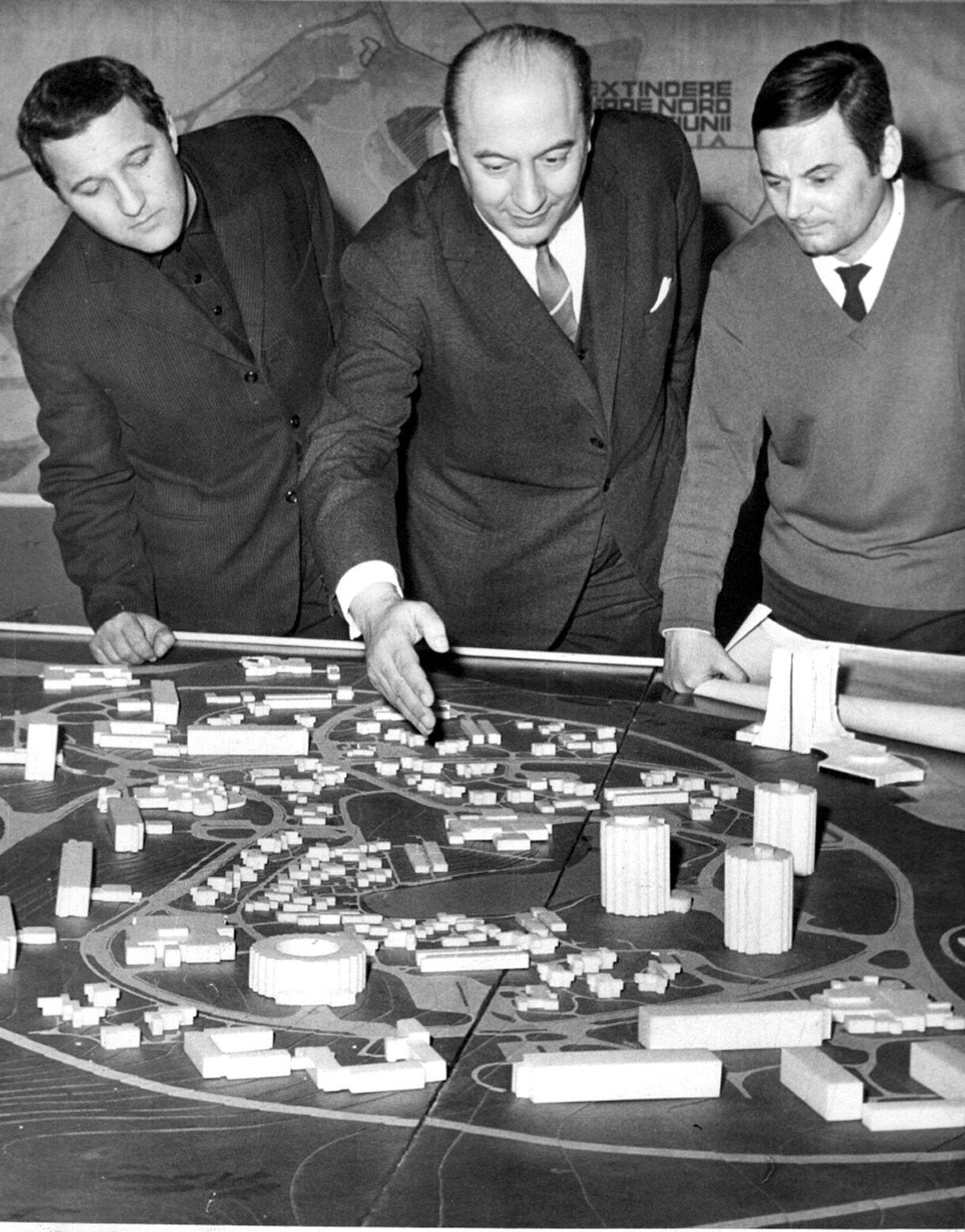
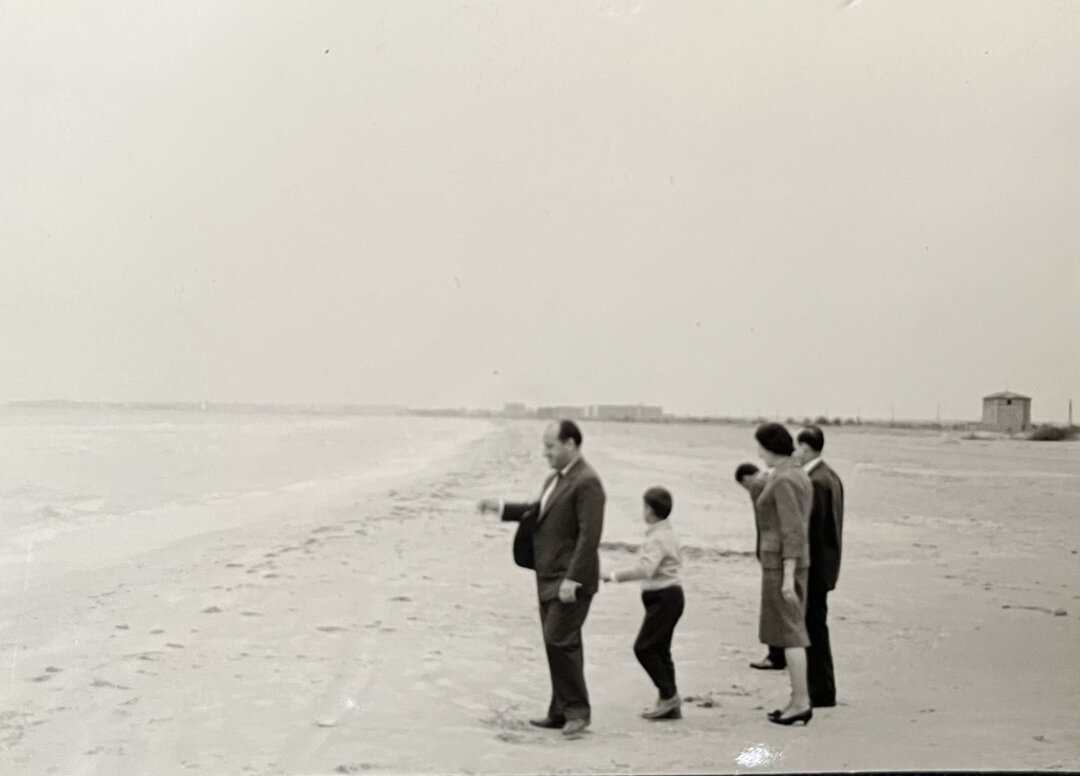
Architect Cezar Lăzărescu was appointed project manager for the reconstruction of Mangalia. He was only 32 years old and assumed a huge responsibility for the present and the future7. In fact, the entire systematization plan for the Black Sea coastline, from Năvodari to Mangalia, bears the signature of arch. Cezar Lăzărescu, arh. Gheorghe Dumitrașcu and arh. Ion Cojocaru.
"I had the honor," Cezar Lăzărescu confessed in an interview, "to take part in one of the great works realized in recent years, namely the development and construction of the rest houses on the Black Sea coast. This prestigious achievement was based on the General Project for the Systematization of the entire coastal area. The volume and scale of these works, the pace of execution and the quality of the works are quite unusual. The works that can give these resorts an international value have been ensured."8
Gheorghiu-Dej was in charge of the country. In Romanian architecture, the traces of aristocratic styles were brutally removed and socialist realism was imposed, with Soviet omnipotence dominating in architecture. But this ambitious young architect and his colleagues succeeded in translating the categorical instructions of the party leadership into the mold of professionalism, and in record time they created a lasting, large-scale work.
Chronological milestones
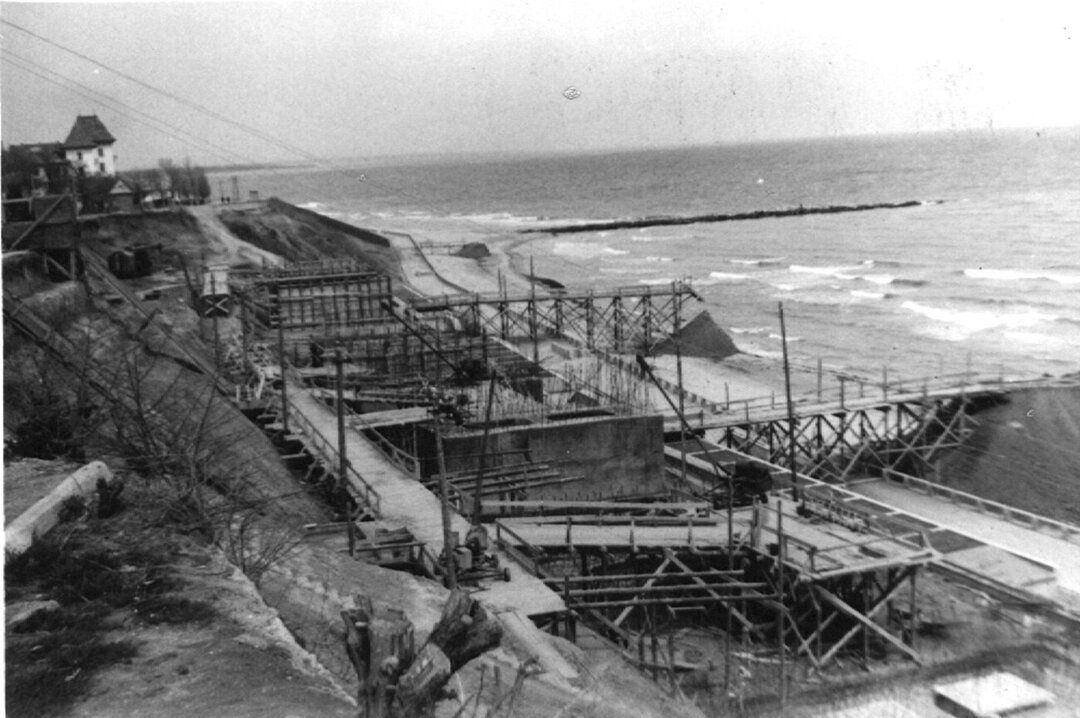
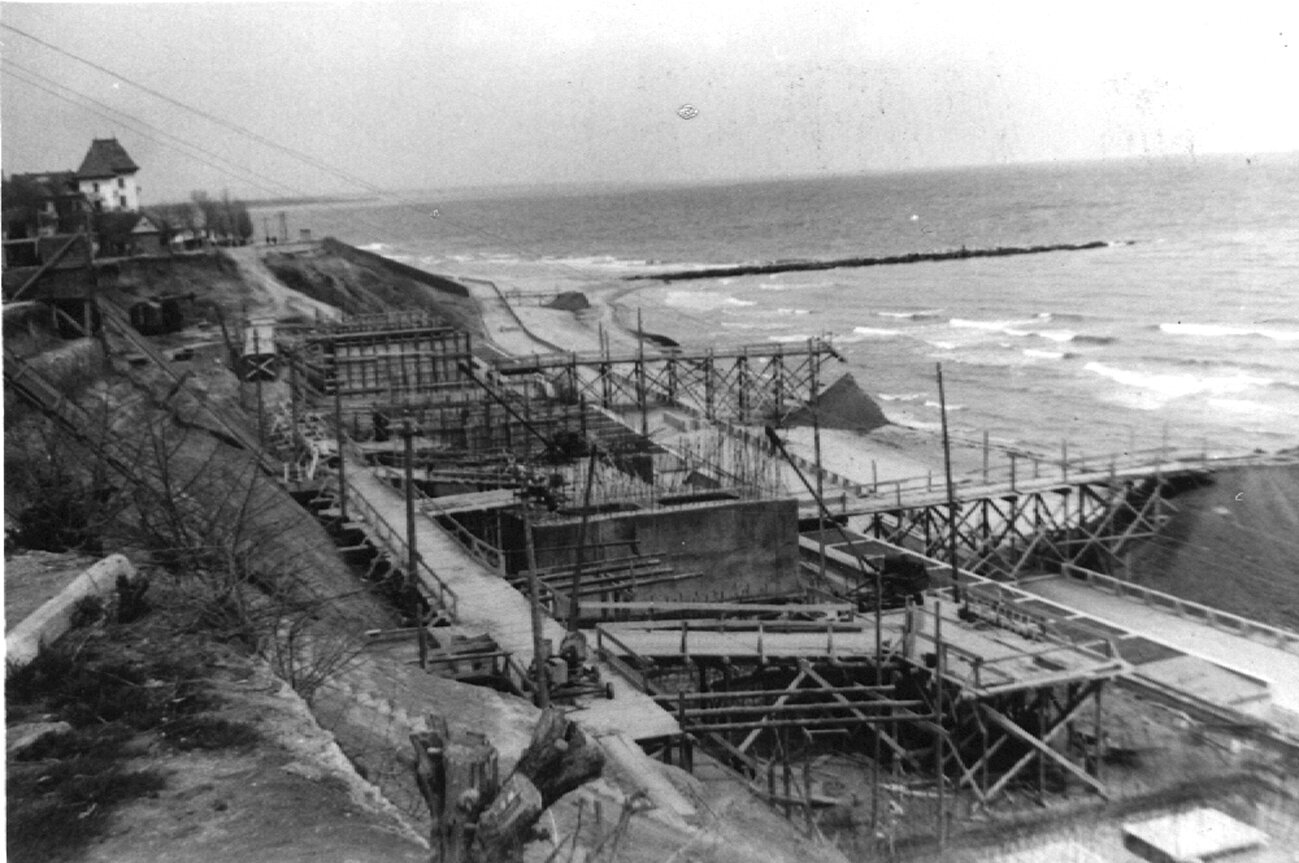
The first stage of the general systematization plan began in 1955 and covered the coastal stretch between Cape Midia and Tuzla. The second phase was marked by the reconstruction of Mangalia in 1958.
Significant tourist attractions that capitalized on the area's natural potential were springing up to convince skeptics of the virtues of the new social order, brought with great fanfare from Moscow.
Mangalia quickly became a single construction site. Under the bulldozers' noses, however, the remains of Callatis emerge from the earth. The dilemma remains a matter for specialists and locals. The decision of the party bodies was only one. Let future constructions show the grandeur of the new regime!
The architect foresees that the city's systematization plan will radically transform the central area, highlighting the natural beauties, but also traces of the ancient past. "The route of the walls of the old fortress demarcates the waterfront area, the area reserved for the development of the leisure center," the project manager clearly writes. Surrounded by greenery and flowers, these old walls and gates, once again in the sunlight, will tell the story of the old fortress to younger generations."9
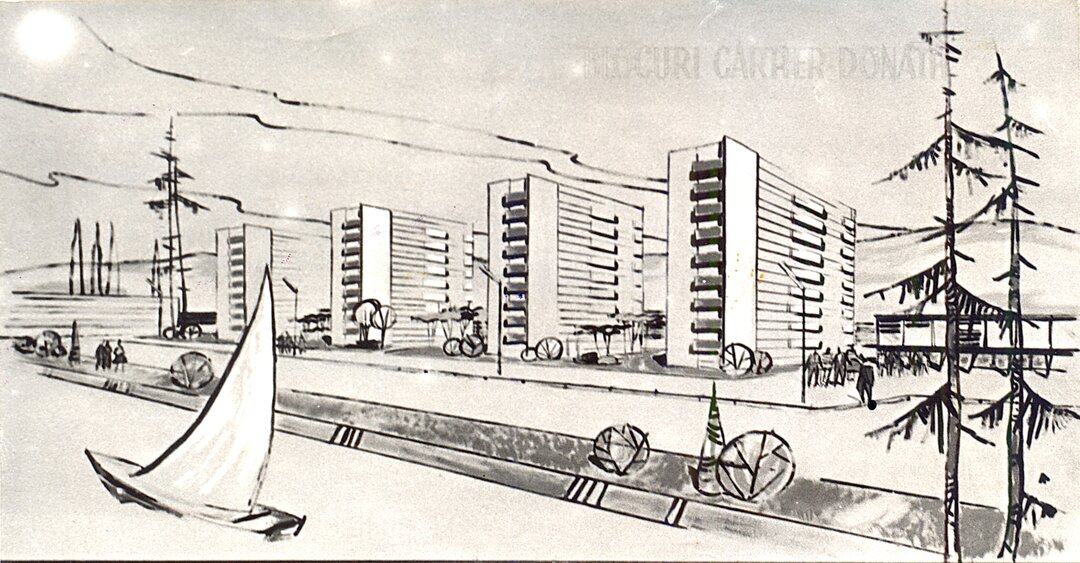
The first year of reconstruction saw the construction of the 1,000-bed recreation center, a first batch of 120 apartments and a sports park. In 1960-1961, a group of 248 apartments was built in Mangalia on Pushkin Street, the main access road from Constanta. Given the configuration of the land and the route of the old wall of Callatis fortress, the architects had to take into account the building regime limited to ground floor and two storeys, the enveloping of the Church of St. George in the front of the buildings, the inclusion of the meat factory in the neighborhood, in order to locate the People's Council building, which preceded the group of apartments. The indications, but also the restrictions led even the authors of the work, arh. Violeta Morariu, to give a critical note to her work. "To some of the negative examples of overall and detailed systematization existing here, we can add this one, by creating a central square - the city's square of honor - without any dominance, without proportions and without a guiding idea in the composition. Attempts to give the group of dwellings the appearance of urban planning concerns have been limited to simply treating the continuous building front of Pushkin Street by creating alcoves that break the monotony and fit into the scale of the locality. /..../ The technical and economic difficulties encountered by the designers had their mark on the plastic expression of this group of dwellings, which, being located on the main artery of the town and forming the framework of the People's Council Square, lacks the architectural expression required by their decisive position in the plastic of the town center, not being at the level reached by other coastal realizations."10
Later, the architect Stephan Eleutheriadis wrote from Brazil: "It is unbelievable how the communist regime arrogated to itself the right to plant hotels and buildings on the ruins of the Callatis fortress for tourist and utilitarian purposes in order to chase Western tourists' money. In the same way it is unbelievable that having so many documents and certainties about the existence of a Mediterranean civilization in the most evolved and prosperous part of all the Greek fortresses on the territory of today's Romania, the same communist regime ignored it, silenced the archaeologists and remained deaf to the appeals of the "Historical Monuments Commission" and dared to plant the tourist city with an expression foreign to its environment, climate and historical past, leaving to lie under these constructions the treasures of a civilization of 2.700 years"11.
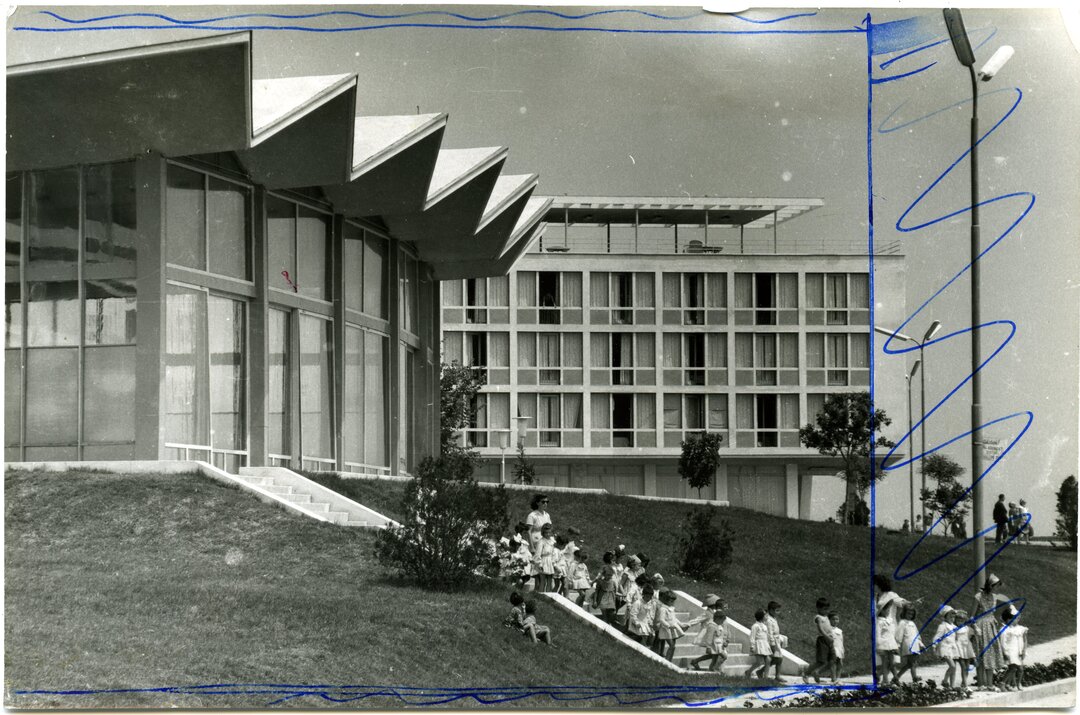
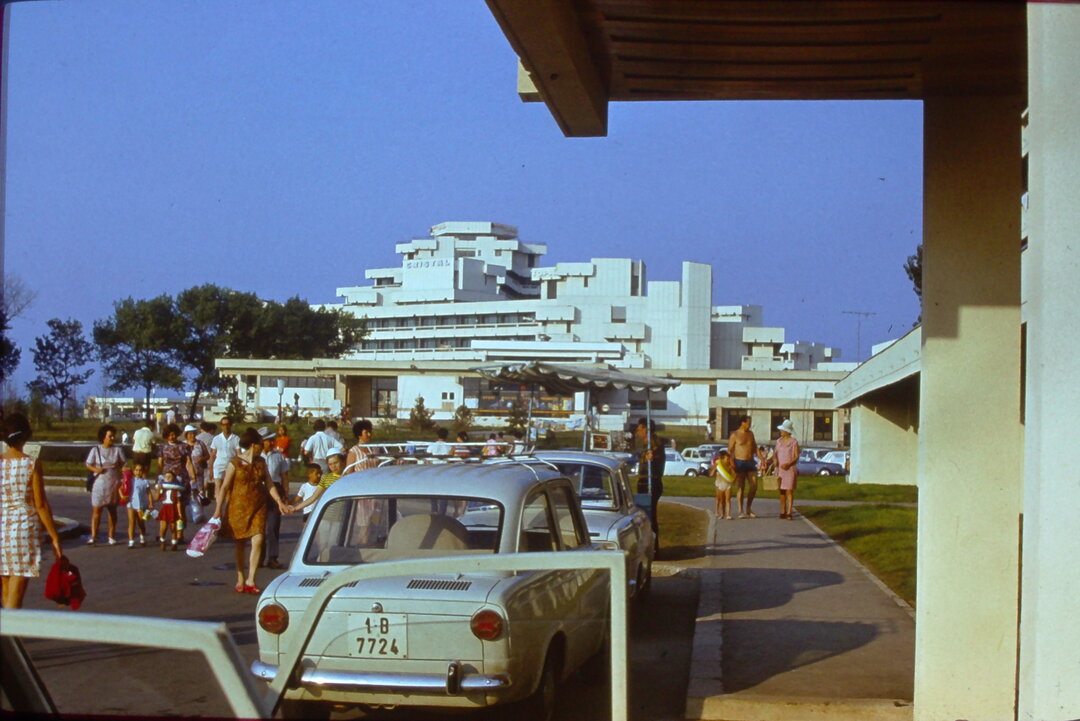
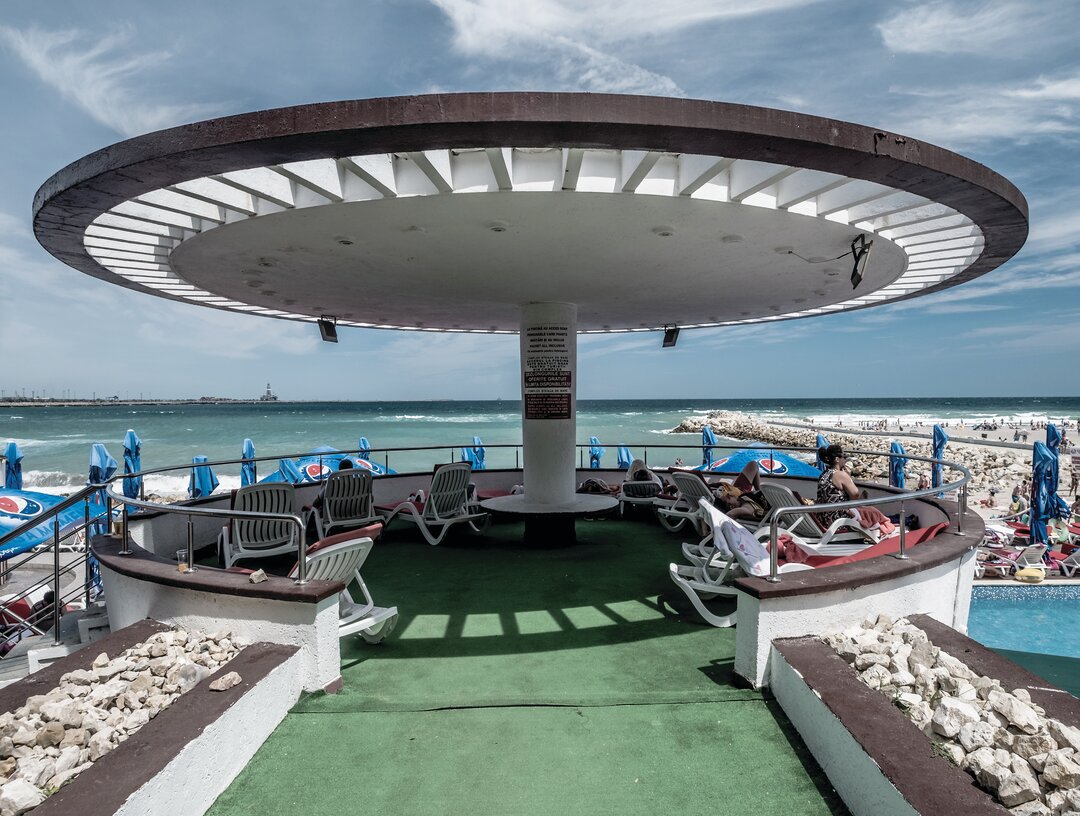
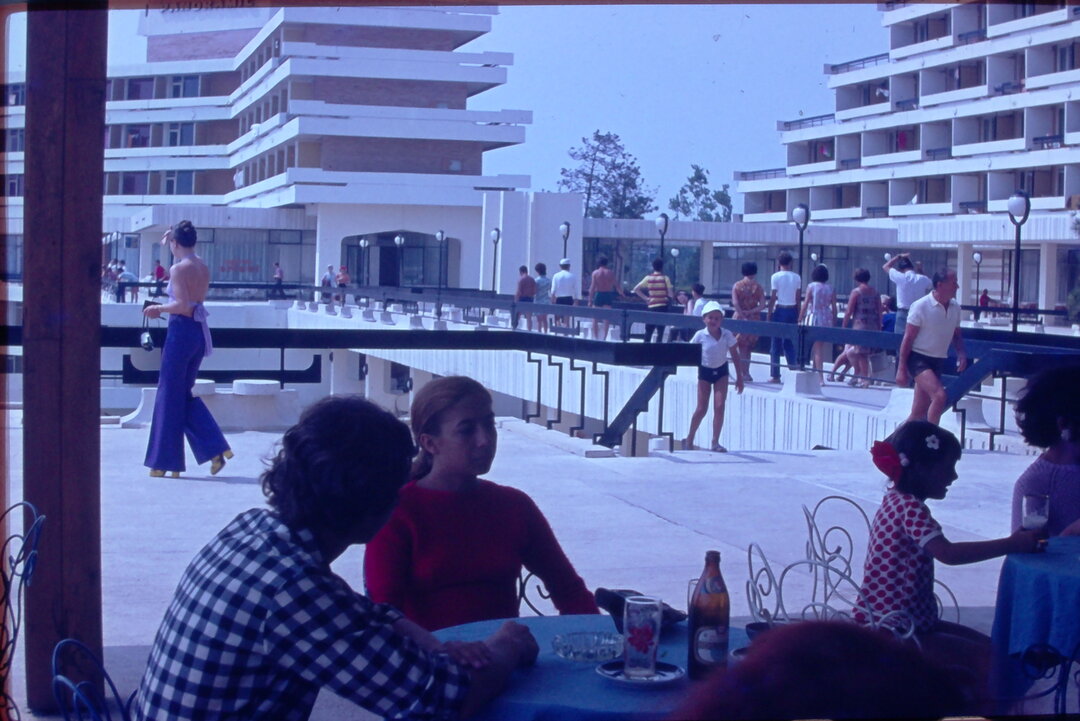
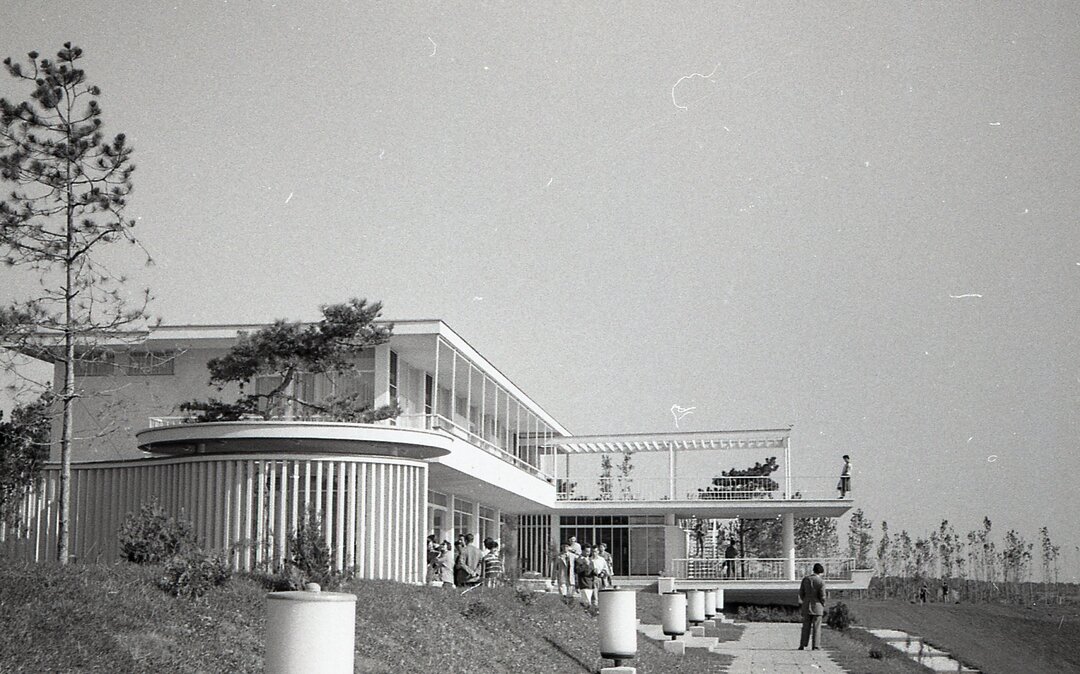
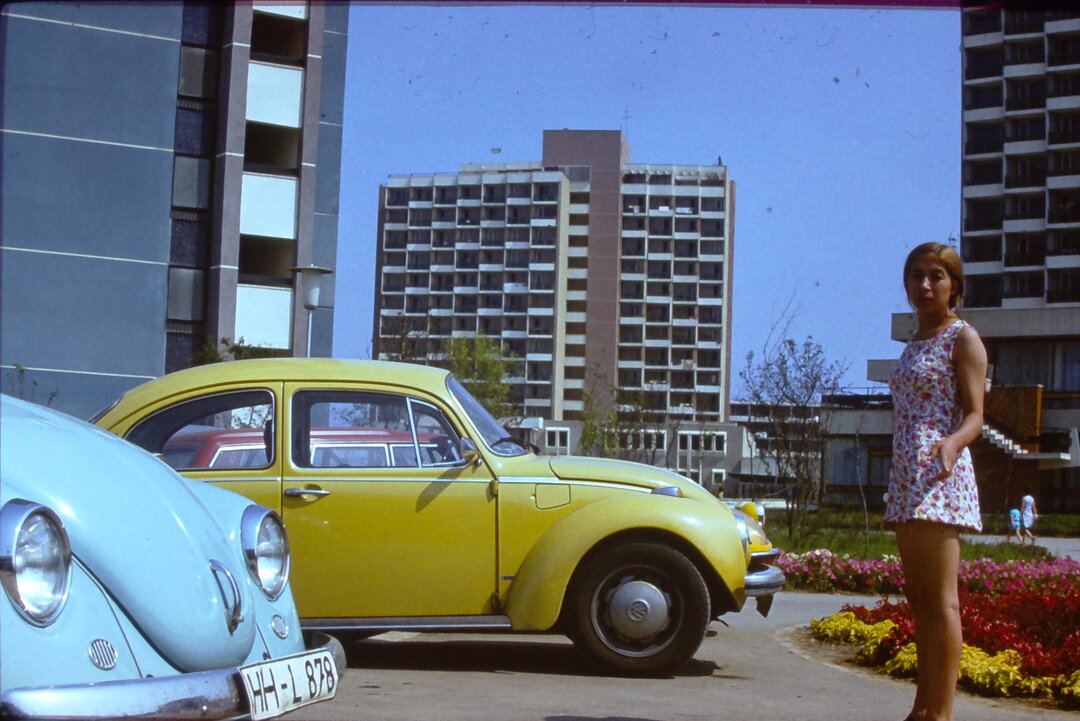
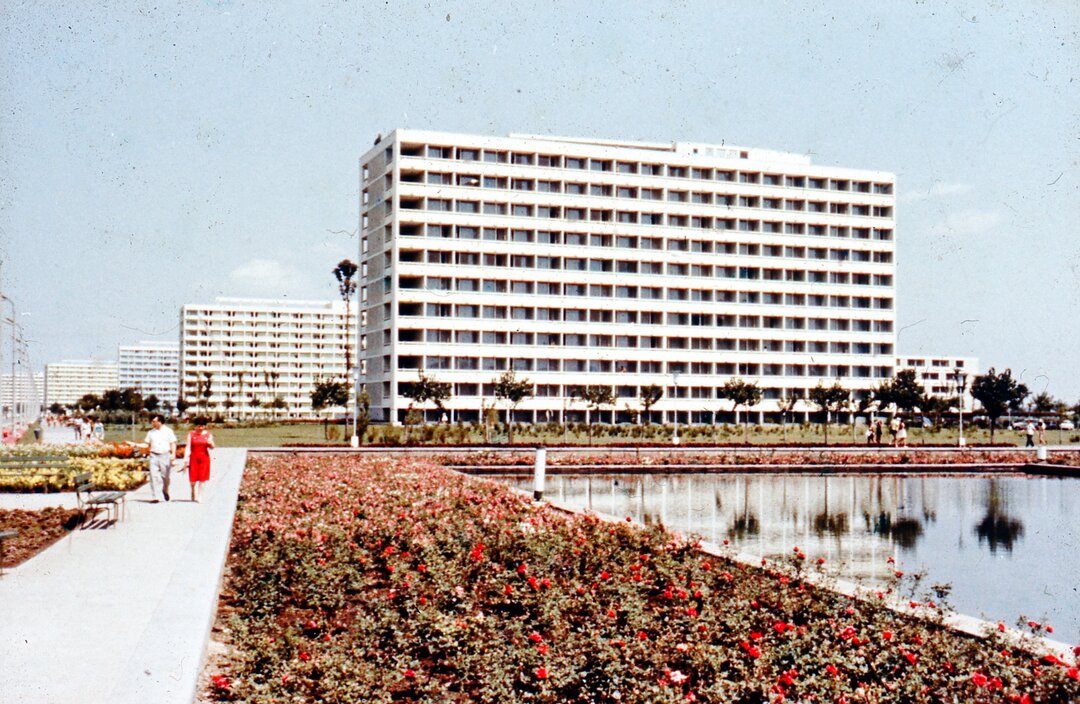
The recreation center, which runs along the seafront, consists of several different pavilions. The whole complex is complemented by green, flowerbed lawns that continue along the fully landscaped promenade. The first and the last have l category rooms and 2-room apartments. On the ground floor of the blocks there is a lobby, a club, a dining room. In relation to the central square was located the restaurant.
The construction systems and materials used were the same as in Eforie Nord. The treatment of the facades, however, took a different approach to the other resorts. The way in which the new town square was laid out, complete with the building of the House of Culture and the pieces of ancient architecture excavated from the excavations, as the author of the project wrote in a memo written in those years12, gave a personal touch to the town.
The dwellings were placed along the main street with staggered sections in order to resolve, in a spirit close to the local character, the unevenness of the terrain. Cezar Lăzărescu also designed the three special villas with a swimming pool on the waterfront, one of which was intended for Gheorghe Gheorghiu-Dej's seaside vacations.
The Council of Ministers decided on a program of special measures for the rest and health strengthening of the working people, based on the conditions created especially on the Black Sea coast, and the Central Council of Trade Unions was responsible for ensuring the maintenance and better exploitation of the existing fund of rest houses and spa treatment units, as well as for a better social-cultural service of the working people sent for rest and medical treatment. In parallel with this social measure, there was another, with much more political connotations: the abolition of the humiliating cards for bread, clothing and fuel. Although people's lives will continue to be rationalized!
In October 1958, the Council of Ministers of the Romanian People's Republic decided on the form of the administration of certain properties on the Black Sea coast. "In order to ensure the best possible conditions of rest and medical treatment for working people and, in the first place, for workers in the basic industries, leaders in production, innovators and rationalizers, as well as technicians, engineers and civil servants with outstanding merits in the work of building socialism, the Central Council of Trade Unions organizes and directs all the activity of sending people to rest and treatment in the resorts of Mamaia, Eforie, Vasile Roaită and Techirghiol. It will be the sole beneficiary of all the existing rest and treatment places in the resorts mentioned. The contracted places will be distributed by the same body among enterprises, institutions, economic and public organizations, their beneficiaries to be determined by the respective trade union bodies.
The year 1958 brings to Mangalia the project of the first complex of rest houses for the Ministry of Internal Affairs and the Ministry of the Armed Forces, with a capacity of about 1,000 accommodation places. The commissioning date - June 15, 1959. The labor force was drawn from various local enterprises and prison inmates. At the same time, approval was given for the construction of 80 flats for the staff of the Ministry of the Armed Forces, through its own construction organizations, blocks with shops on the ground floor.
The list of properties swallowed up in the systematization maelstrom is longer. It was still the period when the entrance to the area was only possible with a special authorization issued by the Executive Committee of the People's Council. The border town, where military units were merged, bore the stamp of a closed settlement13.
In Mangalia, the Climatic Spa Resort Enterprise (ISBC) was set up, subordinated to the People's Council of Constanta, to manage all the rest houses in order to accommodate the working people who came to rest and treatment. The new enterprise was taking over the new residential blocks and shops - including electrical, plumbing and central heating installations - from the builder, UM 02647 Mangalia. These were the first 11 two-storey blocks of flats with eight apartments and shops on the ground floor.
But it also took in the nationalized buildings, 77 in all, which were handed over to the ISBC and refurbished for tourism14.
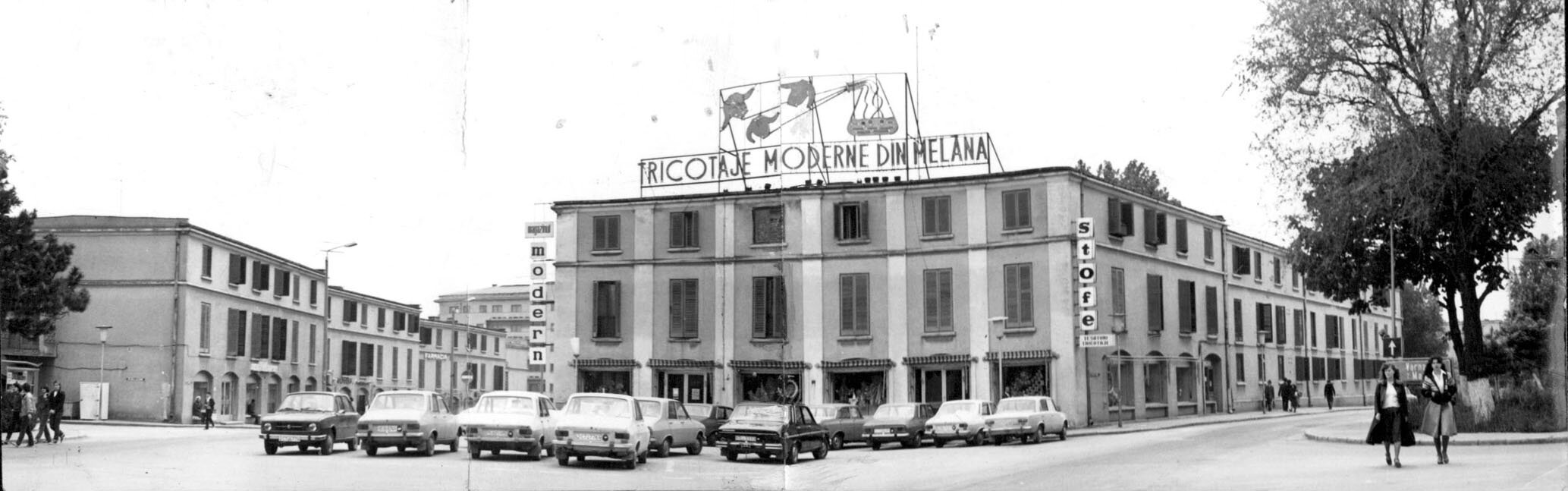
Dumitru Dragu, retired in 2006, one of the city's sons, tells the story: "Mangalia had only one main street in the center, which we used to like to walk down. It's still the same now: small, narrow, but it passes in front of the town hall. There used to be a movie theater and several pubs in the area. Where today's roundabout in the center of the city used to operate a pub called "Class Struggle", another one nearby was called "Ciocârlia", a hruba that was demolished in the '59-'60s. On today's President's site was the old lighthouse, later moved to the pier. And in the place of the spa sanatorium was a movie theater, to the right of the buoy, Delureanu had the restaurant "Black Sea". On the seafront was the army movie theater. Admission - 25 bani. At the other one, located on the site of today's House of Culture, nicknamed "the old one", the entrance fee was double. The director of the cinema was nea Stoica, a very inventive man. Mangalia de Nord used to be a residential neighborhood of villas belonging to owners from Bucharest, Cluj, Ploiești, etc. Then the war destroyed part of it, the Soviets and the army occupied what was left. Over time, military blocks were built.
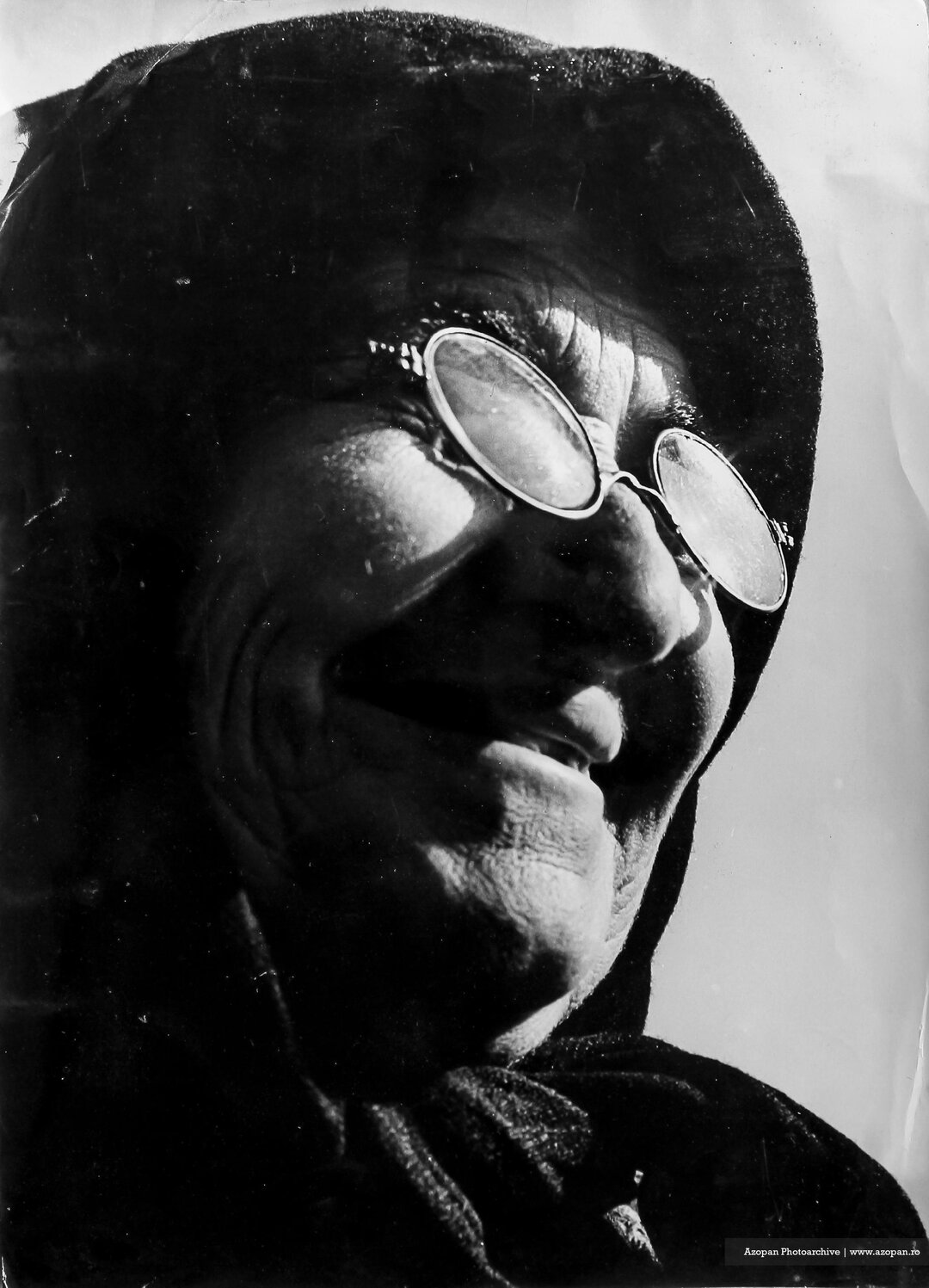
Art critic Florica Cruceru remembered the city of her childhood: "Mangalia was a very picturesque and very chaotic town. Life was very cheap and it was quite comfortable, people's houses were very well cared for, they were sparkling clean. Towards the Marina was the slum of the Tartars and Turks, extremely picturesque. They wore shawls, they had small houses with clay roofs on which a little weed grew. They were all very hospitable, there were vendors selling bragga, baclavale, sugiuc, there were cafes where artists spent hours in a row, some drawing, others composing, telling stories. Everything was gathered together, the main street had alleys leading to the sea. The painters discovered Balcicul later, in the 1920s, and its miracle didn't last long, because in the 1940s the Bulgarians took it from us. In 1900, Petrașcu was painting in Mangalia. Perhaps there was something else: they could go to the large beach from Delureanu downwards, where there were lots of people, but there was also the alternative of going to the outskirts of the town, where there was the ravine and the sea and the beach where you could also go nudism. Everything was peaceful and cheap. Gala Galaction tells such a beautiful story about the city life! Mangalia was smaller than Balcicul, more clustered, it had a special picturesque. There was an architect called Solange, who became president of the World Union of Architects, she came to the Mediterranean Club where Konga played. Mangalia was the place of writers, poets, painters. Monica Lovinescu grew up in Mangalia. We did theater with Vitanidis. I think that among the painters of the inter-war period with the most paintings of Mangalia are Tonitza, Șirato, Dimitrescu and Țuculescu, Petrașcu. Extraordinarily much they painted there"15.
In the memoirs of those who knew old Mangalia, nostalgia for their own memories of adolescence dominates, after a time that could not be reversed.
The pace of construction was fast. Work was done to tight deadlines, with labor brought in from all over, including prisons. Archaeological discoveries prevented the pace from keeping up. The party bodies decided that the RSR Academy should provide a delegate who "during the excavation works would give the necessary guidance for the removal of any archaeological objects found during the works, without delaying the construction works"16.
Thus historians of great authority arrived in Mangalia. In 1959 the present museum was founded, with Vasile Canarache as director. The collections were made up of exhibits from the old museum and archaeological discoveries made during the building sites for the new blocks.
In June 1960, the Department of Architecture and Systematization received the approval to execute the works for the protection of the ancient monuments of Mangalia and the first to start was the construction of the mausoleum. Next comes the drilling of the land for the design of the House of Culture and the geotechnical study. The project of the building for the House of Culture was drawn up by ISCAS and on a built area of 740 square meters the construction of a building composed of basement and first floor starts. At the same time, the same designer was carrying out works for the headquarters of the People's Council and the headquarters of the mass organization, a ground floor + 2 on 540 sq.m. of built area. Author: arh. Nicolae Vlădescu.
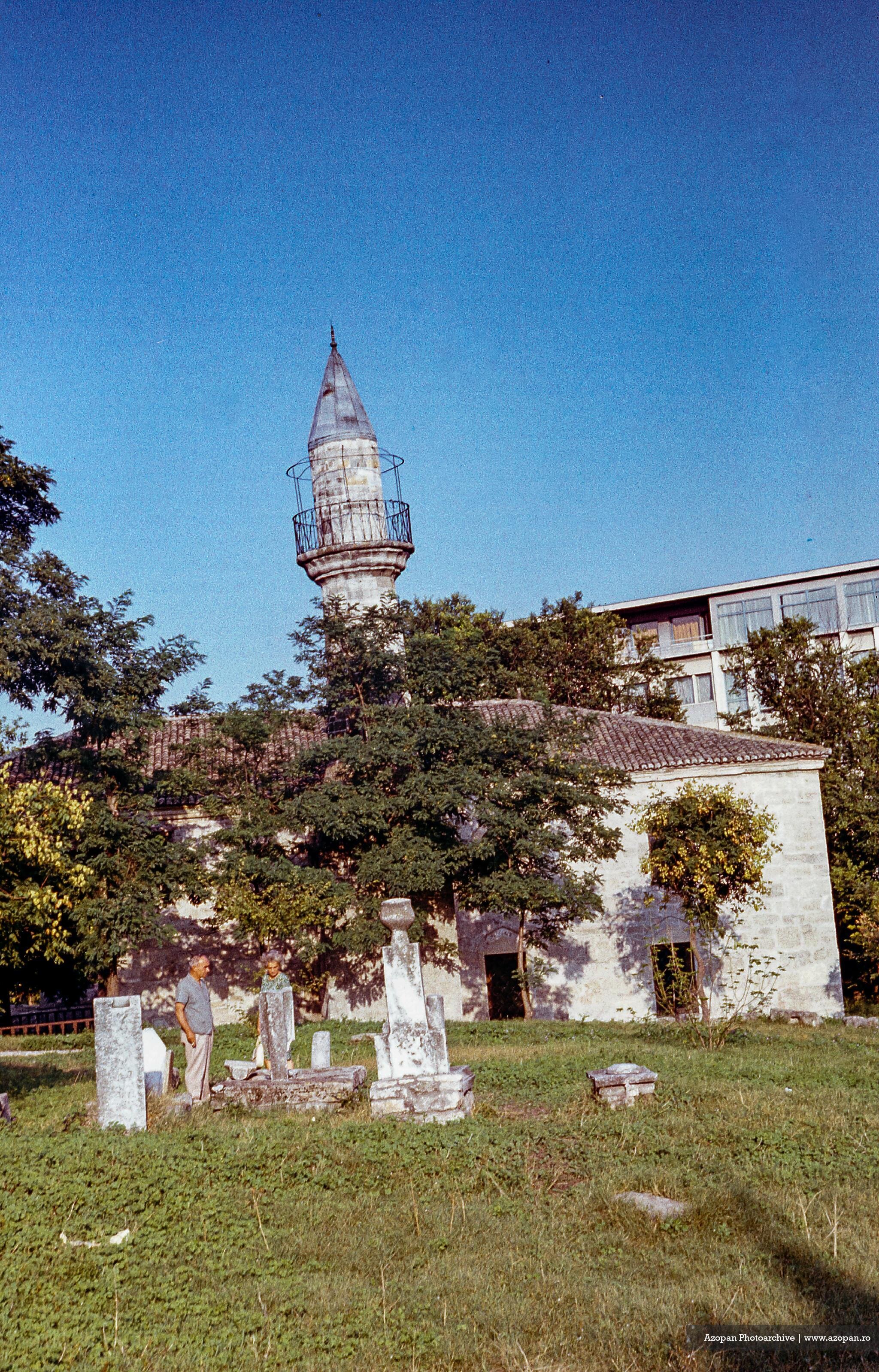
In 1994, Prof. Răzvan Teodorescu recalled: "I was exactly 20 years old when I met a Mangalia in ruins, where no outsiders came, as a permit was required. Around the mosque were machine-gun nests because prisoners were working. I met a few extraordinary people in this place, all of them out of investigations like me - out of prison, like others. Teodor Sauciuc Săveanu had atoned hard for the fact that he had once been a student at the University of Chernivtsi. This old man was walking around and he was measuring with me, the young man who was helping him to check some research he had done in the '20s. He was a site engineer - also an ex-convict - who forced me, severely, between 9 and 11, to sit on the beach because I was weak and had to train. I have many memories of that time. A Mangalia that no longer exists today. The important thing is that, in these 35 years, something has nevertheless happened - more or less clandestinely - many good things have been done. It would be good to remember all those who have done these things. Here is a former mayor of Mangalia, a former sailor, totally illiterate, but full of the will to do something. There were also some cultural mentors full of pride that they had discovered something extraordinary. It's a spirit of the place that really disturbed me"17.
HCM no. 1261 of 28 August 1959 established the further construction in Mangalia of social and cultural housing and landscaping: the building of the People's Council and the headquarters of the mass organizations of this city; the building of the House of Culture; the block of flats on Pushkin Street (section 12) with 12 apartments; block 2 of flats with 40 apartments, the completion of the public park, the necessary building works in the areas of the above-mentioned constructions; the extension of the children's sanatorium for osteo-articular TB. The State Committee for Construction, Architecture and Systematization was responsible for the design of the House of Culture, the other objectives as well as the detailed systematization of the area of the extension of the new buildings18.
The Council of Ministers' decision no. 444 of April 16, 1960 again nominated the construction works in Mangalia. They appeared as a pressing necessity. It was about the building of the People's Council and the headquarters of the mass organizations of Mangalia, the building of the House of Culture, other building works related to Mangalia in the area of the sanatorium, the improvement of the facades of the IGAF block, housing blocks with 250 apartments for the staff of the Ministry of the Armed Forces, building works needed in the rest of Mangalia.
The construction of the new Administrative Palace - as it appears in the official addresses signed by the President of the Executive Committee - underwent some changes to the plan, imposed by the expropriation of the perimeter necessary for the construction. A new master plan was drawn up19.
The head of the project for the headquarters of the People's Council of Mangalia is arh. Cezar Lăzărescu, who "interpreted a representative political edifice in a contemporary architecture, in keeping with the general style of the seaside"20. He is joined by arh. Cristian Ionescu, who motivated the design theme and the proposed solution as follows: "Lacking a long perspective from the road, from Constanța, the building was set back from the street alignment in order to create a setback and at the same time a small square that enhances it. The aim was to create facades in harmony with the architecture of the leisure complex and the new dwellings built in the previous phase"21.
In July 1958, the first requests concerning the House of Culture were made to the Sovrom-Construcția Design Institute in Bucharest, in accordance with HCM 17, which required the construction of premises for public utility by self-taxation. It was then proposed to design a cultural dormitory with a 400-500 sq.m. performance hall in the city center.
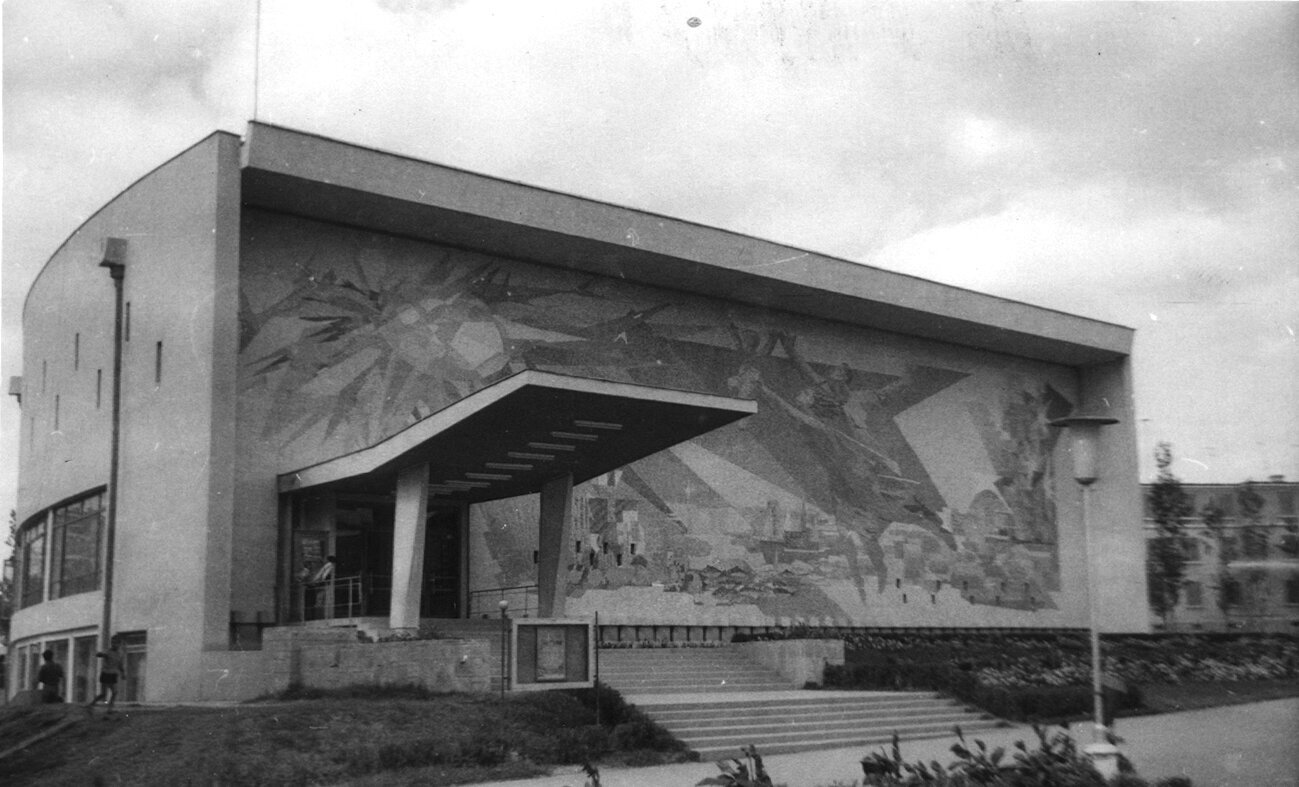
The finalized building is, however, a representative edifice for the reconstruction period all along the Romanian coast, its architect being Nicolae Vlădescu22. The building forms the background of the new square. A huge polychrome decorative panel of ceramic mosaics, called "Geneze", is a splendid plastic work by Jules Perahim and Mac Constantinescu, suggestively representing one of the walls of the main performance hall23.
The uninterrupted expanse of the exterior wall of the House of Culture in Mangalia was intended as a decorative tapestry, art critics reasoned. "The porcelain mosaic, realized by a collective led by the master Jules Perahim, responds brilliantly to the call for collaboration between mural decoration and architecture. This is all the more so because it is not only due to the contingencies of form, but to the need to express the same content of ideas, identified in the aspiration for beauty."24
The mosaic is composed of 3,150,000 ceramic pieces measuring 2X2 cm and represents, in an original vision, the primordial elements of life: water, earth, air and sun. The mosaic covers 300 square meters. Designed as a conference hall and movie theater, the building lacks booths, rehearsal rooms and workshops. The auditorium has 450 seats and has been equipped with state-of-the-art equipment and installations for lighting, ventilation, projection, etc. for the period. It was inaugurated on August 10, 1961.
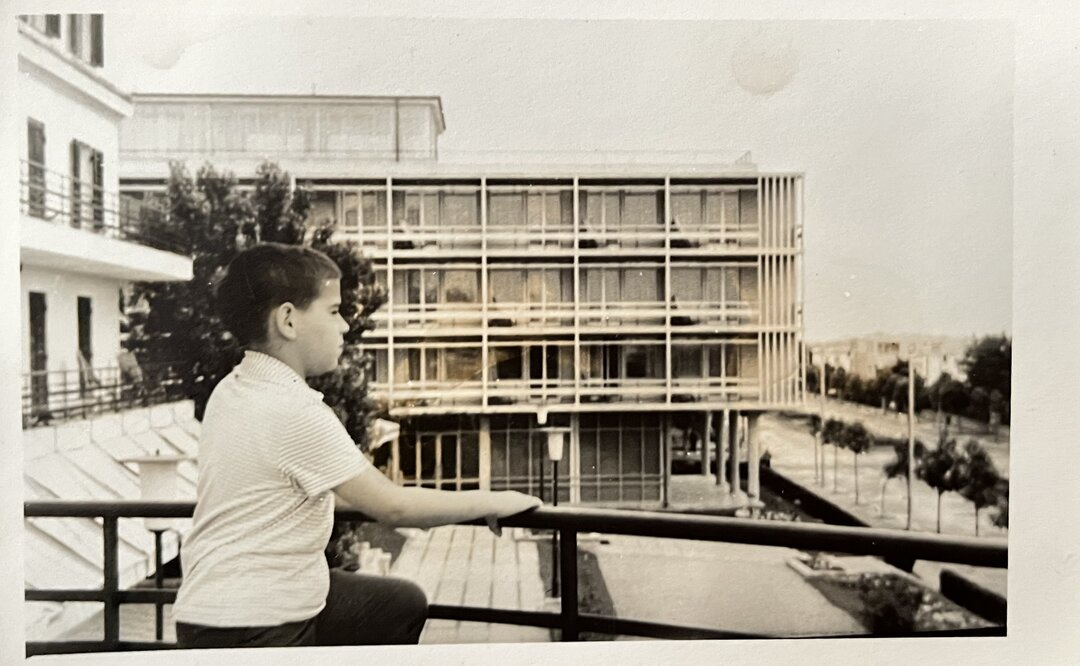
The spa sanatorium for adults was opened in 1960, with Cezar Lăzărescu and Dinu Gheorghiu as architects. Resulting from the need to increase the capacity of the existing sanatorium, the new construction was located on the land between the two sanatorium pavilions, on the southern waterfront of the city, facing south-east. The design had to ensure not only favorable conditions for treatment, but also high architectural and technological quality.
The building had a balneological and gynecological profile, a polyclinic for spa treatments, a club and a restaurant with its annexes, all in a conceptual solution adapted to the uneven terrain. The main author of this architectural creation argues his work: "The exterior plastic is vibrated, the vertical lamellar cadence together with the horizontal tab of the floors and parapets drawing a white texture, detached from the shadowy background of the loggias. The hydrotherapy pool, covered in a fan-shaped pattern of thin reinforced concrete curved sails, is entirely glazed, providing a pleasant continuity with the surrounding nature and seascape"25.
The plastic work "The sea and colored plasters" from the Club of the spa sanatorium had Olga Porumbaru and Ion Mitrici as authors.
The same Cezar Lăzărescu designed the first patisserie on the seafront, inaugurated two years later.
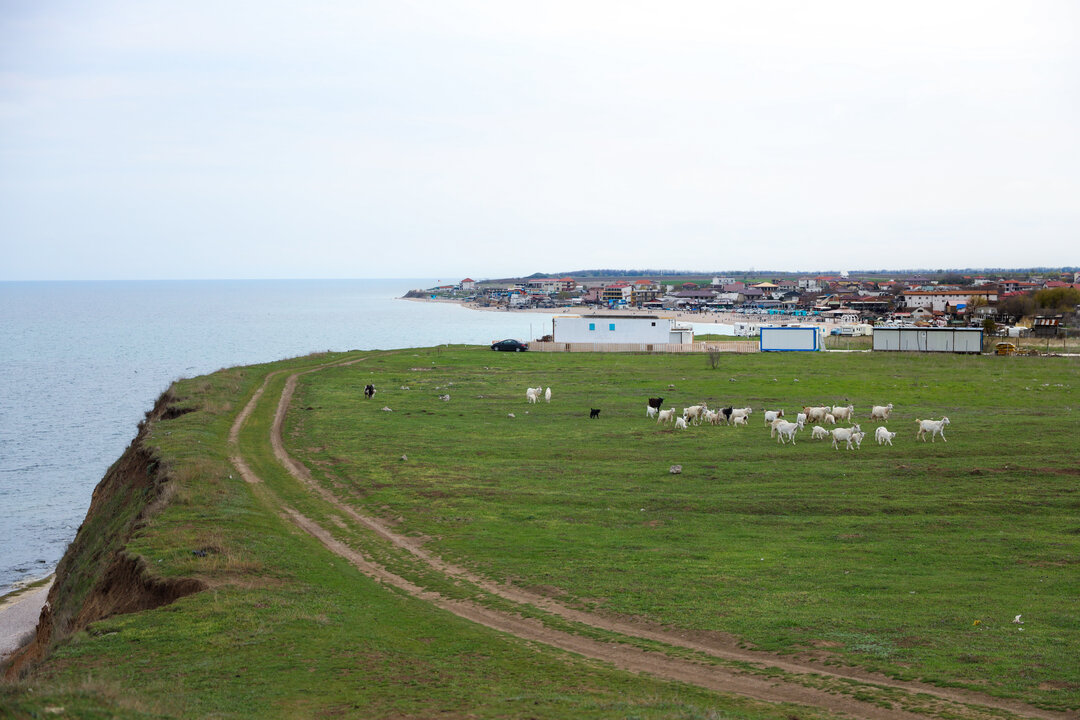
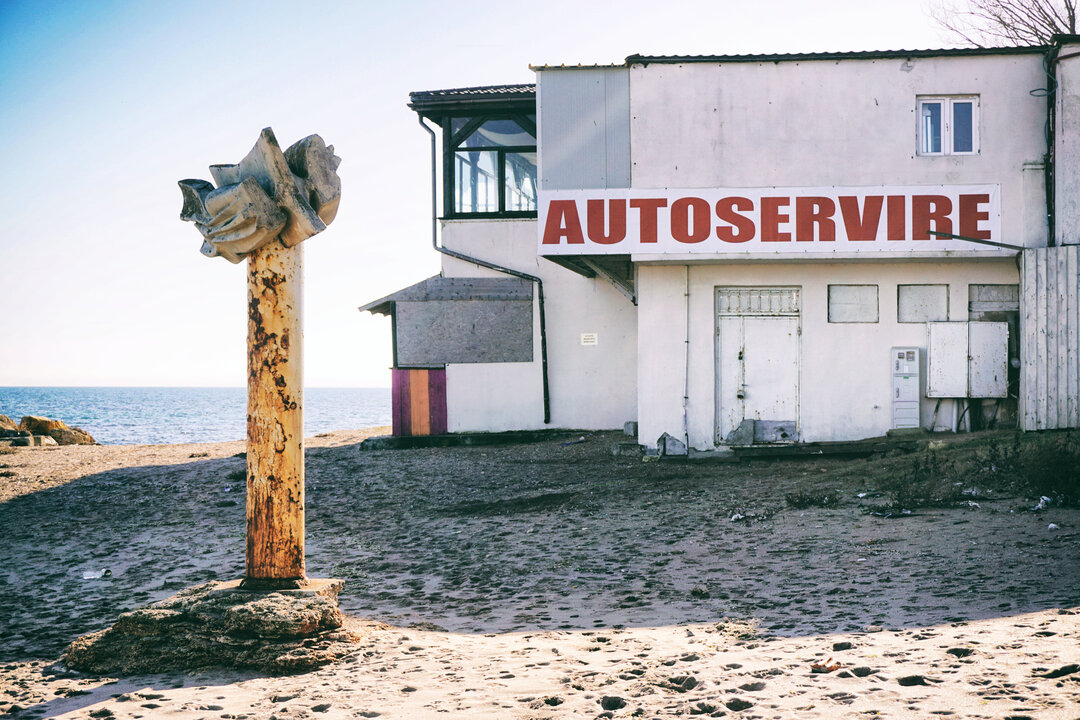
Today, Mangalia appears in a completely different dress. The new architects build mainly according to the wishes of their clients, at the town hall, authorizations are easily granted, the city's chief architect - who imposes uniform rules of alignment, volumetry, is not vested with the necessary authority to refuse. Today's hybrid city bears no resemblance either to that of the inter-war period or to the one on the plans of the Cezar Lăzărescu team of architects. Is it good? Is it bad?
1. Curinschi, Vorona, Gheorghe, The History of Architecture in Romania, Bucharest, Technical Publishing House 1981, p. 378
2. Almanah turistic, 1961, p. 59.
3. Eleutheriadis, Stephan, Mangalia in memoriam, Visual Elegies, Omonia Publishing House, Bucharest, 2011, p. XVll.
4. Curinschi, Vorona, Gheorghe, History of Architecture in Romania, Bucharest, Technical Publishing House 1981, p. 331.
5. Ionescu, Grigore, Arhitectura pe teritoriul României de-a lungul veacurilor, București, Editura Academiei RSR, 1981, p. 652.
6. Arhivele Primăriei Mangalia, file 24/1993, vol. ll, January 1993.
7. Țelea, Vasile, Arhitectura secolului 20, București, Editura Capitel, 2005, p. 301.
8. Lăzărescu, Ileana, Gabrea, Georgeta, Vise în piatră. In memoriam prof. dr. Cezar Lăzărescu, Editura Capitel, 2003, p. 31.
9. Curinschi, Vorona, Gheorghe, Istoria arhitecturii în România, Bucharest, Technical Publishing House, 1981, p. 375.
10. Morariu, Violeta, Ansamblu de locuințe la Mangalia, Arhitectura RPR, lX, nr. 4-5 (71-72), July-October 1961, p. 51.
11. Tomis, XXXll, no. 5 (322) May 1997, p. 13.
12. Arhivele Primăriei Mangalia, file 2/1958, miscellaneous, file 246.
13. Arhivele Primăriei Mangalia, file 2/1958, miscellaneous, file 51.
14. Arhivele Primăriei Mangalia, file 2/1958, miscellaneous, file 92.
15. Lăpușan, Aurelia, Lăpușan, Ștefan, Mangalia în paginile vremii, Editura Dobrogea, Constanța, 2007, p. 259.
16. Arhivele Mangalia, fond neprelucrat, dossier 13/1961, Decizii, p. 17.
17. Lăpușan, Aurelia, Lăpușan, Ștefan, Mangalia în paginile vremii, Editura Dobrogea, Constanța, 2007, p. 145.
18. Arhivele Mangalia, fond neprelucrat, dossier 1/1960,Decizii, p. 20.
19. Arhivele Mangalia, unprocessed, file 1/1960, Decizii, p. 167.
20. Lăzărescu, Cezar, Cristea Gabriel, Lăzărescu, Elena, Romanian Architecture in Images, Editura Meridiane, 1972, p. 131.
21. Ionescu, Cristian, "Sfatul popular Mangalia", Arhitectura RPR, lX, nr. 4-5 (71-72), July-October 1961, p. 64.
22. Vlădescu, Nicolaie, "Casa de cultură de la Mangalia", Arhitectura RPR, lX, nr. 4-5 (71-72), July-October 1961, p. 68.
23. Lăzărescu, Cezar, Cristea Gabriel, Lăzărescu, Elena, Romanian Architecture in Images, Editura Meridiane, 1972, p. 114.
24. Vanci, Marina, "Estetica litoralului", Contemporanul no. 28, July 12, 1963, p. 2.
25. Lăzărescu, Cezar, Cristea Gabriel, Lăzărescu, Elena, Romanian Architecture in Images, Editura Meridiane, 1972, p. 124.