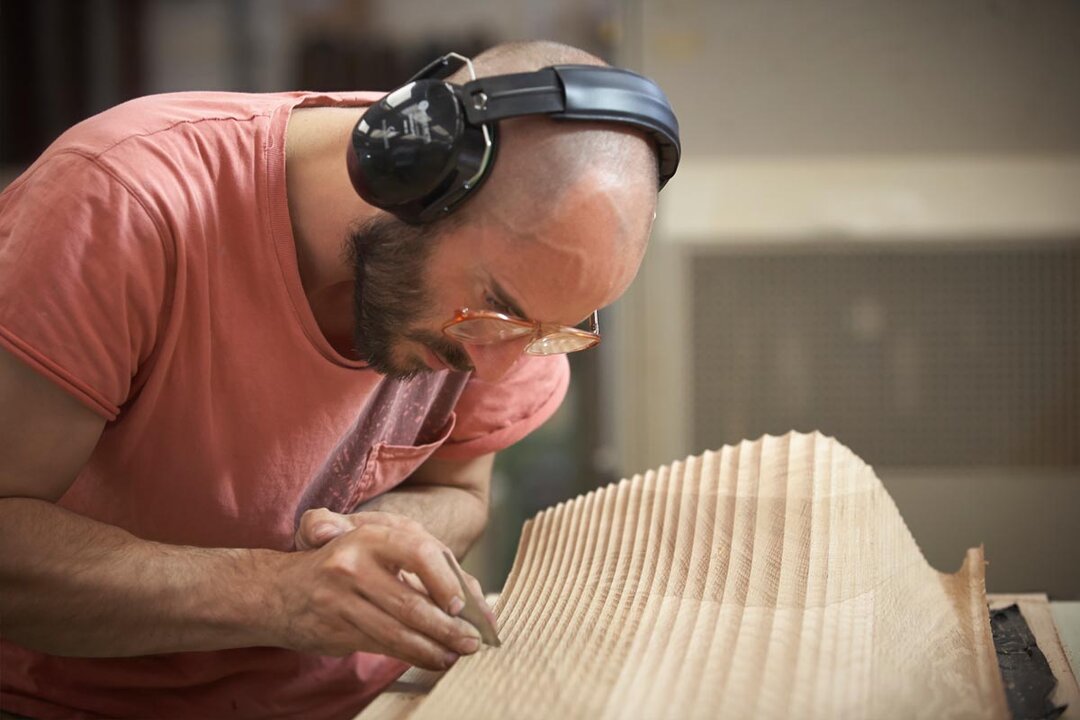
VES-EL - Design: Gareth Neal & Zaha Hadid

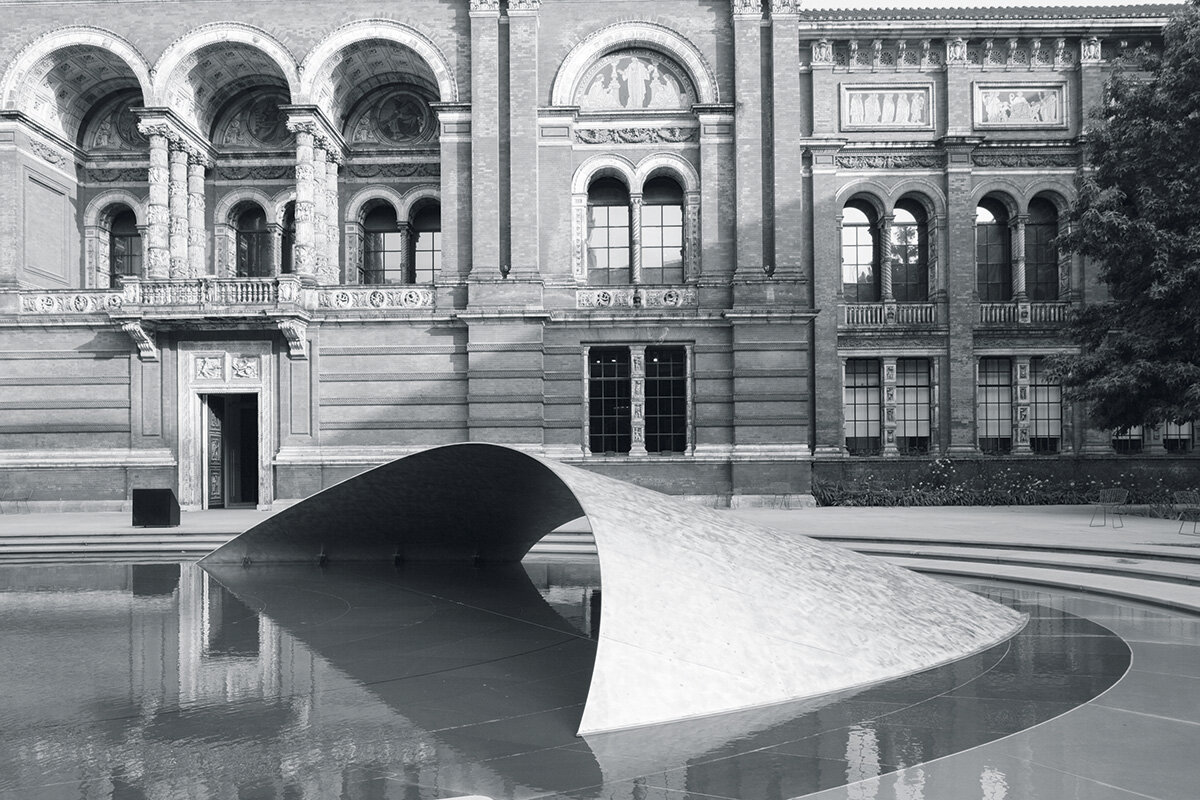
The Crest Installation was the first project in my professional career to be built. I graduated from the Faculty of Architecture at the Polytechnic University of Timișoara, and in January 2014 I started my internship at Zaha Hadid Architects.
Since I studied architecture with an emphasis on rationality and efficiency, I was exactly in the right place at Zaha Hadid Architects team to experiment new possibilities and building techniques. For the "Crest" installation, we set out to investigate shell structures, analyzing them from a structural, architectural perspective and to find the best resolution between them and the client's requirements.
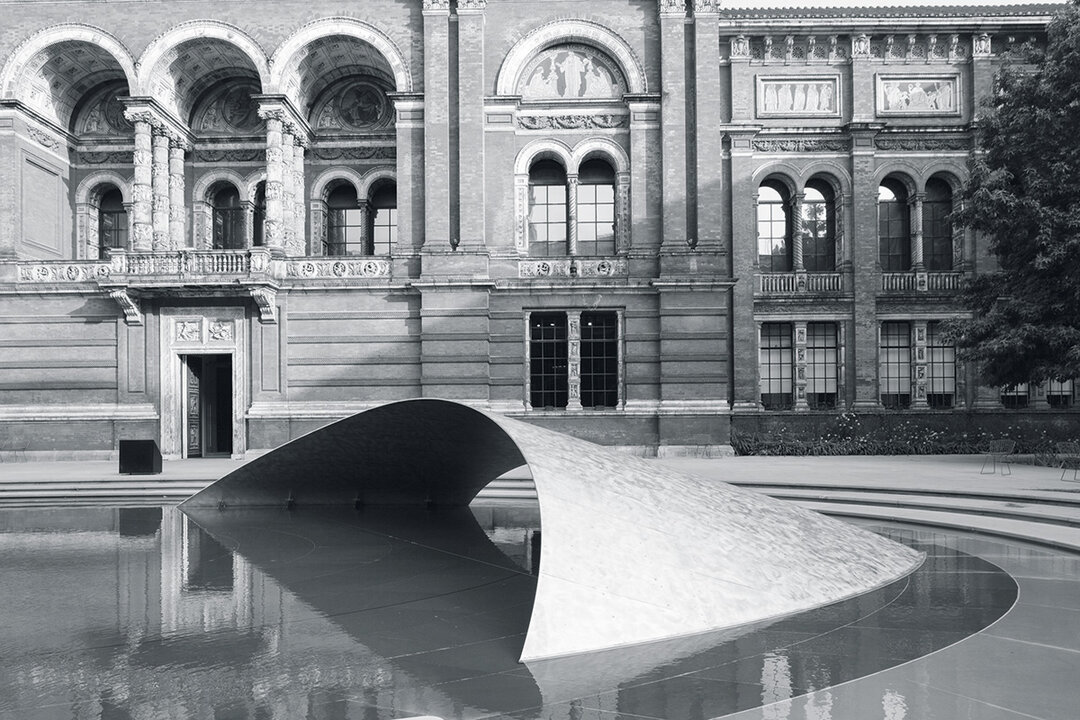
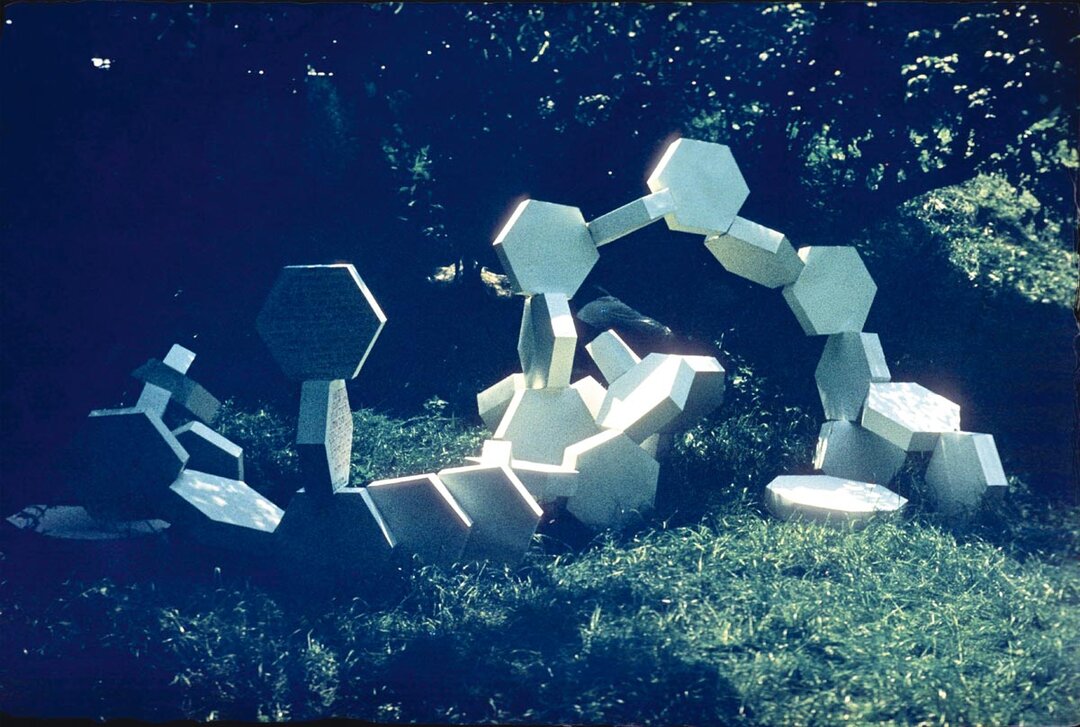
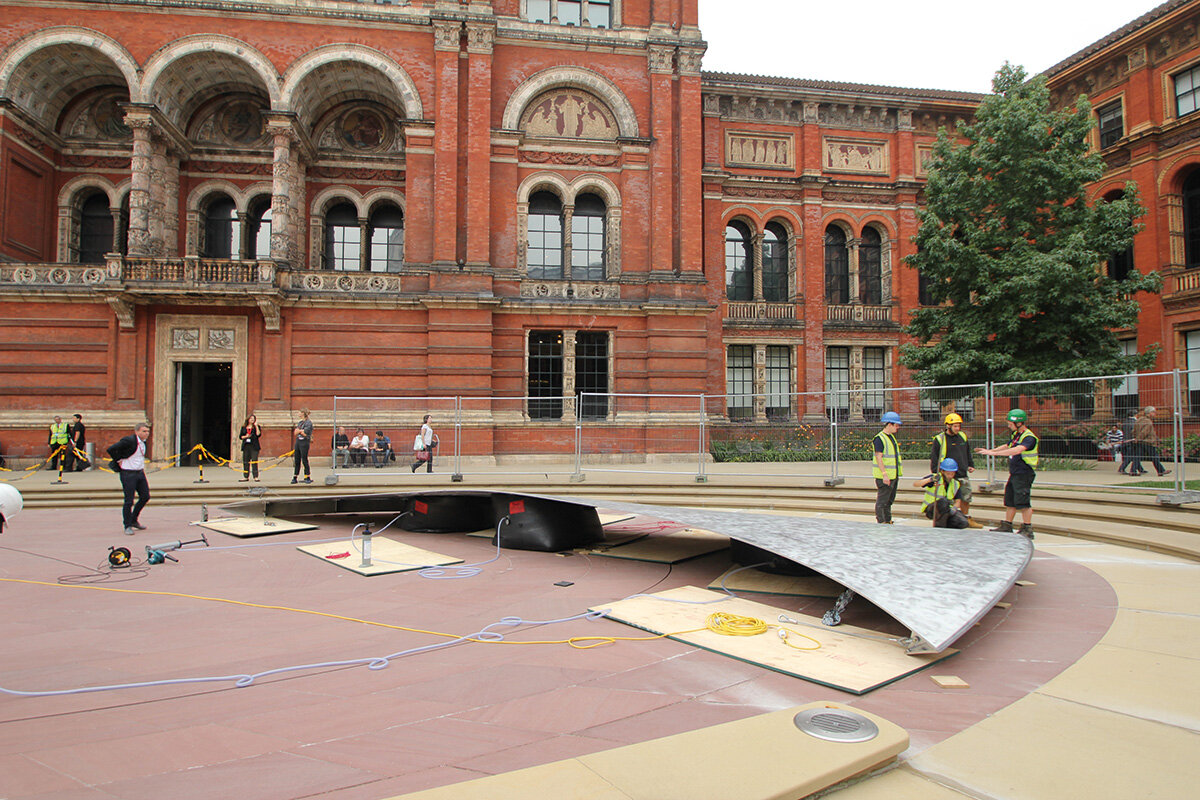
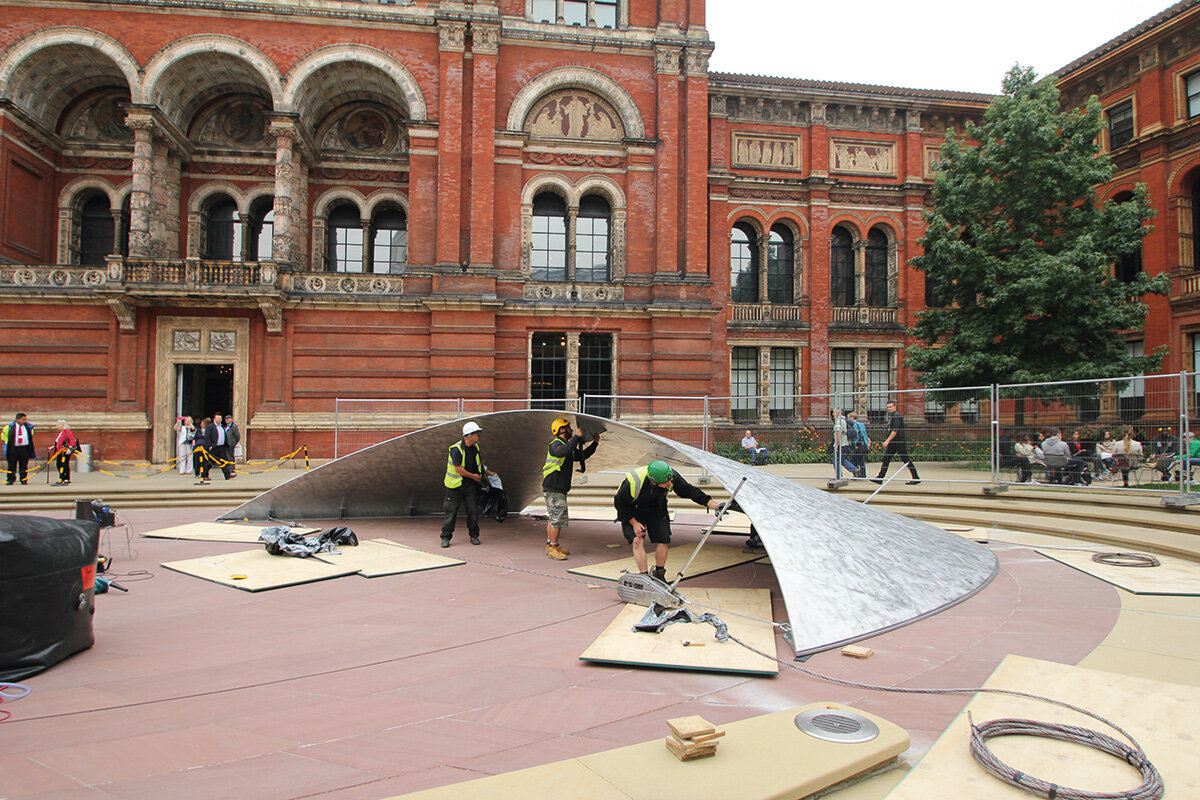
'Crest' is a demountable shell structure that was temporarily installed at the Victoria & Albert Museum for the London Design Festival. Making the installation demountable was a challenge, but also a requirement because the only way we could get it into the museum's courtyard was in pieces large enough to fit through the museum doors. This also meant that the pieces had to be transported by hand. Beyond the sculptural role, I treated the installation as an investigation into possible methods of building and assemblingshellstructures. We went beyond the way of working typically used in design and explored an integrated approach to design, where communication between partners was constantly and fluidly synthesized into the design. The use of digital tools, 3D modeling software and also custom scripts made it possible to introduce design changes quickly and accurately at all stages of the design, with parameters coming from structural and fabrication requirements.
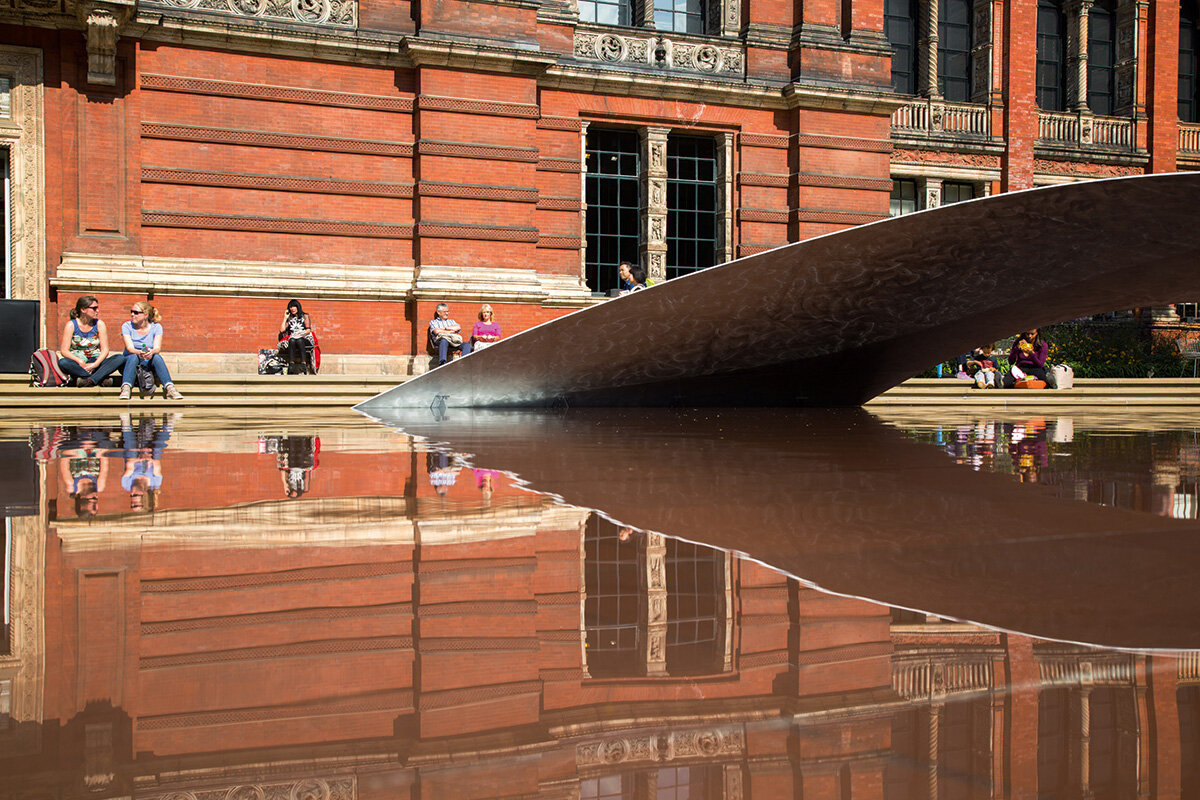
The geometry definition was an iterative process based on a cycle of analysis, testing and refinement. In order to define the design process for the plant, a first series of studies was carried out, in which the complexity was added sequentially with parameters coming from the structural requirements. The results, later, were tested with manufacturing constraints by simulating different behaviors that we may encounter in the process. We simulated the application of forces on various elements that we can use in the shell definition and analyzed different geometrical typologies, spherical, conical, free-form and their structural capabilities. Further, we refined the studies so that they could be constructed with the techniques at hand and still be within budget. The goal was to find a balance between thickness, aperture, curvature and fabrication possibilities. The optimal process discovered was to define the fixture as a 2D deployable surface, assemble it horizontally, and find possible 3D geometries by compressing or tensioning the part on site. With the design process established, we made a series of studies to explore the architectural qualities of the installation. On these studies we looked at small details: how the panels are fastened to each other, how far between the edge of the panel and the center of the screw should be, and how large the joints between the panels should be to achieve the desired curved shape. We also investigated the qualities of the installation at the scale of the site, its integration into the surrounding architectural environment, the play with water and reflections, how it creates a dialog with the visitors. Zaha Hadid said of the installation: 'Crest explores the relationship between surface and structure, transforming the flat surface of the water in the V&A courtyard into a curvilinear form, creating a compelling interaction with light and reflection'1.
The final installation measures approximately 1.9 meters high at the highest point, 11 meters span and is 16 millimeters thick. It is made of 90 individually cut aluminum panels, each panel 8 millimeters thick, arranged in two layers and joined with about 800 stainless steel screws. The installation was assembled by hand on site. The center was raised on air cushions and the edges were tensioned together with cables. Two tensioned cables are permanently under the water film and allow the installation to find its shape. Melodie Leung, an associate at Zaha Hadid Architects, says of the installation, "This is a process I have never achieved before, an experiment in making the thinnest possible form. It's the thinnest shell-like structure I've ever built"2.
NOTES
1, 2 http://www.zaha-hadid.com/architecture/crest-installation/
The 'Crest' Installation was the first project that I worked on in my professional career which got built. I graduated in 2013 from the Faculty of Architecture, 'Politehnica' University in Timisoara, Romania, and in January 2014 I started my internship at Zaha Hadid Architects.
Having studied architecture with a focus on rationality, buildability and efficiency, I was in the right place in the Zaha Hadid Architects team to experiment with new construction possibilities and techniques. For the Crest installation we set out to investigate shell structures from a manufacturing, structural & architectural point of view, and to find the best resolution between them and the client's requirements.
The 'Crest' installation is a demountable shell structure that was installed temporary at the V&A Museum for the London Design Festival. Making the sculpture demountable was a challenge but also a requirement because the only way we could bring it in the V&A courtyard was in pieces big enough so they can fit through the doors of the museum. That also meant that you needed to carry them by hand. Beyond its sculptural role, we treated it as an investigation on construction and assembly methods for shell structures. We went beyond the usual design workflow, and explored an integrated design approach for the 'Crest' in which communication between the partners was constantly and fluently synthesized into the design. Using digital tools, 3D modelling software and also making custom scripts for specific tasks we were able to make changes to the design through all stages, fast and precise, with input from the manufacturing and structural partners.
Finding the geometry was an iterative form finding process based on a cycle of analyses, testing and refinement. To define the design process for the shell, a first series of studies were made on to which complexity was added sequentially with input from the structural partners. The results were then tested with the manufacturing and fabrication constraints and we used digital tools to simulate different behaviurs that we could find in the design process. For material performances we simulated applying forces on different elements that we can use in the process. We simulated geometry typologies like spherical, conical and even freeform domes and analyzed their structural and fabrication qualities. Further we refined the iterations so they can qualify for a construction technique that we could use and still be in the budget. The aim was to find balance between the shell thickness, span, curvature and buildability. The optimal process that we found was to define it as a 2D developable surface, built flat on the ground, and to find the possible 3D geometries by pushing or pulling the piece into place on site. Having the process set, we made a series of digital design iterations to explore the architectural qualities of the output 3D geometries. On the iterative studies we analyzed small details: how are the panels bolted together, what distance should we have between the edge of the panel and the bolts center and how big should the gaps between the panels be so that we can achieve the desired curvilinear form. And also major moves like how the piece can play with the surrounding architectural environment, with the water and it's light and reflections, to make it integrate within the space and to create a dialog with the visitors. Zaha Hadid said of the installation, 'Crest explores the relationship between surface and structure, transforming the planar water surface of the V&A's courtyard pool into a curvilinear form, creating a compelling interplay with light and reflection.'1
The final shell structure is approximately 1.9 m in height at its highest point, 11 m span and is 16 mm thick. It's formed from 90 individually laser cut panels of 8 mm structural aluminum arranged in two overlapping layers and joined by approximately 800 fabricated stainless steel bolts. The panels were assembled by hand on site. The center was raised with air jacks and its edges are pulled together with Tirfor wire rope winches. Two permanent cables in tension below the waterline prevent the plate from springing flat, and allow the piece to find its natural form. As Melodie Leung, Associate, Zaha Hadid Architects says, 'It's a process that we've never done before, an experiment about achieving a precise form as thin as possible. This is the thinnest shell structure we have built to date'2
NOTE
1, 2 http://www.zaha-hadid.com/architecture/crest-installation/