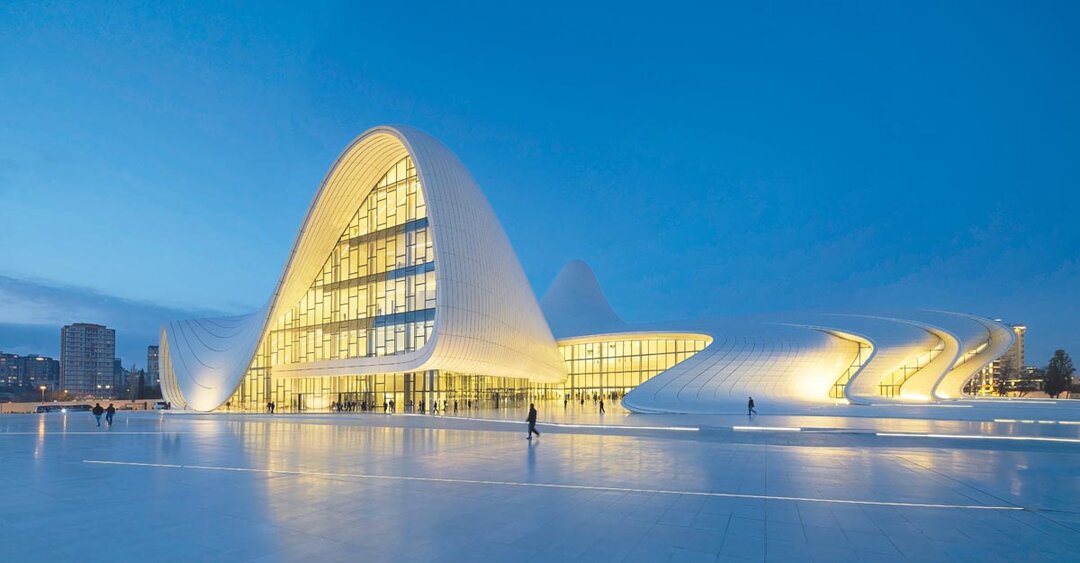
VES-EL - Design: Gareth Neal & Zaha Hadid

supervisor: dr. arh. Radu Fortis
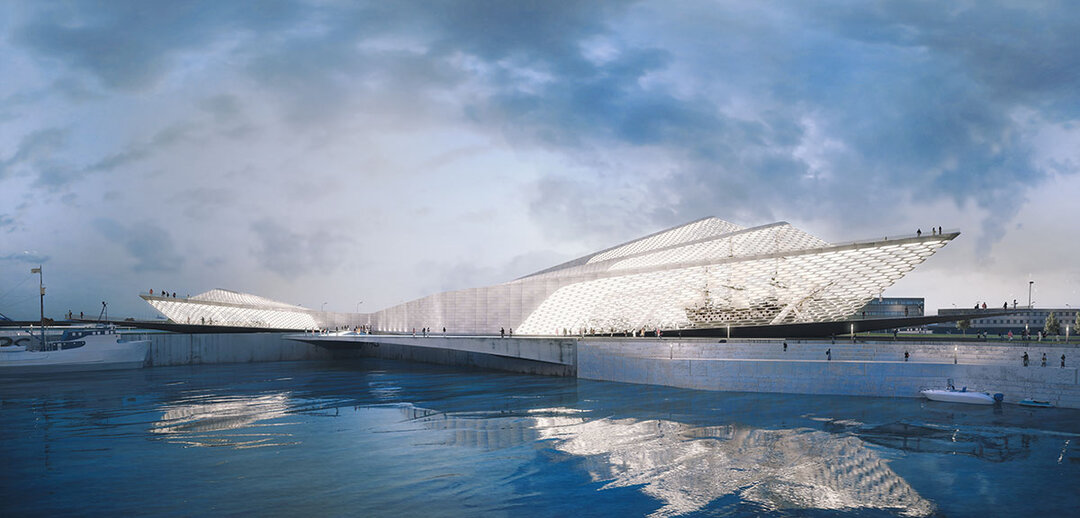
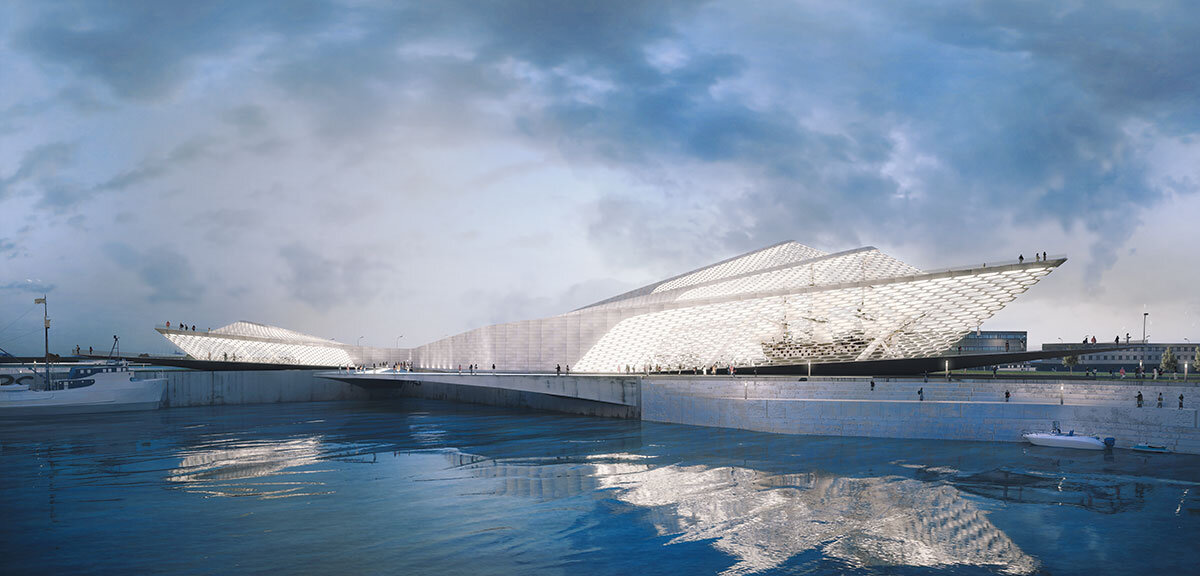
The basic aim of the diploma project - Maritime Museum of Constanta - is to revitalize, regenerate and rehabilitate the entire area of the North Breakwater seafront; an area intensely populated by tourists, but which is currently completely neglected.
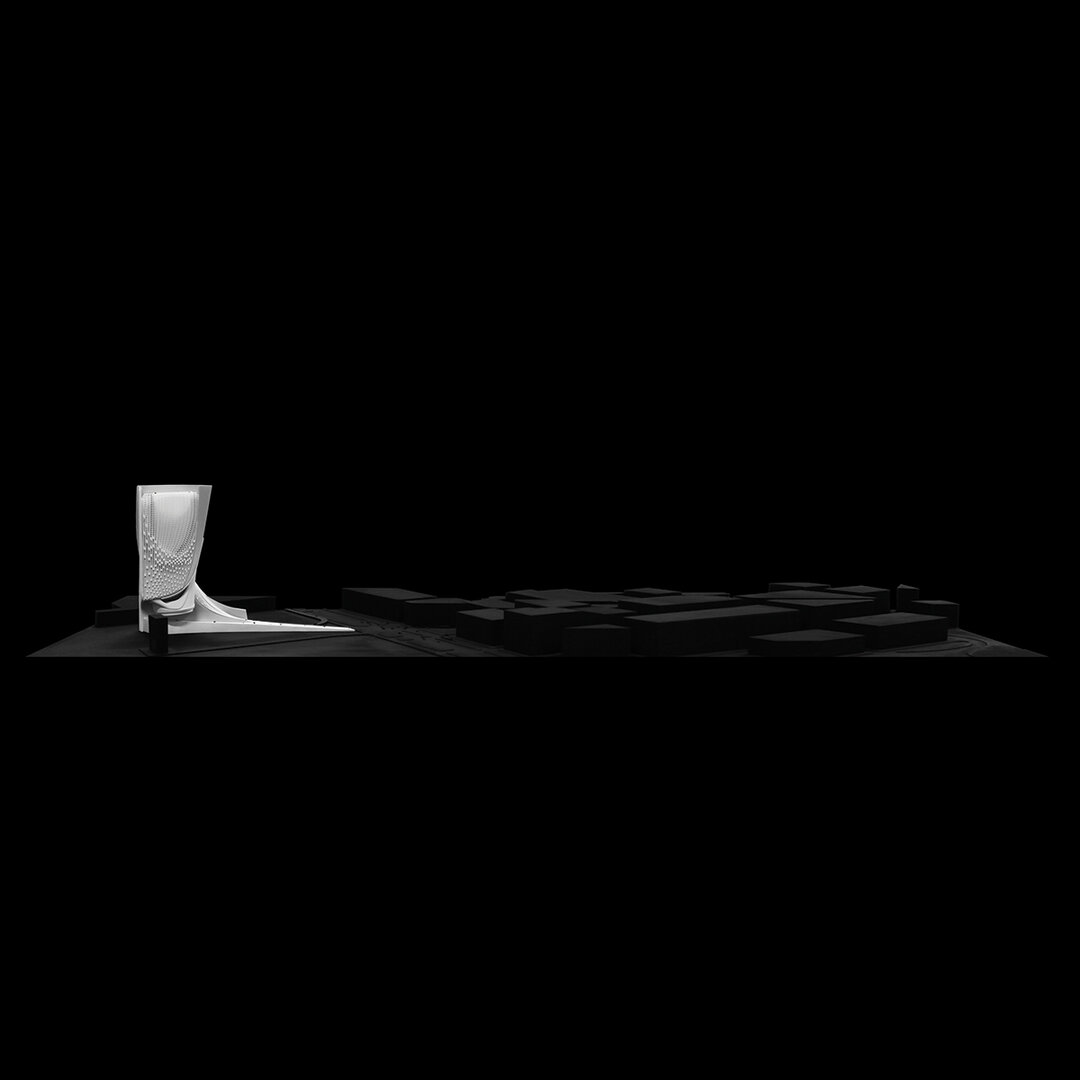
The main plan of ideas is to take over as a working site the whole area of the seafront, from its extreme northern end, where the peninsula and the Casino are located, to its southern end, namely the Maritime Station and the "Carol I" Lighthouse.
The southern end of the breakwater is chosen as the location of the museum. Thus, it is possible to propose a complete landscaping of the remaining area which, from the beginning of the peninsula to the opposite end of the peninsula, becoming a park - like an entrance trail, prepares tourists/locals for the central point of attraction, the Maritime Museum.
It can be assumed that the landscaping of the museum area will drastically influence the increased flow of tourists and locals, turning it into a major point of attraction.
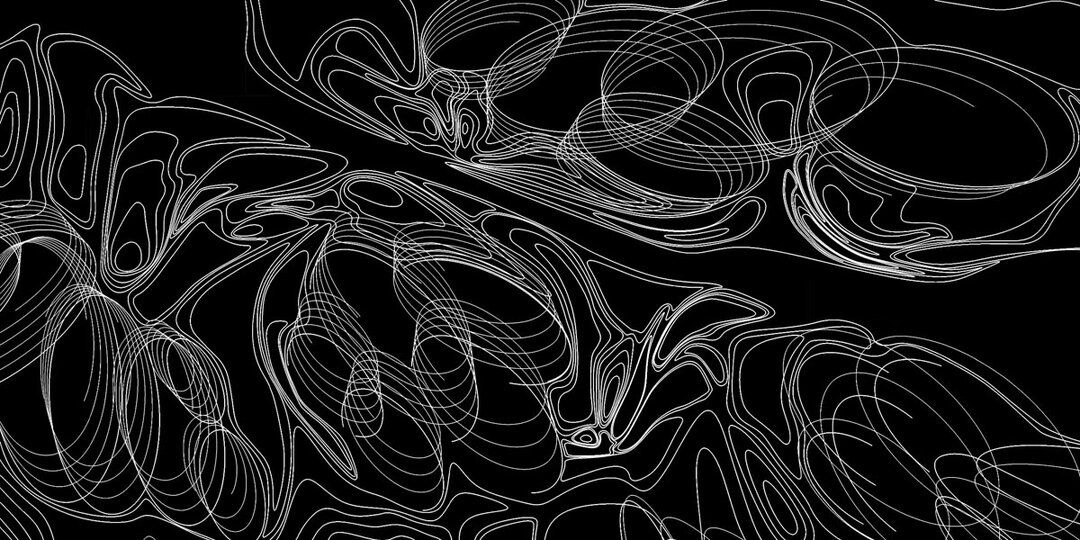
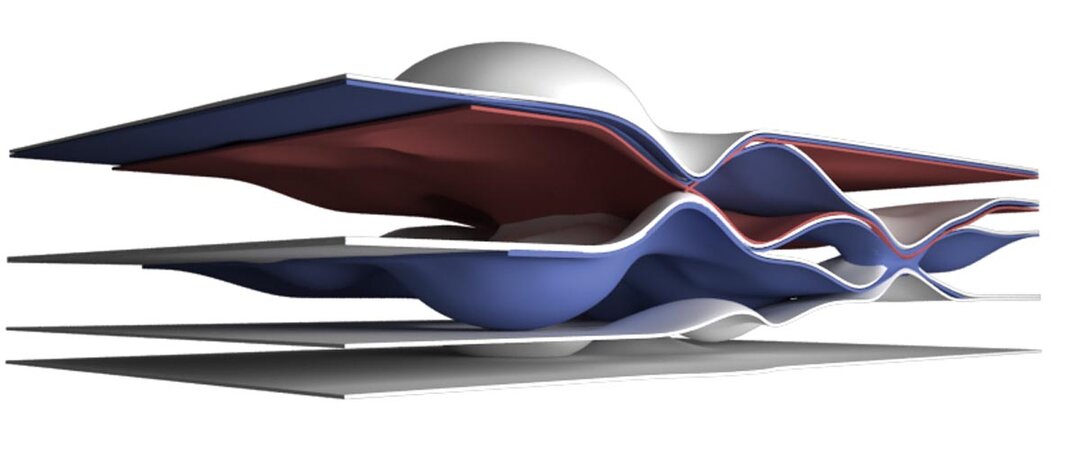
The concept of the diploma project originated from the idea of "waves" - more precisely, the vibrating waves that are generated when a liquid is subjected to impact.
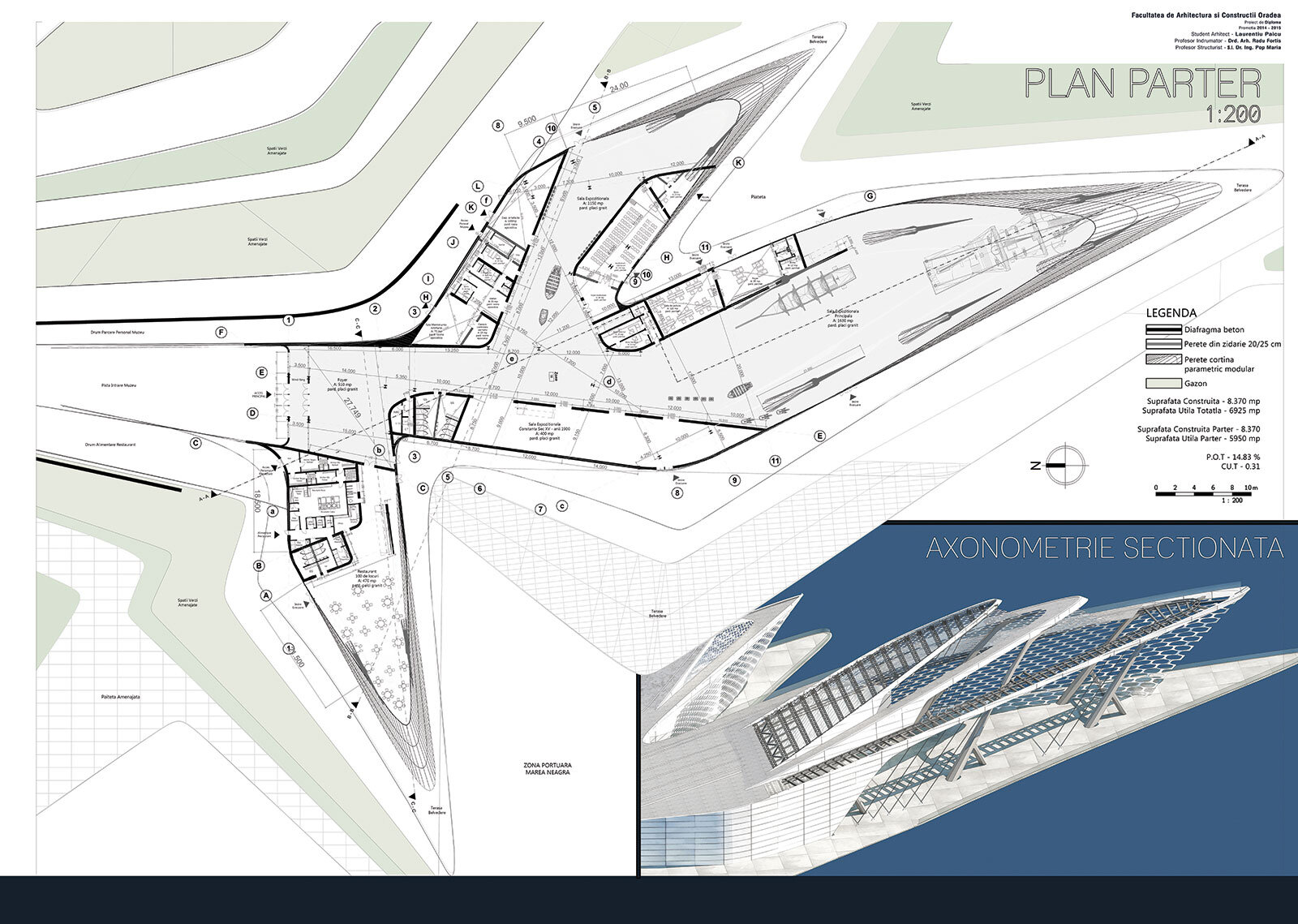
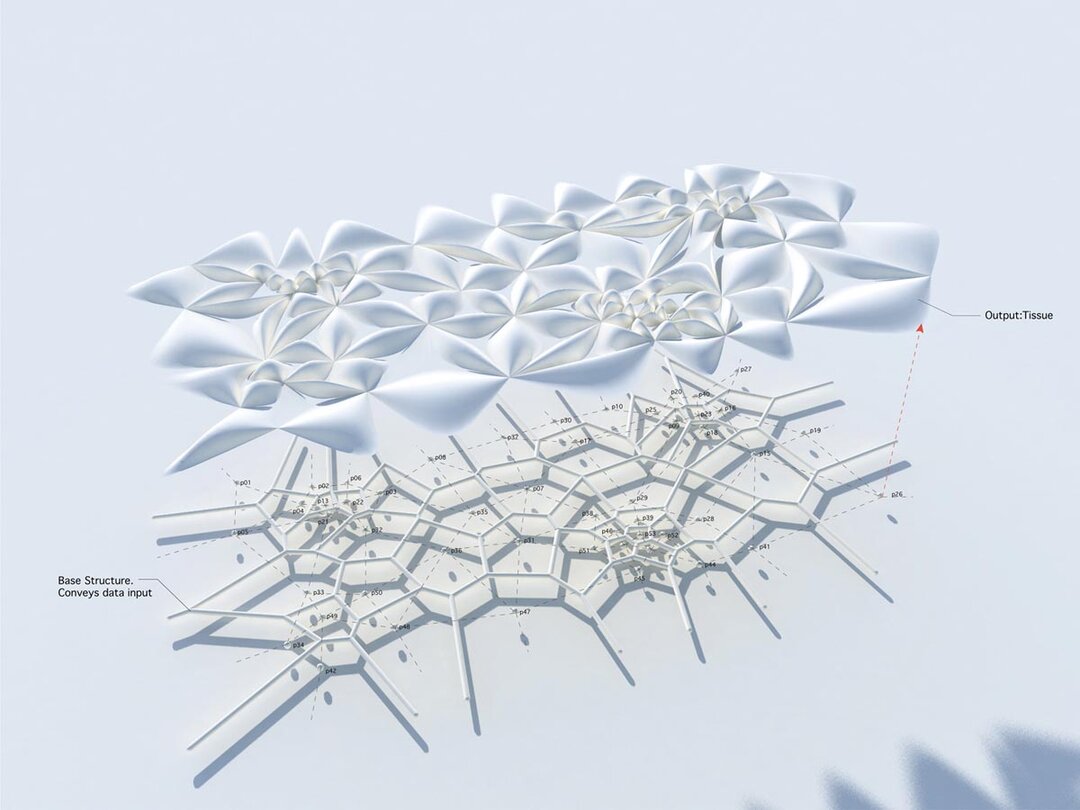
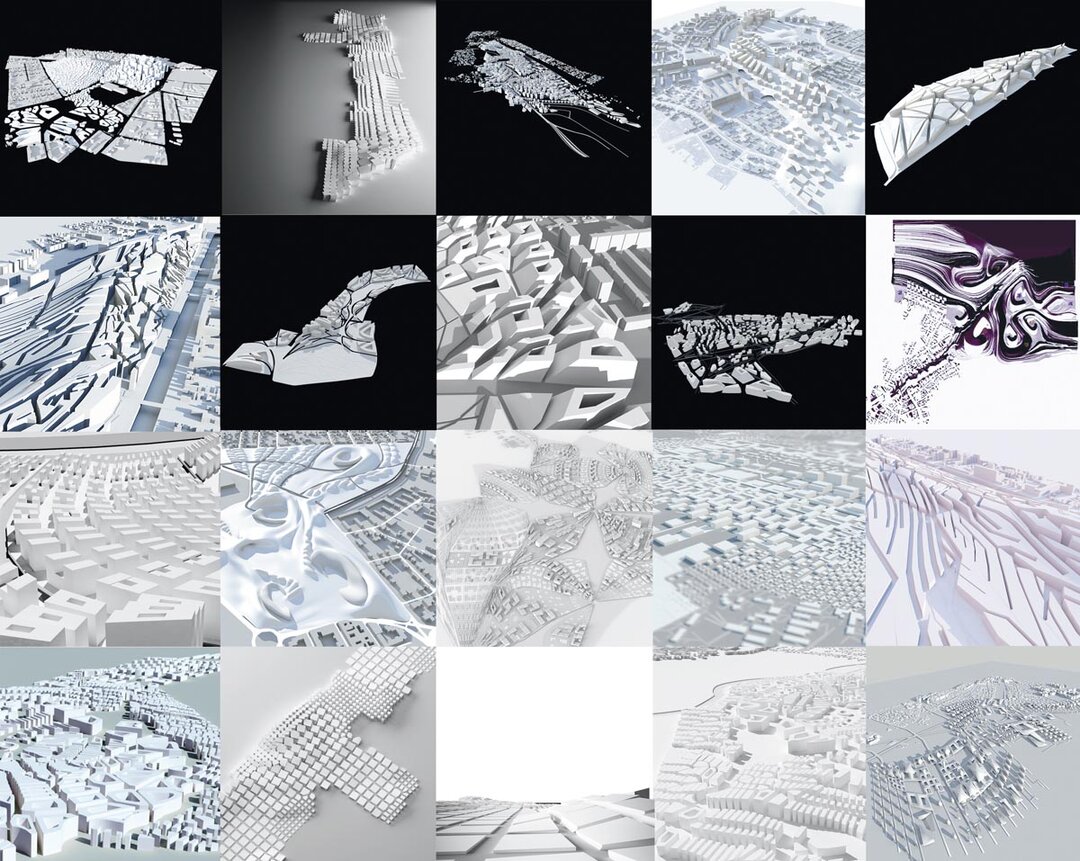
All these "waves" resulting and generated from the parametric plan, which marked the practical stage of the concept in the situation plan, would later mark the footprint of the proposed building and its direction, the structure of the pedestrian walkways and walkways, the landscaped green spaces, the parking lots, the plazas and the descending amphitheaters.
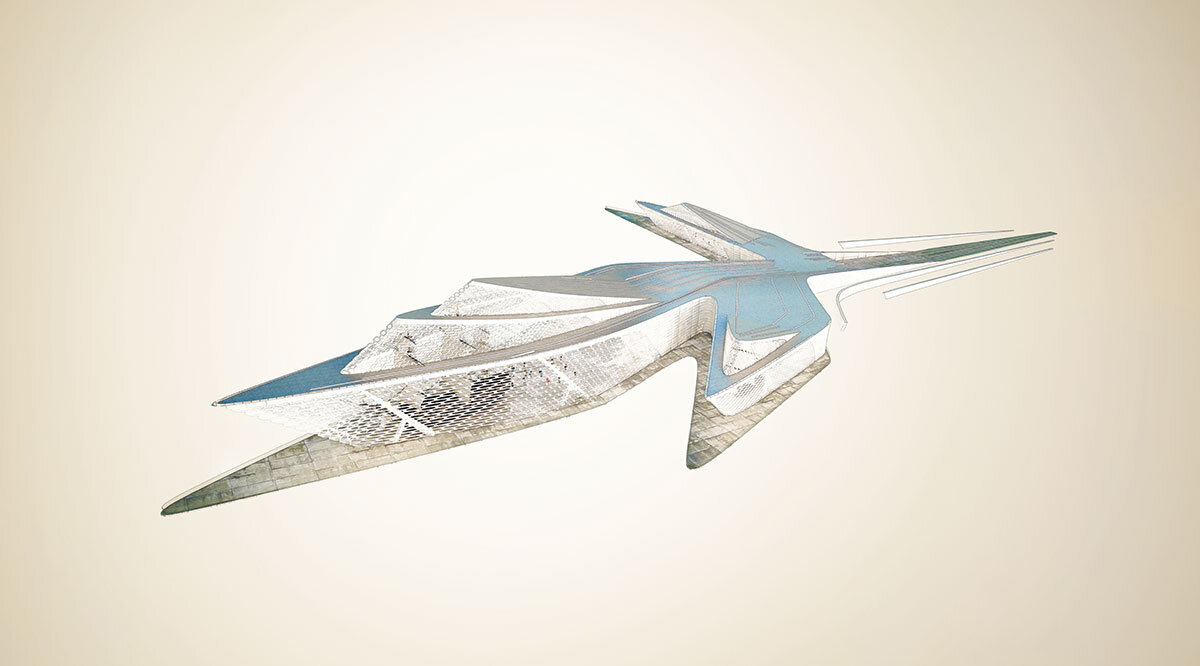
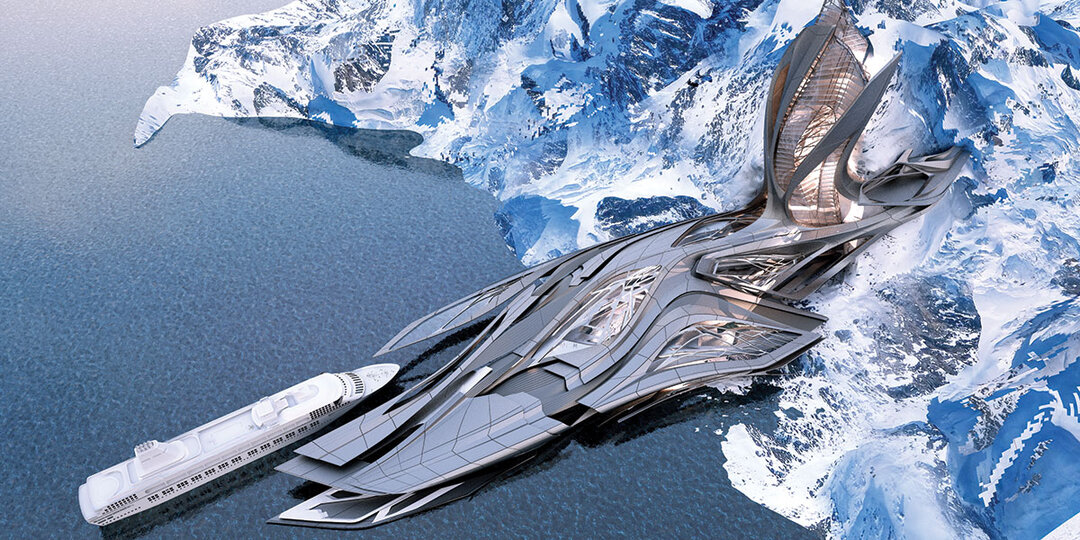
The Museum's architecture was not conceived as a rigid, immobile and self-referential geometry. Instead, a 'living' architectural composition was pursued that cooperates and communicates from one end to the other, both planimetrically and spatially, to suggest a wave effect. The Maritime Museum - a wave that starts from the impact of the water, evolves, grows, rises, dominates and creates the indirect effect of its impact with the 'shore'.
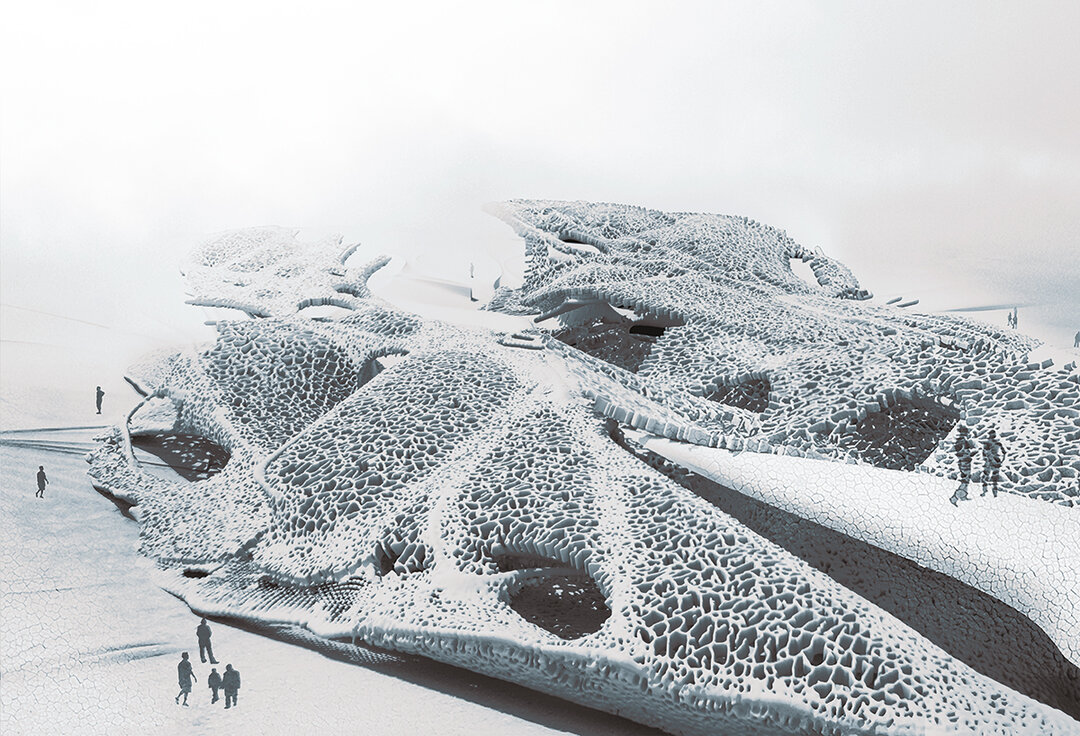
The basic idea was kept as a law both in determining the functions in the site plan and layout, and in the 3D evolution of the project volumetry and structural form. The main pillars, which provide the large openings in the exhibition halls, retain the same shape and fluid angles as the curves resulting from the Voronoi parametric algorithm in the situation plan.
The relation of the volumetric shape to the function spaces in the plan keeps a fluidizing movement. Technical areas, maintenance areas, sanitary groups and adjacent functions are concentrated on the edge of the main shell to make room for exhibition spaces in which visitors can freely manifest, express and integrate, without barriers and constraining limits.
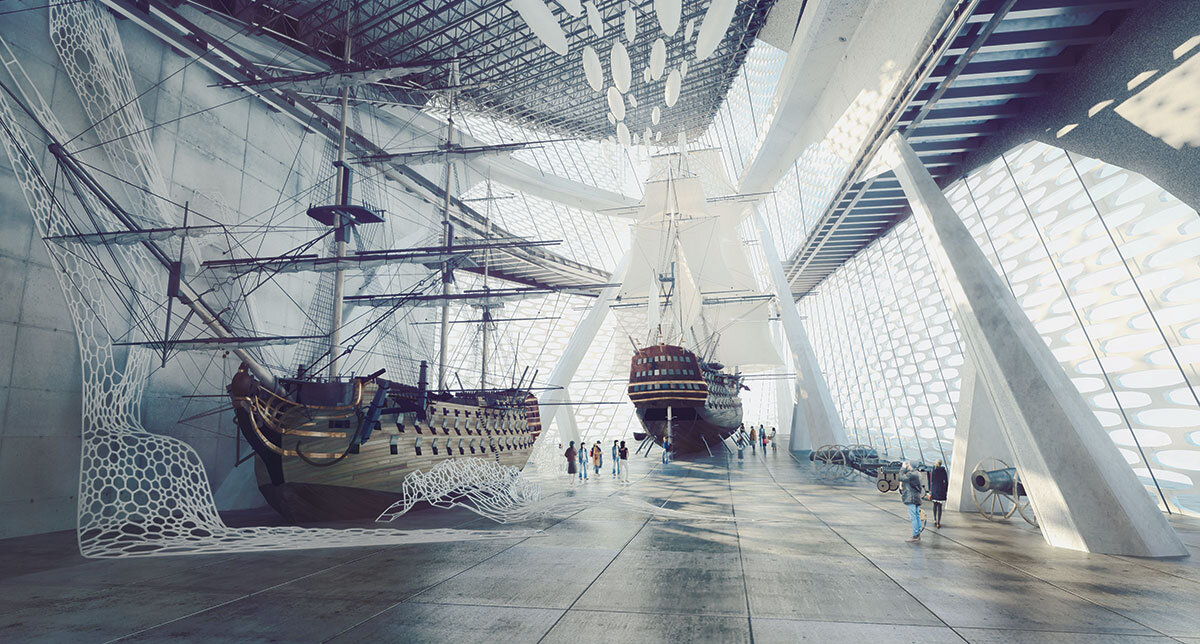
The interior spaces have been designed to create a free and open space with a telescopic effect that expands and opens up as you move inwards - a cathedral effect that gives grandeur to the rooms with light flooding the interior spaces.
The interior and exterior circulation of the belvedere terraces and roof terraces are designed to provide a 360o panoramic view of all the points of interest visible from the site.
The aim of the proposed architecture is to revolutionize the overall image of this important function, how it should be viewed and the major effect it has on the existing site, its relationship with its surroundings and the population it influences.
Faculty of Architecture, University of Oradea, June 2015