VES-EL - Design: Gareth Neal & Zaha Hadid

Supervisors: Zaha Hadid, Patrik Schumacher
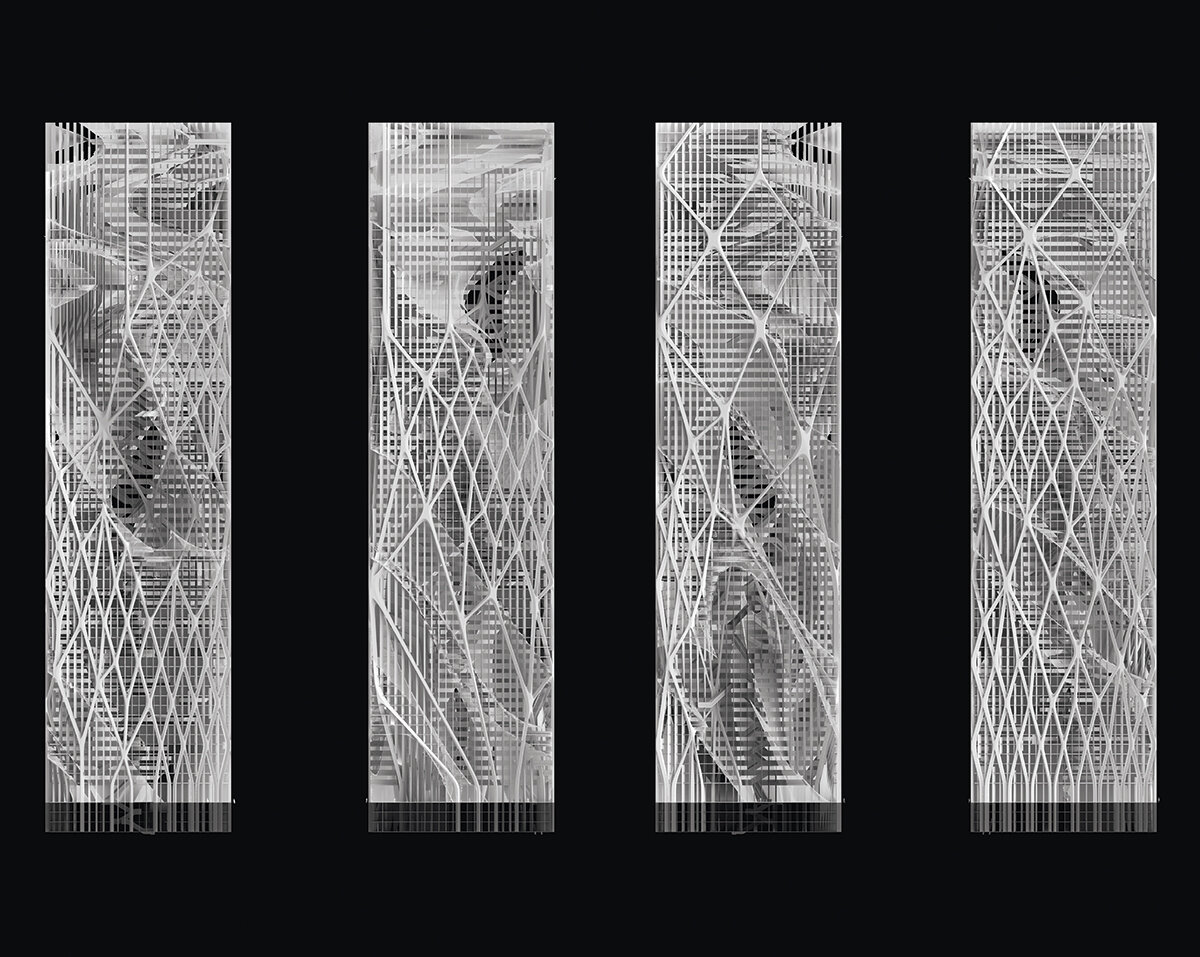
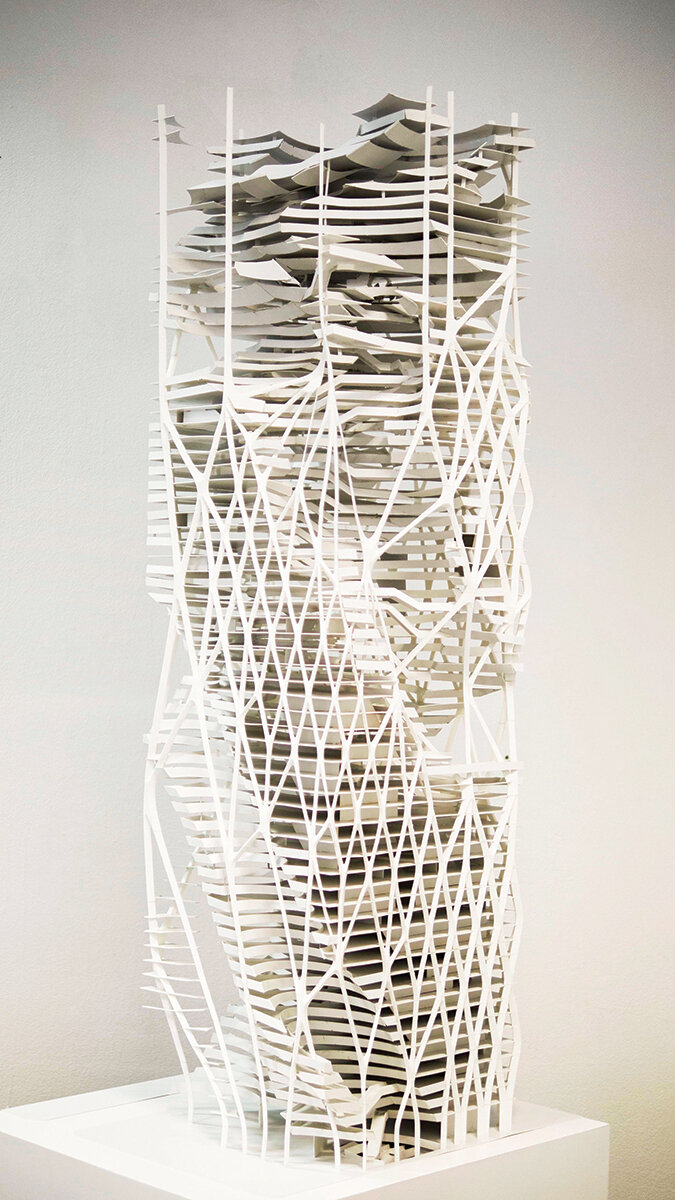
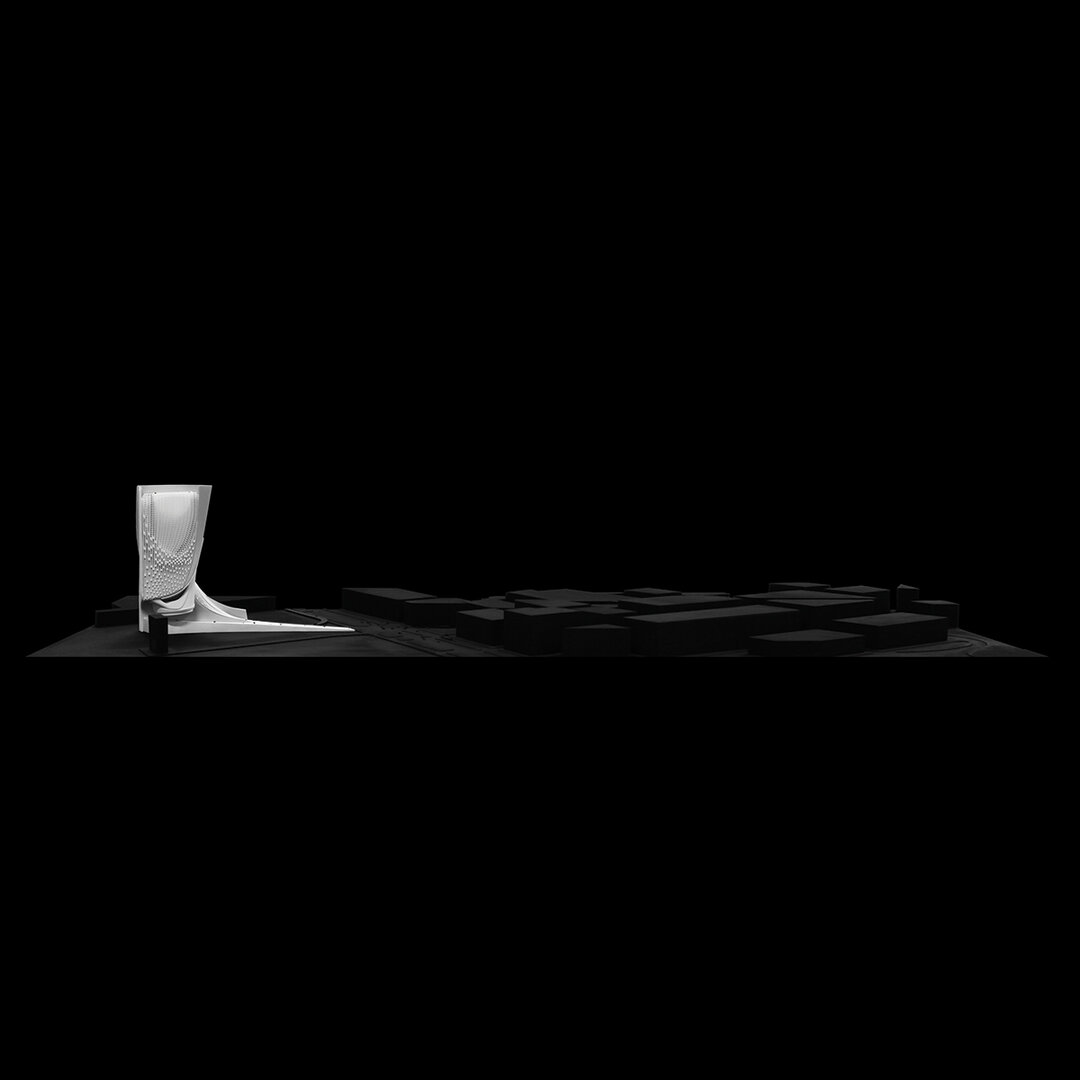
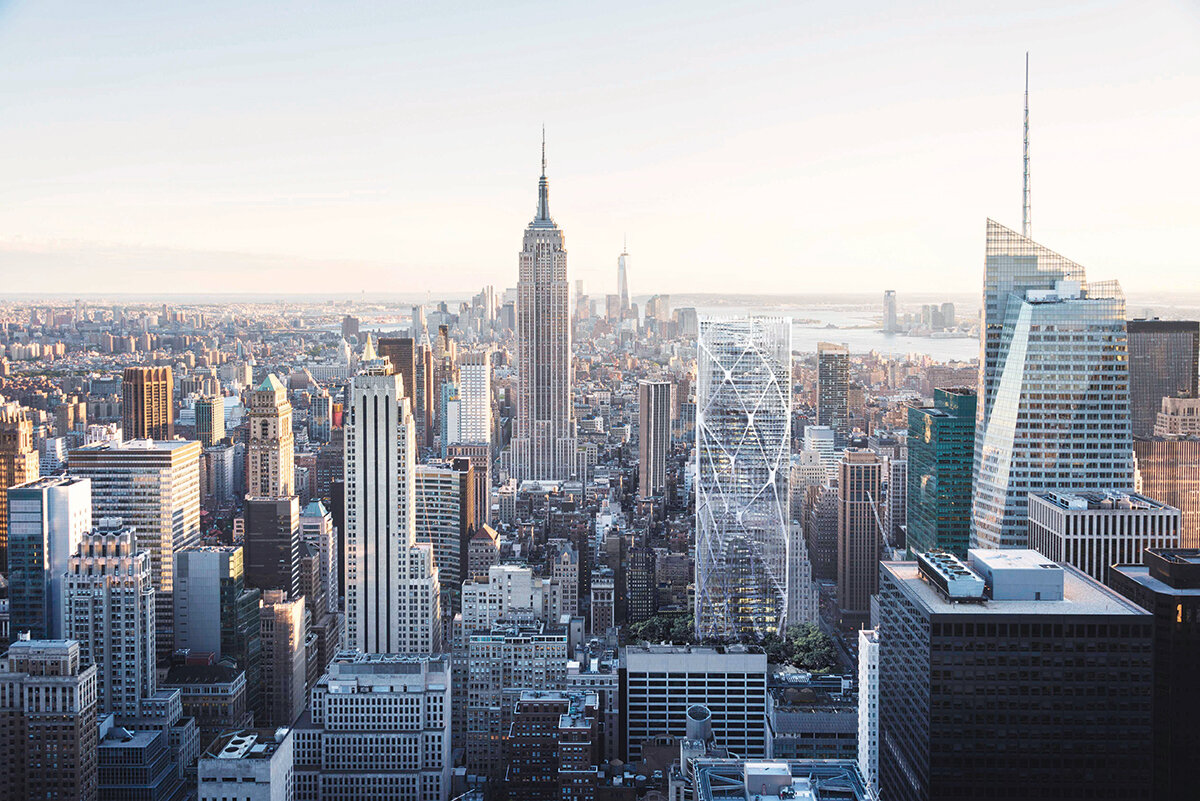
The diploma thesis project Hybrid Tower focuses on the changing typology of a tower. The backbone of all the research was a thorough investigation of the history of towers and campus typology, resulting in the creation of a tower-hybrid structure. It will house three institutes, namely an architecture institute, an art institute and a design institute. The two typologies are being analyzed in terms of density, spatial positioning in the urban environment, spatial occupancy, space utilization and visual connectivity. With the intention to optimize the typology and to mark a new stage in the evolution of the towers, a list of advantages and disadvantages was compiled, which was then used as a basis for the development of a parametric system. It was designed to generate a spatial sequence, circulation systems, structural systems and a programmatic configuration.
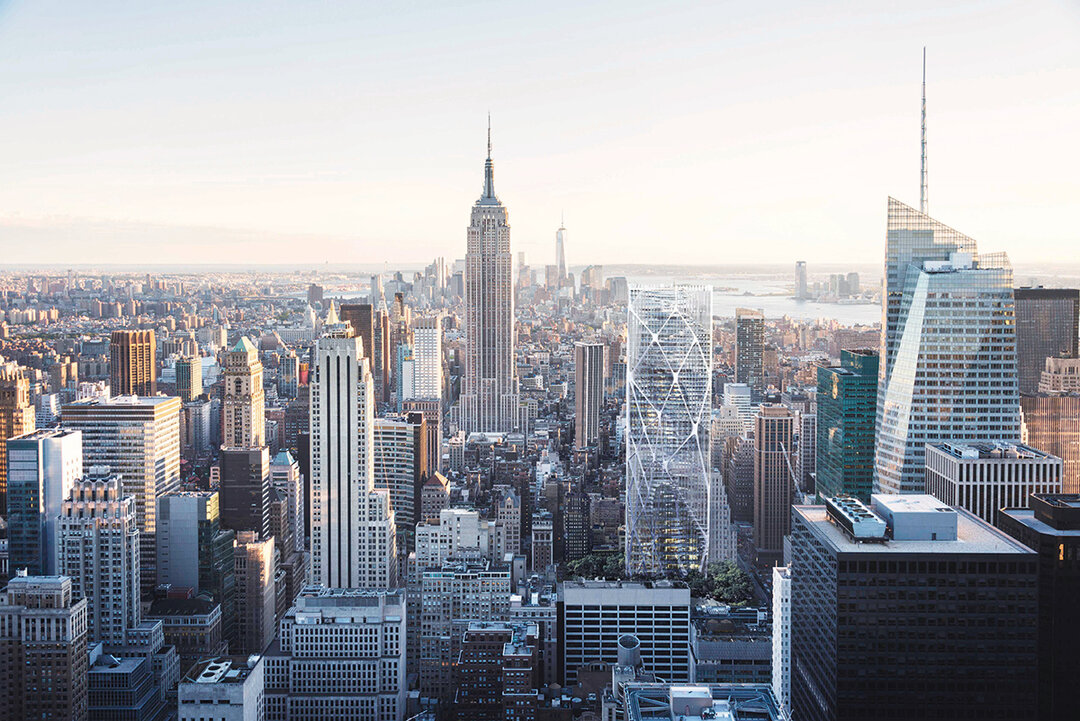
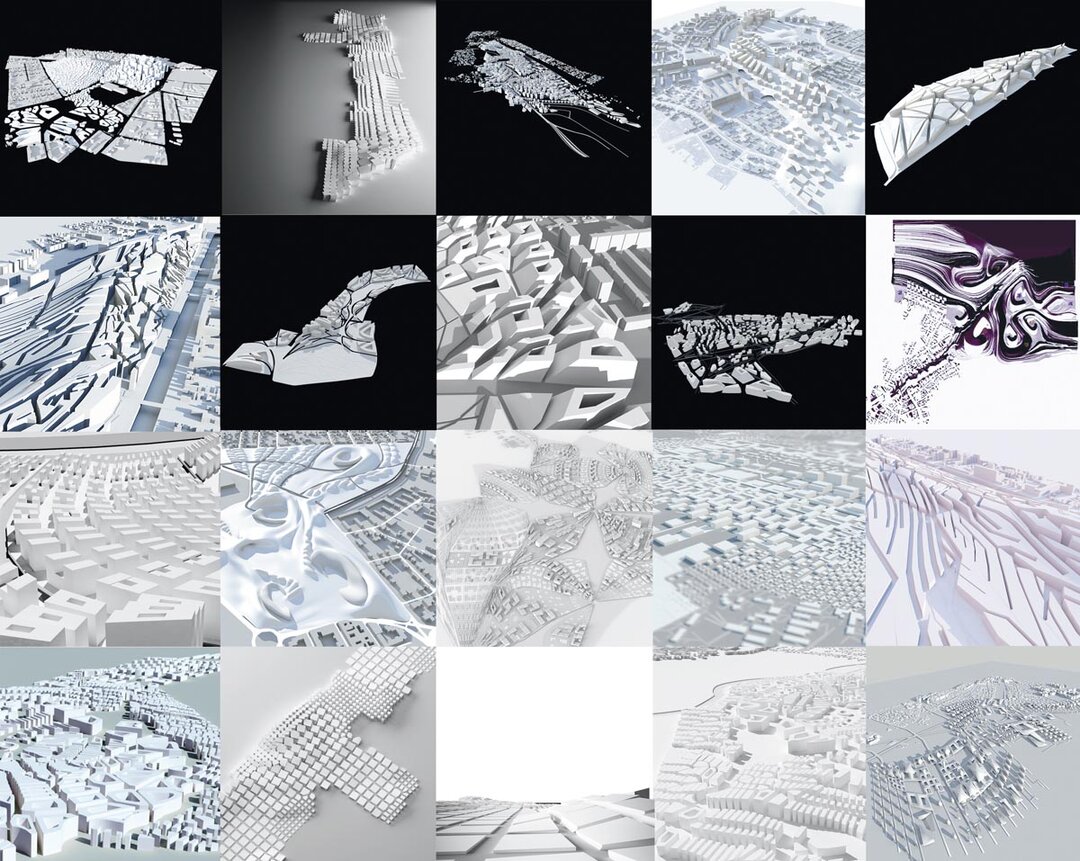
The New York City site near Bryant Park is the testing ground for the new hybrid tower. The prototyping process, which explores vertical connectivity from the perspective of viewscape and configuration, took the typical New York City block as its starting point.
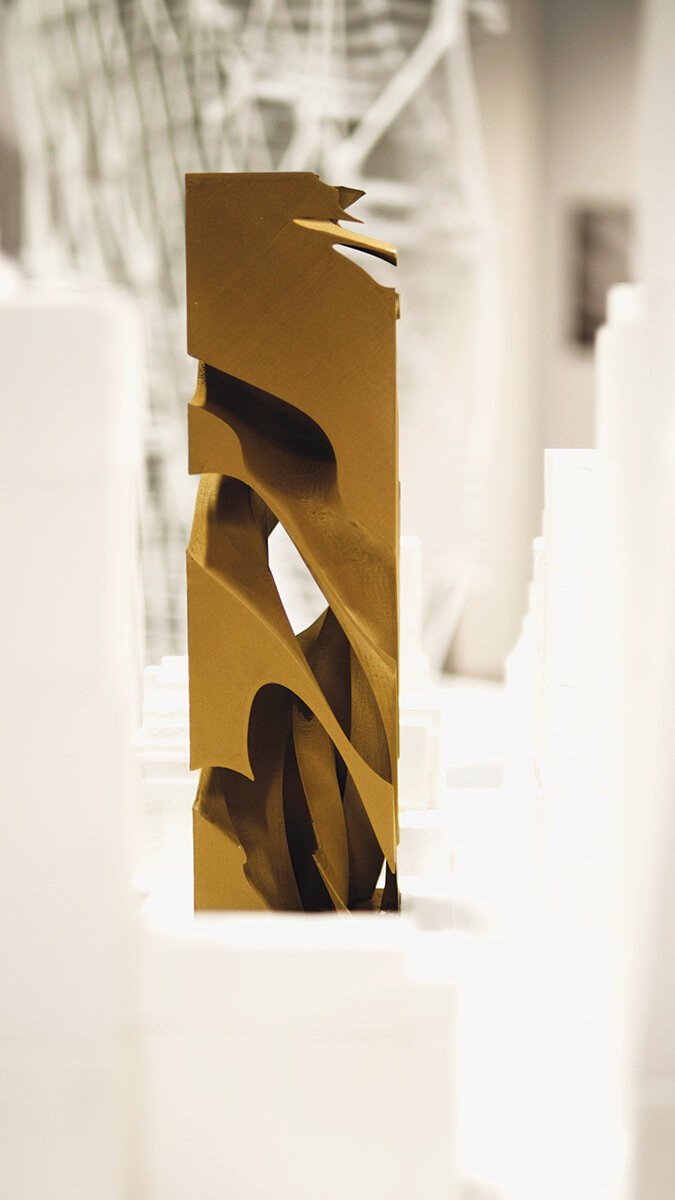
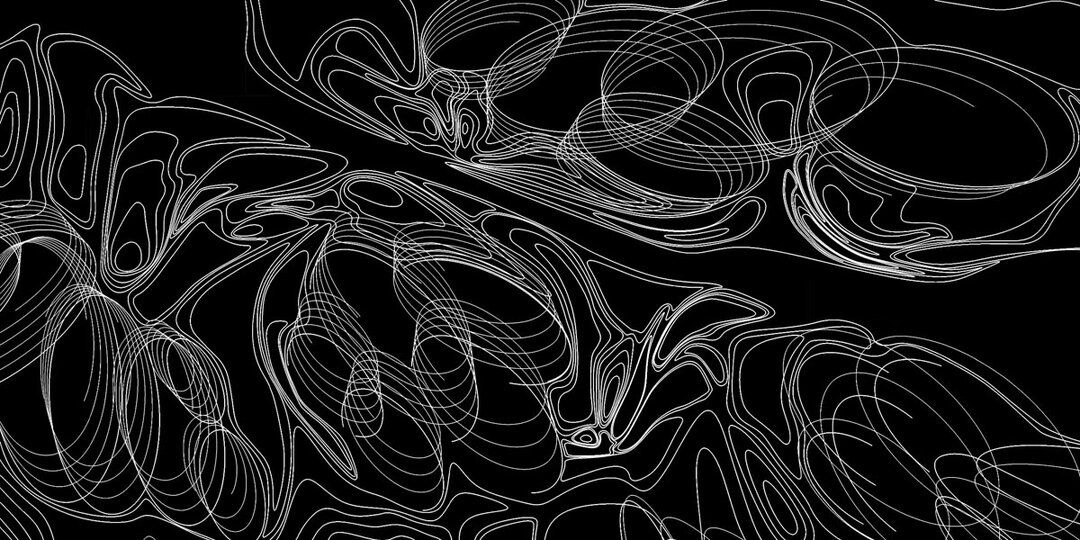
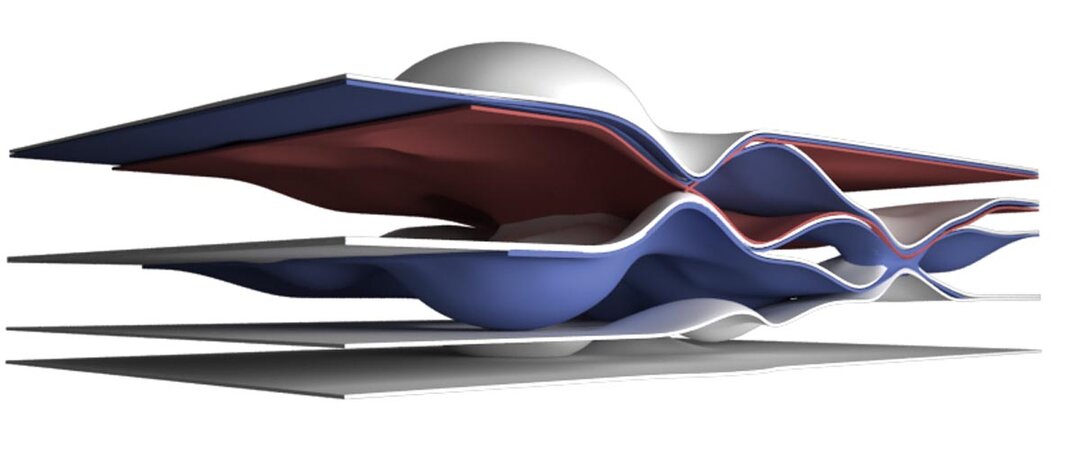
The system centered on the interplay between voids and volumes, which undergo permanent vertical shifts, provides a vast and intuitive series of architectural elements that provide orientation and multiple types of visual connectivity throughout the tower. Multiple layers, such as the structure, utilize parameters set by the primary volume/void prototype. The result of this parametric system is a set of rules that dictate the continuous and homogeneous change of features such as perspective, depth of space, program, and structure. For example, the lower part of the tower is occupied by the Institute of Architecture, and is also the most structured and elaborated portion, and as the tower ascends towards the space dedicated to the Art Institute, the degree of structuring and elaboration decreases. This demonstrates how the system adapts to architectural needs and physical requirements: the tower requires a richer structure at the base compared to the top. In the same way, the tower acts as a funnel, filtering people through its spaces. Because the tower is entered through its base, crowds of people have to move differently through the building as they ascend; for this reason, the parameters of the system have been set so that in the lower portions, where human density is higher, the spaces dedicated to atrium or public spaces are smaller in area, while towards the top, where density is lower, these spaces are spread over more generous areas. This allows people to stay visually connected wherever they are in the tower. This marks a revolutionary step in tower construction, compared to the typical tower typology, where you enter at the base, take an elevator to a designated floor, but are visually isolated from the rest of the floors in the tower and with limited movement between levels. This old type of tower, with segregated floors and limited vertical circulation, is not an optimal environment for human interaction, meetings and exchange of ideas. The aim of this project was to push the boundaries of what is expected from architecture and to test new ideas for this exciting typology, the result of multiple iterations throughout its history.
The hybrid tower aims to transform the obstructive vertical environment characteristic of typical towers into an environment defined by an intense connectivity that encourages the exchange of ideas and human interaction.
Tutors: Mario Gasser, Christian Kronaus, Jens Mehlan, Robert Neumayr, Hannes Traupmann, Mascha Veech.
Studio Zaha Hadid - Institut fur Architektur - Universitat fur Angewandte Kunst Wien, June 2014