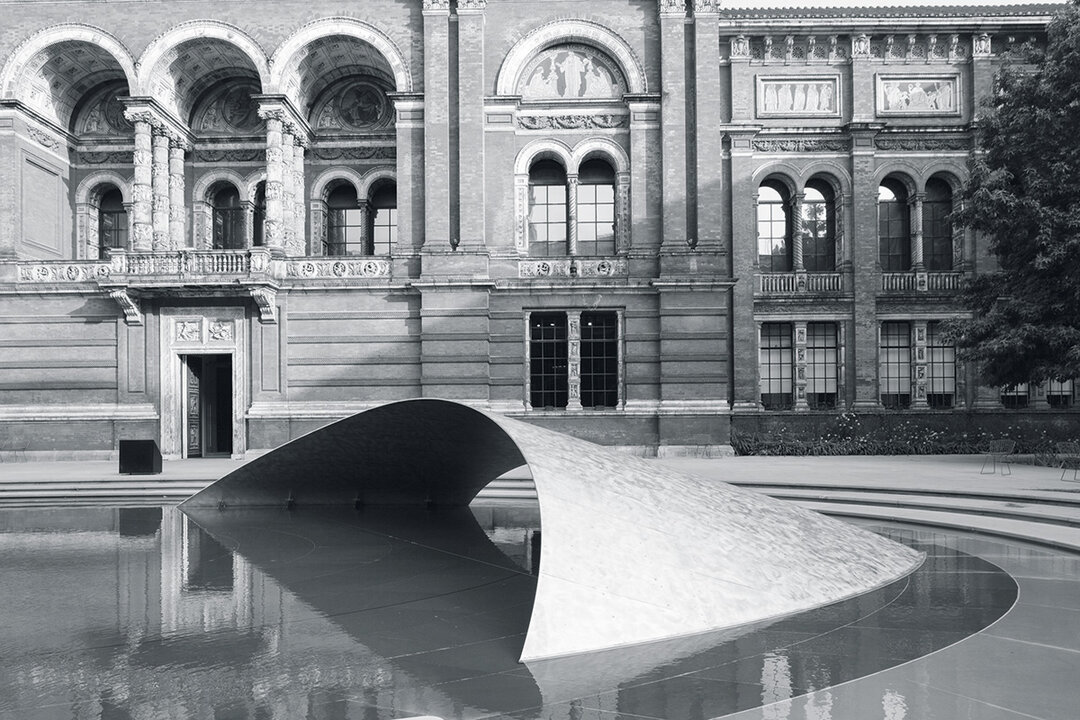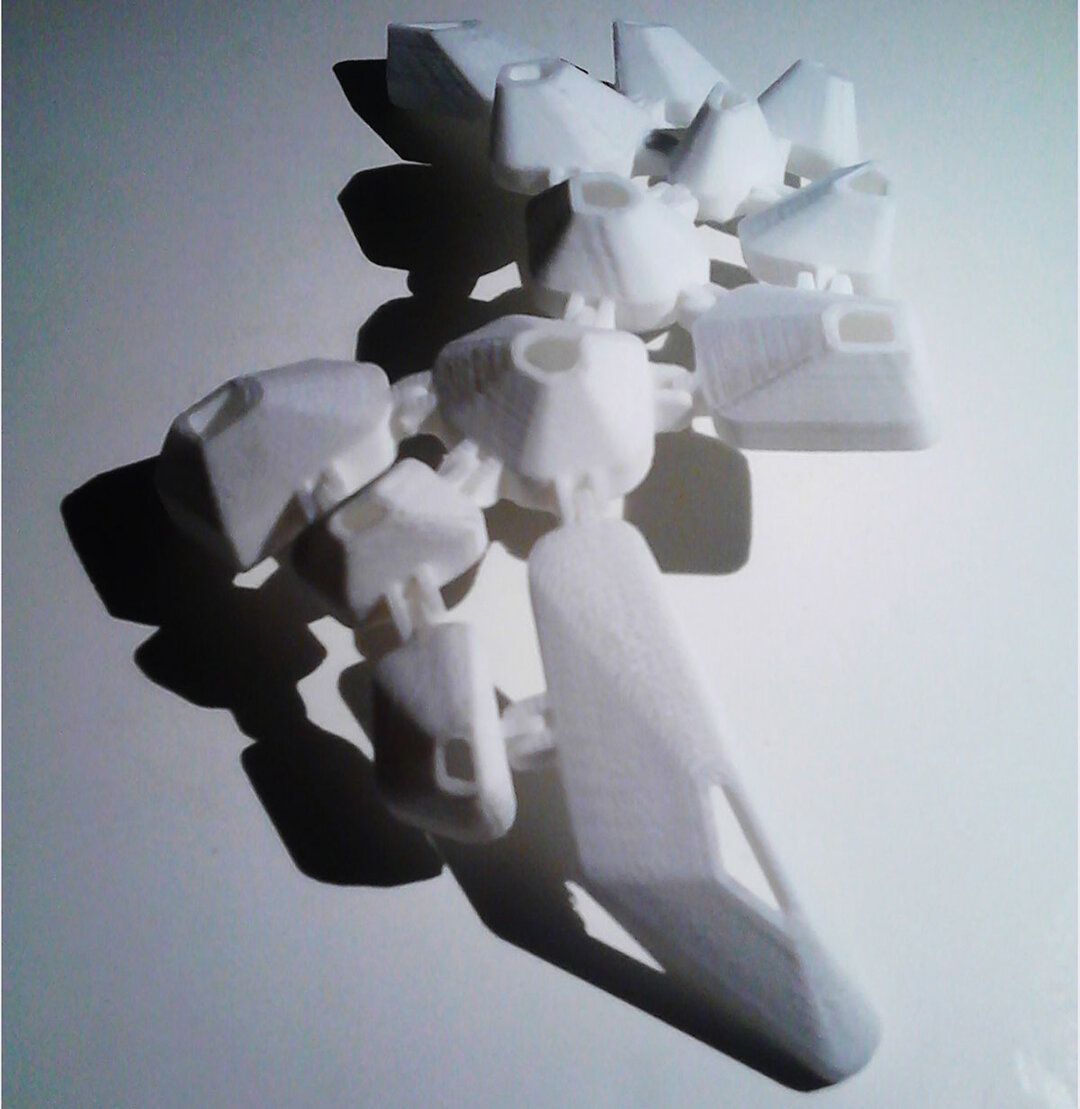
VES-EL - Design: Gareth Neal & Zaha Hadid

ZEST Collective is an architecture and design studio based in Bucharest that was started with the aim of implementing knowledge about computational design and digital fabrication1 in real projects. The projects we have attracted in the two years since our formation are mostly residential or interior design. They help us to work and advance our computational design research the rest of the time. At the moment, the sequence of our activities does not only include the concern for parametric architectural theory and experimentation, although this desideratum strongly influences the goals we have in the long term. Nevertheless, we systematically include in the program themes related to this topic, either when we convince a beneficiary of a solution that contains some elements of computational thinking, or when we decide which theme to deepen through experimentation. The project themes we've come up with in the last couple of years are all about parametric design, with slippages towards interactive. The studio's vision is one that is enthusiastic about new technologies, that understands on the fly what's involved in a project's infrastructure from commission to use. We use any time we have left to learn about design as a process and what role it plays in everyday life, but more importantly how we can integrate it into commissioned projects. When we are not struggling to understand the thickets of entrepreneurship, a field newer to us than computational architecture, we are planning and realizing various projects of our own. So far it has been a challenge to introduce parametrically designed elements into the projects we work on day-to-day. A few times we have succeeded, and a few other times we have almost succeeded. As a rule, the first filter we go through in any project is to understand how we can integrate the solution into a bottom-up thinking. With this attitude we feed, sometimes artificially, quite simple tasks. Once we had to make a Christmas decoration in the shape of a helicoid and we preferred to design it algorithmically, according to an appropriate mathematical formula, to which we applied a few transformations, just so as not to lose the habits we had acquired in the workshops. Thus we obtained a family of different helicoids and the fabrication was flawless.
Experiments
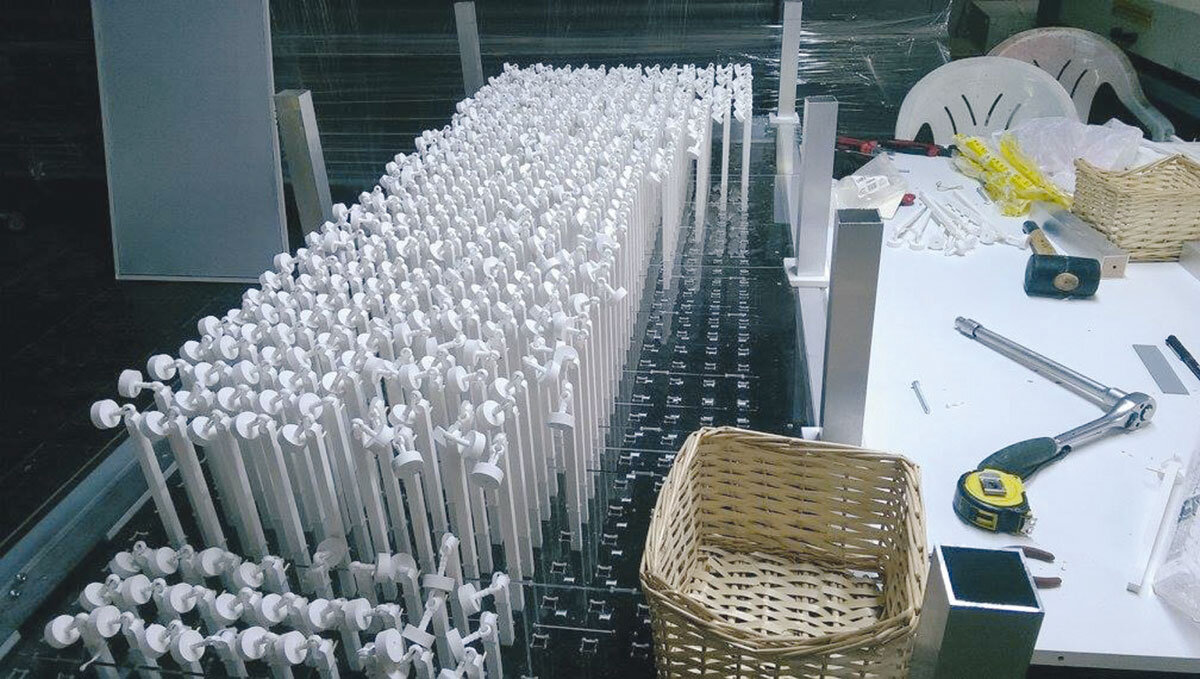
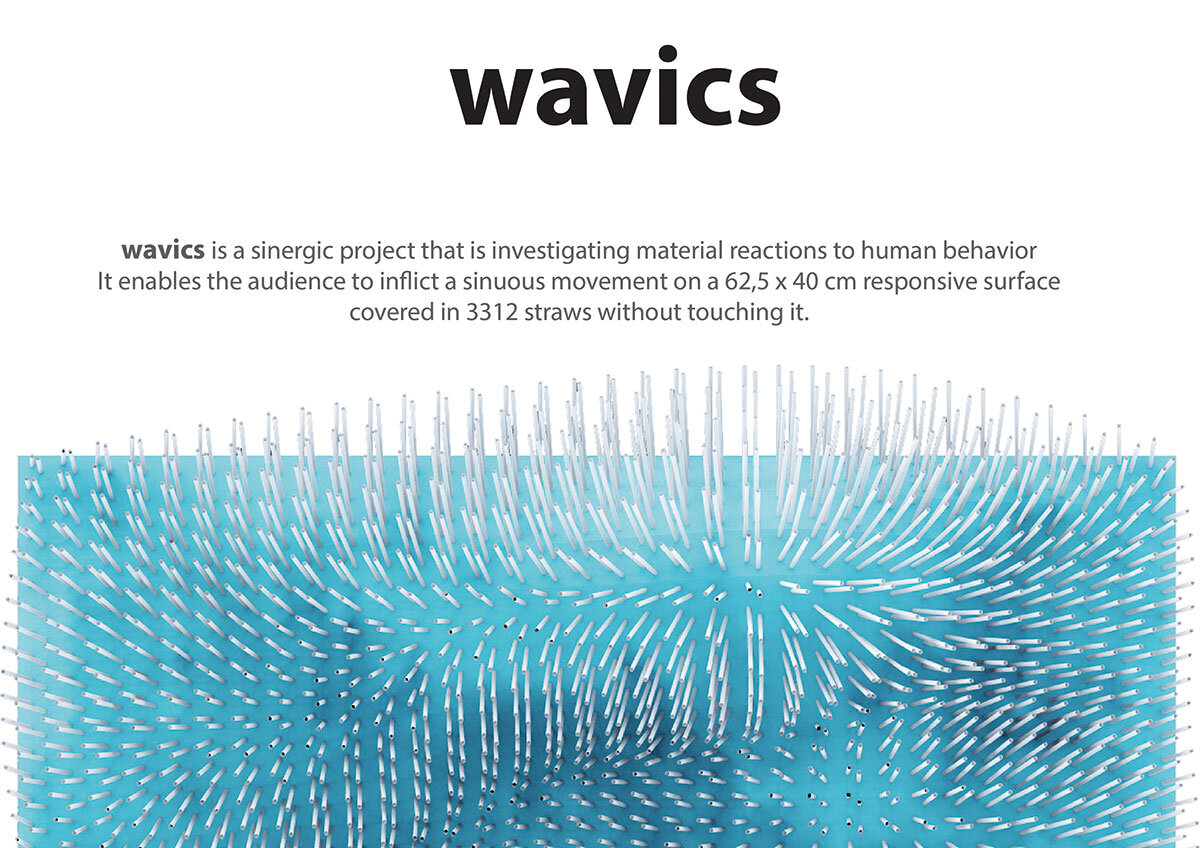
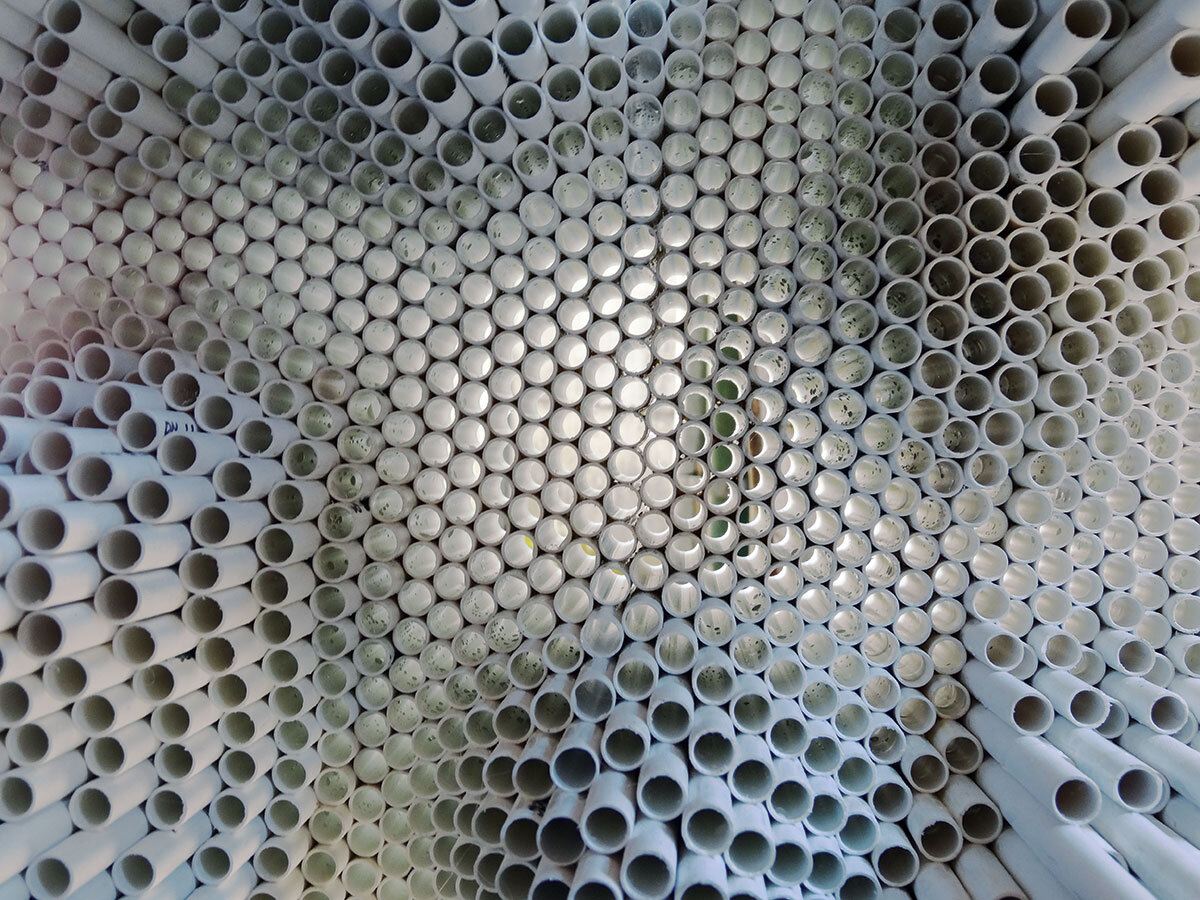
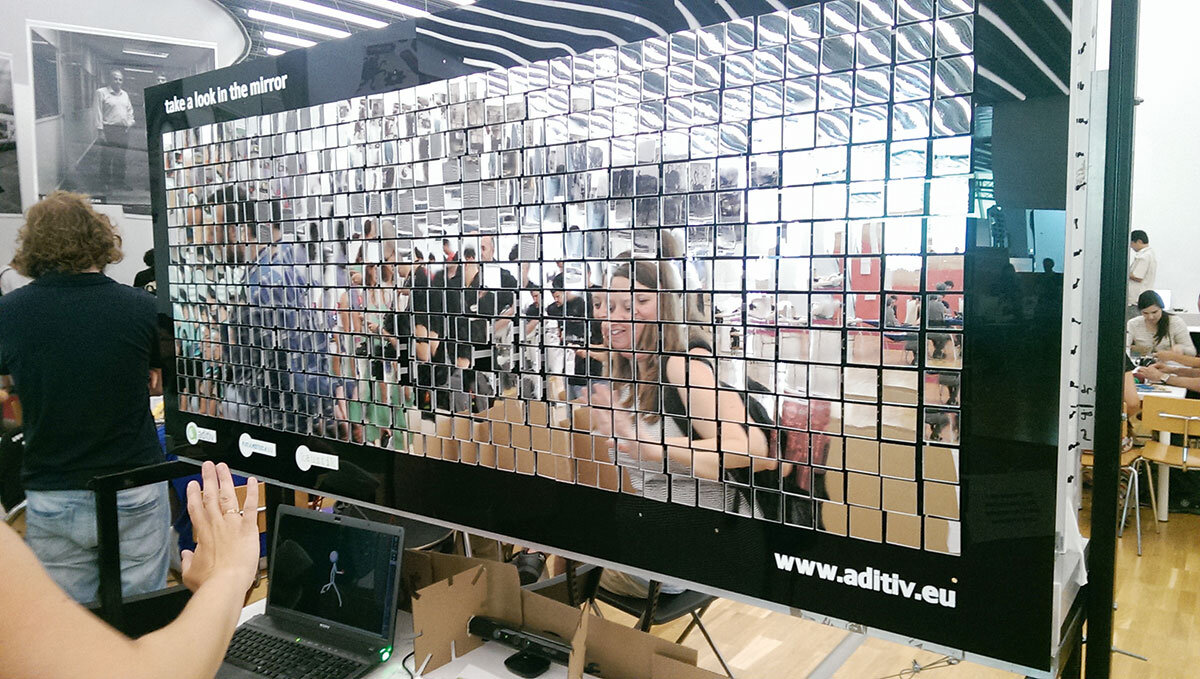
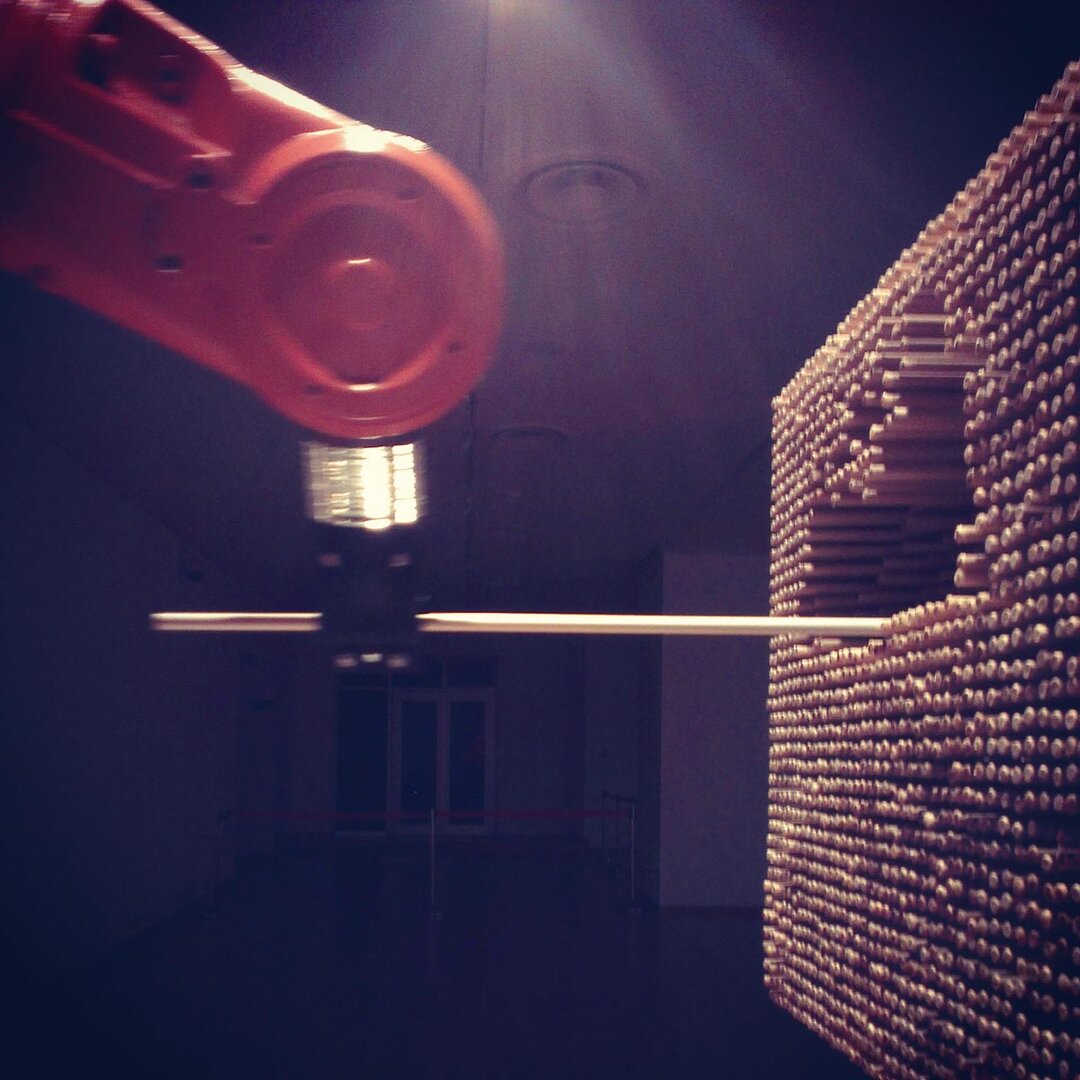
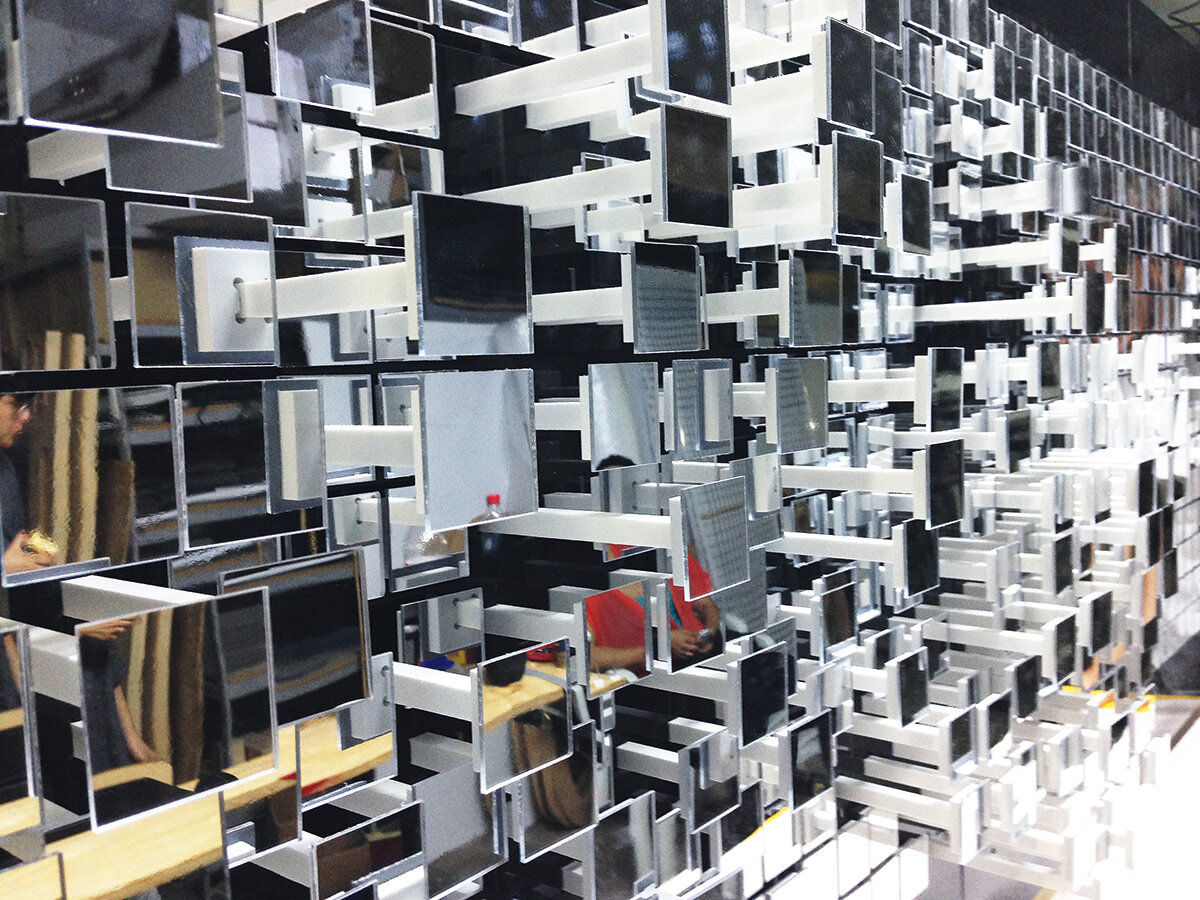
The project that guided us to our current way of thinking is Wavics 3.02, an interactive mirrored wall that went through several stages of design and construction. This project has kept untouched from inception until now only the intention of being a sample of a movable wall that interacts with people who come within its radius. Otherwise, it was a playground in which the rules were established on the fly through a work loop based on try, fail, repeat. By experimenting with several materials, the installation went from a static model to a technical concept for the realization of an interactive surface. Initially, Wavics was made of a rubber mat on which we glued hundreds of colored drinking straws (several times). The movement of the resulting material was very organic and aroused a form of curiosity among those who came to see it. So we had the inspiration to produce the controlled movement that animates this surface.
The first prototype had big problems with the motor system. That's why we switched to Wavics 2, which also changed its appearance and started to run better. We glued several hundred straws again, but in a different way. We exhibited both of them at several innovation fairs and we also took them to TEDxCluj, Innovation Area. On these occasions, we presented our concept, one by one, to hundreds of people who walked by and were curious to ask what it does. Our explanation that it is a prototype that tries to express the idea of customizing spaces by interacting with the position of the user's body did not arouse much interest. But the interaction itself, and the unexpected aspect of it, invariably gathered groups of people around it trying to find out what was going on. Most interesting was when we weren't there to answer questions and the visitors would strike up a conversation about what the installation meant and how to use it. Often the people we had the opportunity to talk to would pass on the rules of use. That's how I discovered what the installation was really there to do - to arouse curiosity, to generate discussion. Conversation is, after all, an essential tool for disseminating knowledge in any new field, and it is a decisive factor in raising awareness of the possibilities that this generates.
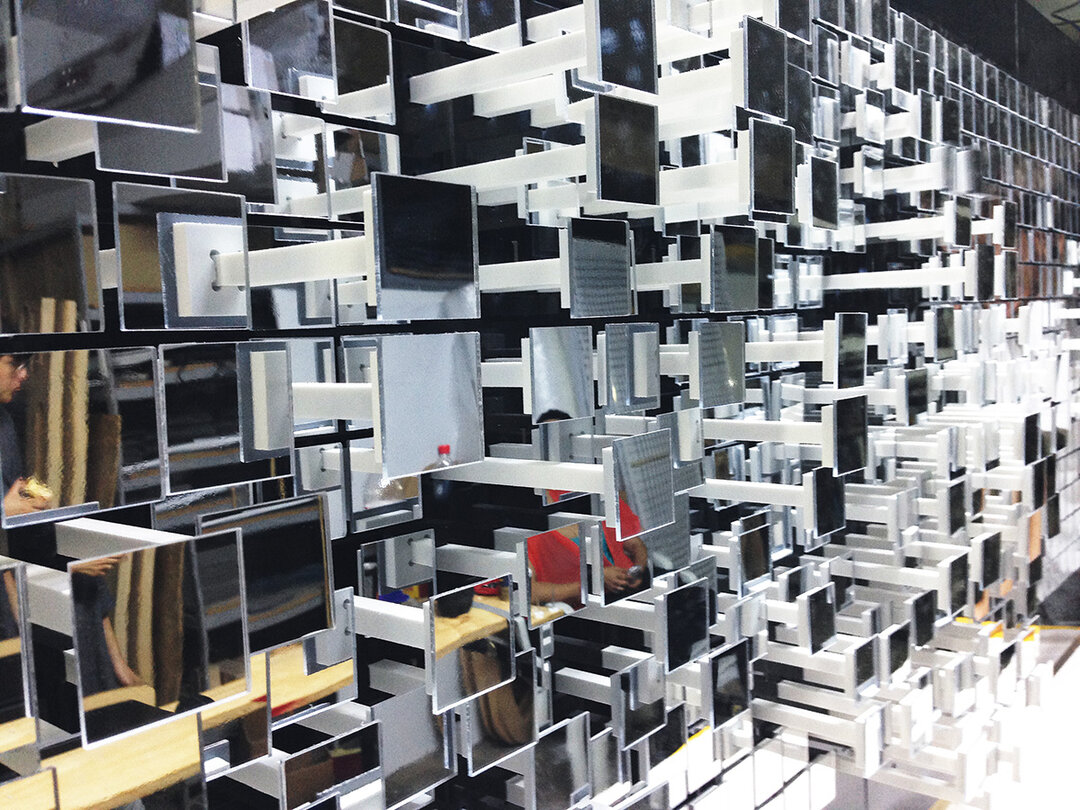
From the first prototype to the one we exhibited at Fab103 in Barcelona, the motor system, actuators, sensors, size and materials have changed. From a 60 x 80 cm elastic surface covered with colored straws whose movement could be controlled from a tablet or smartphone, Wavics grew to a 200 x 90 cm surface populated with small mirrors whose movement tracked the right hand of the speaker4. And the process doesn't stop there, for as we exhibited it more, we learned more about what such an interactive material could mean and how it could contribute to the experience of space in a meaningful way. Wavics remains for us an ongoing theme of work through which we find out through conversation and observation what effect and utility interactive surfaces might have in contemporary spaces and on the people who occupy them. Wavics was also how we learned that the role of experiments is not to convey a predefined concept, but to shape it through use. At Fab10 we met Valerie Bergeron, the curator of a smart materials exhibition, who saw in Wavics a prototype for a smart material and invited us to see the MatterFab exhibition, which happened to be running at the same time in the same space. She also suggested that we continue our research until the prototype behaves autonomously and does not need to be assisted by a technician, and becomes part of a smart materials exhibition.
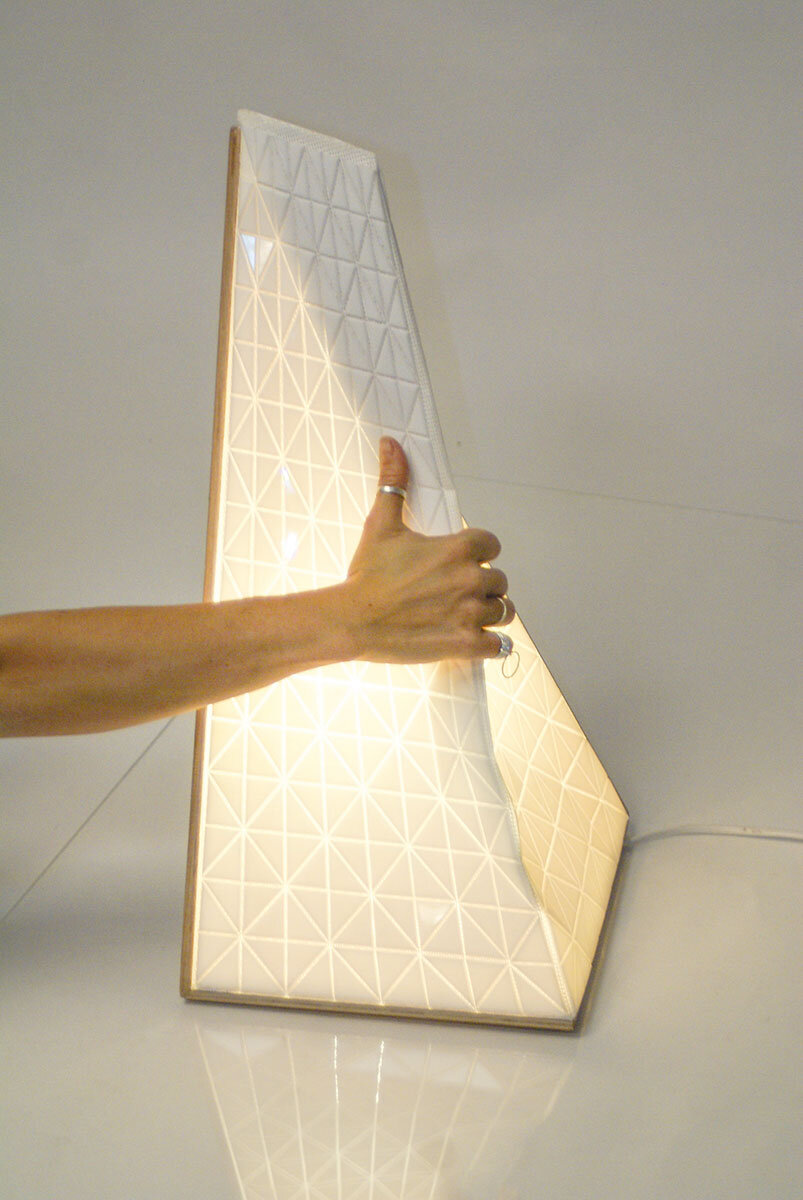
Browsing the MatterFab exhibition was another inspiring moment. What we saw there led us to the idea of superimposing materials cut according to complex geometries with flexible materials to obtain a new behavior of the composite thus realized. The Delta lamp was born out of the desire to experiment with such materials. It was conceived on the support of a mesh on which we recomposed fragments of Plexiglas of different shapes and sizes, fragments which, benefiting from the flexibility of the mesh, thus take the desired shape. The result was a semi-rigid material that can be molded along the edges between the elements. But once mounted on a wooden frame, I also realized the limitations of the first concept. In order to achieve a volume modeled exclusively from the properties of the material, for the Delta 2.0 lamp, we will remove this supporting frame. This is the evolutionary creative process to which we have chosen to submit ourselves, realized in small steps through multiple writings, trial and error. In spite of their seemingly minor character, our objects are but the physical representation of crystallization steps of generative procedures and processes. A process-lamp, a process-table, a process-library, processes physically translated into objects.
Projects
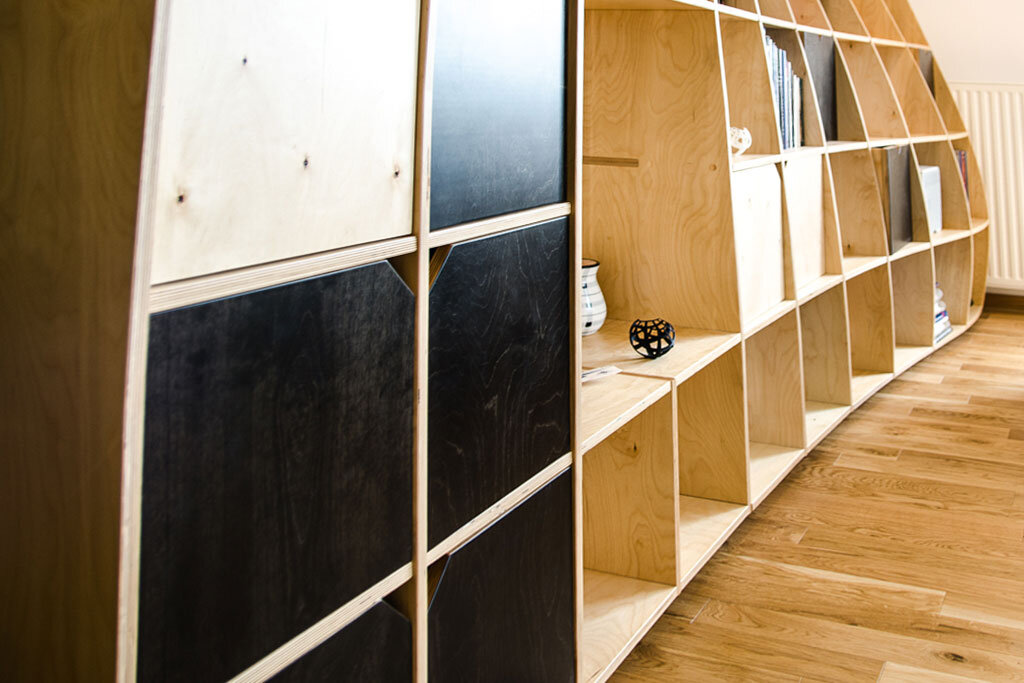
Firmly commissioned projects, projects with real clients, capture to a good extent the experience of these tests, trials and processes. The D.I.Y. (do it yourself) attitude is here replaced by carefully controlled manufacturing processes and application techniques. A first such object was commissioned following the exhibition in mock-up form at BIFE-SIM 20145 of a library I had built for our office, using the waffle algorithm, already a classic among connoisseurs. The disappointment of working with a process as mundane as modeling ribs arranged neatly on a grid with two attractors was overcome by the satisfaction of working on a product that is not temporary and rises to a level of wear-resistance and quality of detail that we had failed to achieve working on our other experiments or in workshops. Interestingly, it didn't have to be explained to our beneficiaries that thinking about such an object is about site specificity and identifying the conditions that inform the transformation. They were looking for an object to match a living room with a stepped ceiling. The bookcase's cutout, but also its non-standard look matched the solution our clients envisioned. In the end, the bookcase project was for us a small victory written in the law of commissioned, contextual products. These products are contextualized precisely through computational intelligence, through algorithmic responses that are transformable according to the scale of the context they operate with. Our library has thus gone from being a singular object, a prototype, to becoming the DNA of a family of objects, which we hope to grow, each time adapting to another context, thus justifying the algorithmic approach.
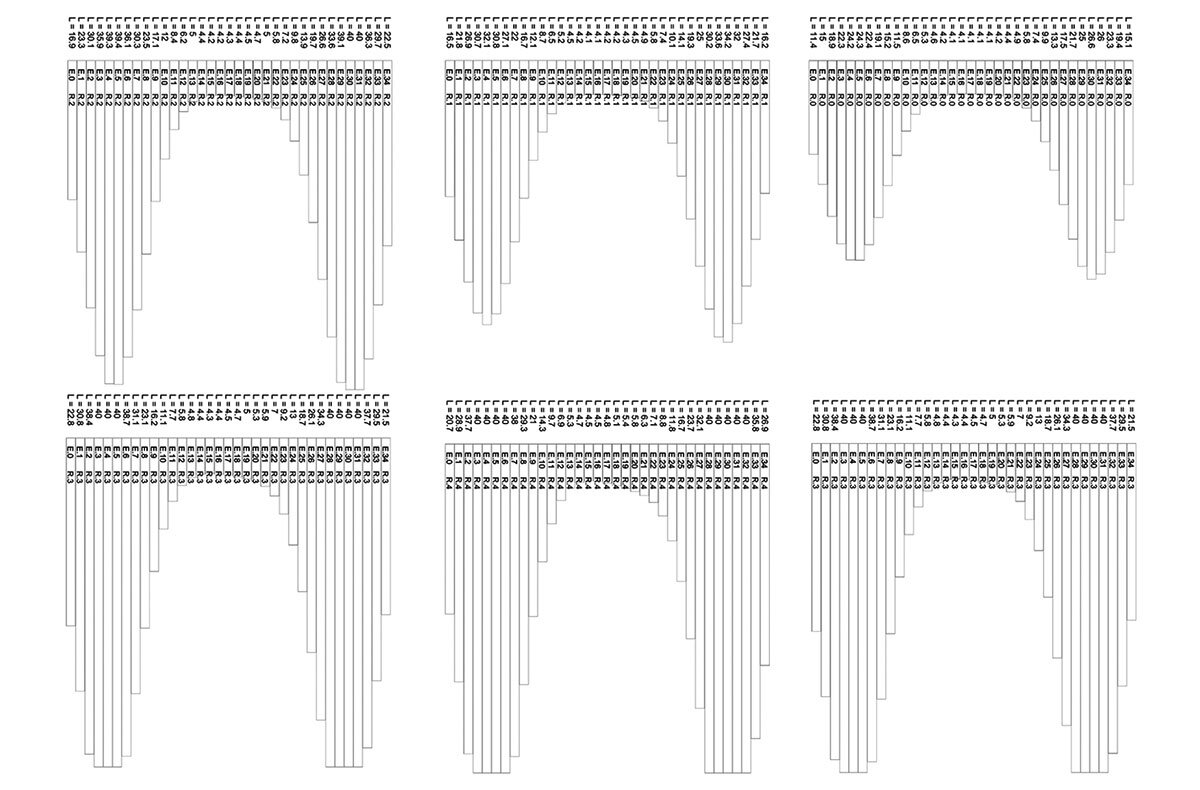
At the end of 2014, a collaboration with Corporate Office Solutions to design an office for an IT company gave us the opportunity to integrate our proposals into a design concept that had innovation and technology at its core. We proposed in the same place interactive projections, a wall of cooler activated by position sensors and some static elements, such as a partition wall made of 90 ribs with a height of 265 cm and a variable depth between 18 and 115 cm. This wall complemented the relaxation and experimentation area within the overall design and would have been used to experiment with sitting positions other than the standard office working position. In short, it would have been a place where employees could take a break and straighten their backs. Our approach was praised by both the C.O.S. employees and the beneficiaries as being very much in keeping with the concept of the whole arrangement. The proposal had the expected success and we led it to the point of optimizing the budget allocated for the work. At that point, the high costs of the fixed elements6 and the maintenance costs that were burdening the budget of the interactive installations led to the proposal being removed from the project. Therefore, we did not take the project to the point of manufacturing, but we found that the proposed processes and responses were appreciated by the principals coming from high-tech areas. Both these sectors as well as event organizers have commissioned us several times this year for non-standard solutions for various small-scale projects with the theme of expressing innovation. More than 80% of them don't go beyond the budget discussion, but the conversation remains open. In 2015 we have more opportunities than in previous years to implement some of our ideas and designs in externally funded projects. By accumulating a few projects and continuing to develop the prototypes we have been working on so far, we believe we will generate more demand for such projects in the future. Also starting this year, we are working on a more complex initiative of our own than the previous projects, which focuses on the network of Romanian "makeri" and designers and the need to communicate the possibilities of computational design and digital fabrication to the public.
From the level of a start-up positioned in a market that confuses these notions with science-fiction or doesn't know them at all, we chose to seize every opportunity to experiment. One pragmatic aspect that we still have to take into account when proposing parametric solutions for facades, partitions or furniture is the high cost compared to the standard variants on the market, which sends the product into the high-end zone. As there are still no recipes, systems or standard materials for products for which most of the time even the fastenings are different, the accuracy and correctness of the details is not only a guarantee but a prerequisite for design work. If not all these requirements can be met, it takes innovation and technology enthusiasts who appreciate the product despite the cost, and we are glad to have met some of them.
About Intersection
Commissioned object design and experimentation are two distinct fields that are approached differently. In our opinion, there are no trivial objects, just as there are no useless or crazy experiments. Object production and research are worlds with very different rules. Therefore, two years after starting an architecture and design studio that has the knowledge to think about, detail and broker the production of parametrically designed objects, we are convinced that without unbridled experimentation we cannot develop an attitude of infinite possibilities and truly generative thinking. However, we also know that integrating these experiments into the everyday experience of our beneficiaries depends very much on the context and where the proposed innovations are on the graph of their acceptance as viable solutions. We will continue to have a dual focus, with the aim of tilting the ratio of our design activities as much as possible towards computational architecture. Our immediate goals are to continue to produce small ripples in local architectural production and experiments with greater communication impact than previous ones in the community of architects and student-architects interested in computational.
Experiments of any kind exhibited in the public space or in dedicated exhibitions have a very important role in building a working context for computational architecture in Romania. The number of workshops, positive or negative examples or landmark buildings designed in this language is still far from saturation point. Encouraging initiatives, however small in this field, and criticizing them will contribute to the specific development of computational architecture in the Romanian environment.
NOTES
1 The founding architects of the studio are: Irina Deaconu, Ioana Popescu, Ina German. Our permanent collaboration with Andrei Mitișor also qualifies him as an essential member of our extended collective. UAUIM students Florin Pîndici and Alin Stoica complete the team.
2 Wavics was realized in an extended collective, which we named Aditiv and is composed of Irina Deaconu, Andrei Mitișor, Mihai Aostacioae and Ina German. Ioana Popescu, Traian German, Mihu Șurtea, Cristina Iordache, Cristina Ginara, Claudia Dima, Alexandru Vasile, the whole Kaustik workshop collective and others also participated in its construction.
3 The international conference on new digital manufacturing technologies organized by Neil Gershenfeld, initiator of the first MIT FabLab. The 10th edition took place in Barcelona: https://www.fab10.org/es/home
4 Most relevant for understanding how the facility works is a video montage containing moments from the Fab10 exhibition in Barcelona: https://www.youtube.com/watch?v=RwiTGISimqA
5 BIFE-SIM is the international fair for furniture, equipment and accessories in Bucharest.
6 The 7.15 m wall made of laminated wood ribs, CNC-cut and painted came at a cost of around €11,000.