VES-EL - Design: Gareth Neal & Zaha Hadid

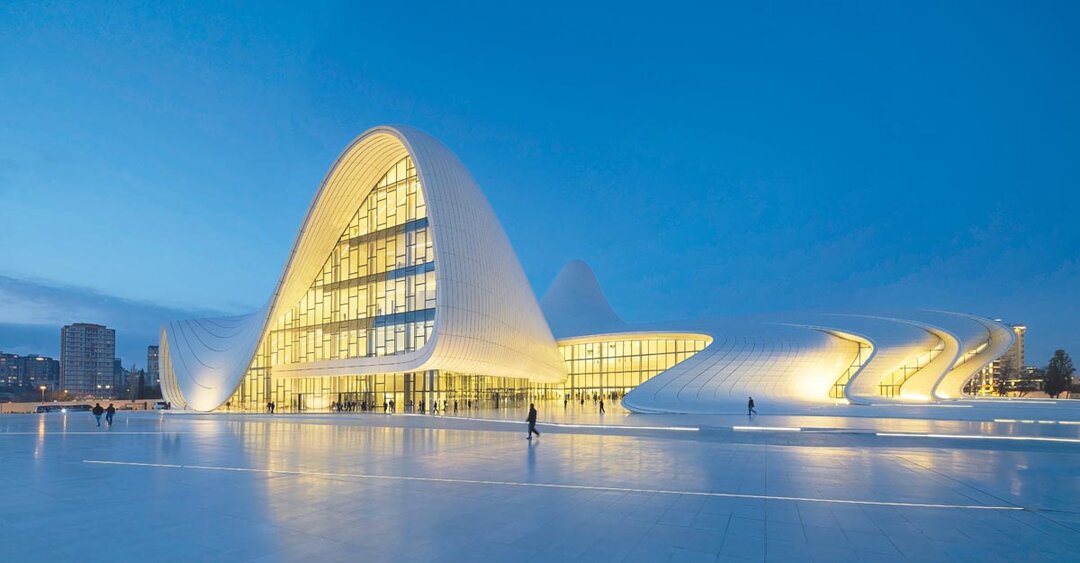
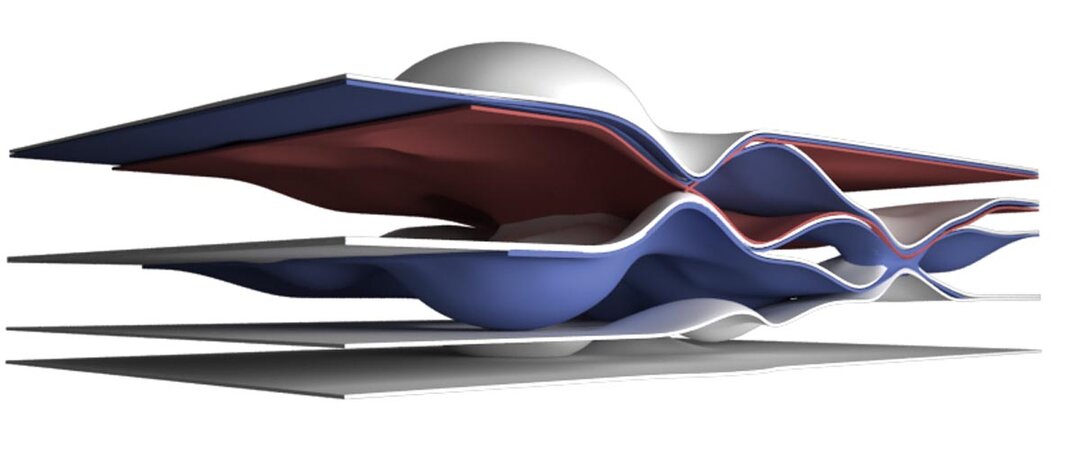
Moving beyond the excitement generated by the use of computational technologies for composing some of the most controversial forms of recent times, going beyond a dispute about style or aesthetics, idz architecture studio's research focuses on the study of computational design that must leave the cold flat screen of the computer every time and must materialize in real objects.
For us, the goal of using computation in design is to be able to control a complex process of design as well as manufacturing. The results often go beyond the possibilities of computer simulation or visualization and become seductive physical objects.
Starting from the idea that we are an architecture and design studio in Romania, where computational design is not yet well defined or even represented, we tried to focus on the real manifestation of objects designed and fabricated with digital tools. Thus, we realized several series of workshops open to those who wanted an applied experience of using digital technologies. We have always focused on physical, visible results that can be imprinted in the common memory.
In addition to the workshops, as a way of transferring knowledge and testing research topics, our studio has also realized a series of small design objects, focusing on the realization of a product rather than a simple demonstration of a technology. One of these experiments, QUAD_LIGHT, a parametrically designed and digitally fabricated lighting fixture, has also been praised in professional circles, being awarded a Nomination at the 2014 Architecture Annual. In the following, we will present some of our latest research that has materialized into physical objects.
IDZ Explorations, the design process with digital tools
Our research is focused on a materialization research methodology, where we explore new design strategies using digital tools, which we fabricate with digital fabrication tools and re-evaluate design options. This is an iterative process where, through continuous feedback, the idea we start from evolves, adding meaning to the design. Research starts from an emerging idea that incorporates the creative process, design options and manufacturing constraints into an algorithm. The algorithm evolves and, more often than not, the research is continuously developed and spans many projects.
Object design. CELL_AGGREGATION
The realization of design objects by digital means intended to realize a link between computational design, digital fabrication methods and material. It involved digital tools in the environment of design practice in order to observe how they can influence the processes of creation and fabrication.
The research had two aspects, one related to the working method and one related to the analysis of the final object. Thus, the working process was pursued as an abstraction of the design and manufacturing process through code. It was also important to analyze the material result in order to observe the influence of the digital process on the final object.
The working method is based on a feedback process between concept, manufacturing method and material. Thus the object is the result of a gradually evolving process, combining creativity with the attributes of digital tools. A continuous exchange takes place, where digital capabilities are subjectively interpreted, transforming the creative process, and conceptual requirements are abstracted and translated into code. The aim was not to achieve a completely digital process, but to relate intuitive design methods with computational ones on the one hand, and digital fabrication with traditional materialization processes on the other.
Although the realized objects are small in size, both the working process and the fabrication methods can be taken and used on an architectural scale. Emphasis is placed on the articulation of the components, which is integrated into the concept, on the interaction with the physical environment, on texture, aspects that also characterize architectural practice. Fabrication tools are also being developed and aim to be applied on a larger scale in the construction of architectural components.
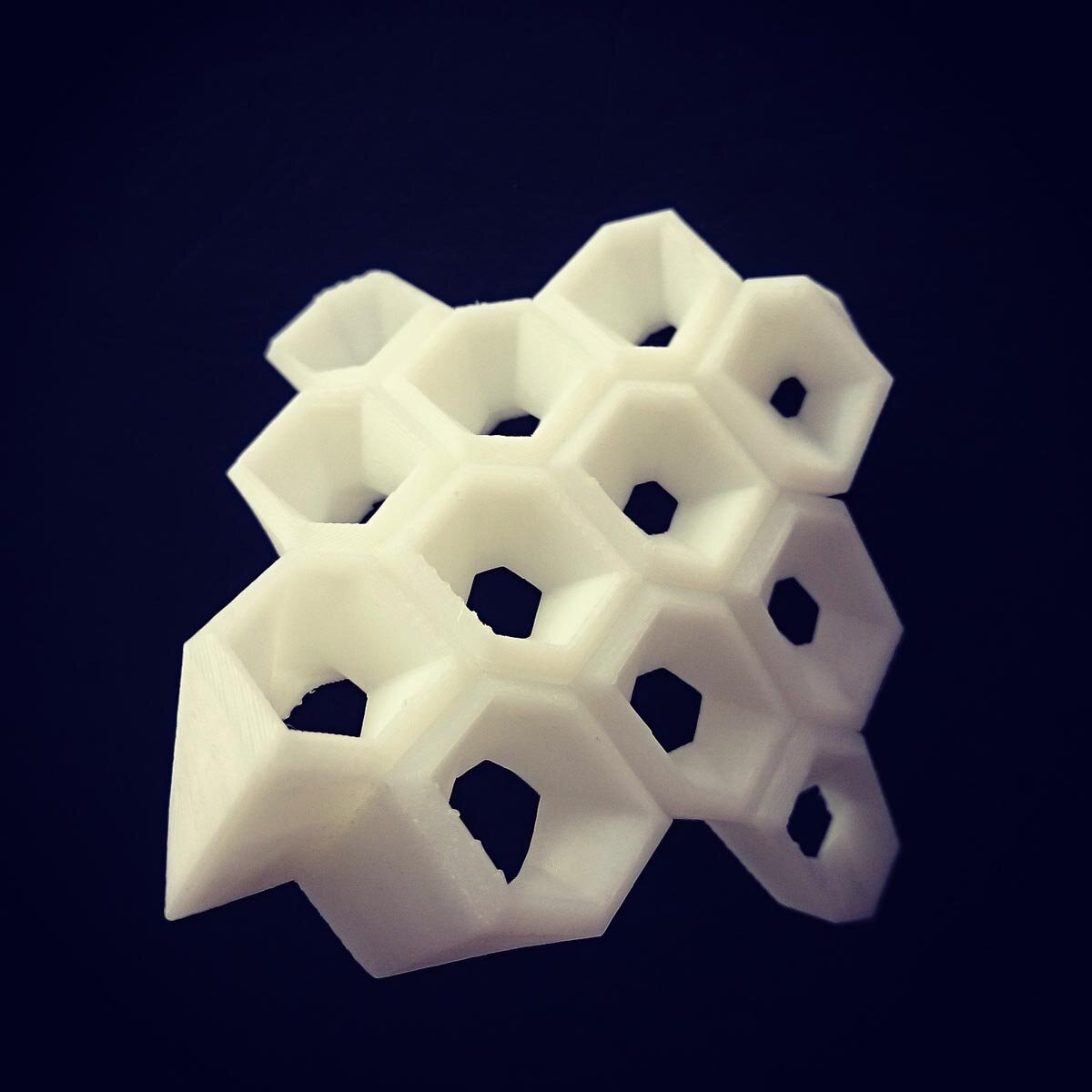
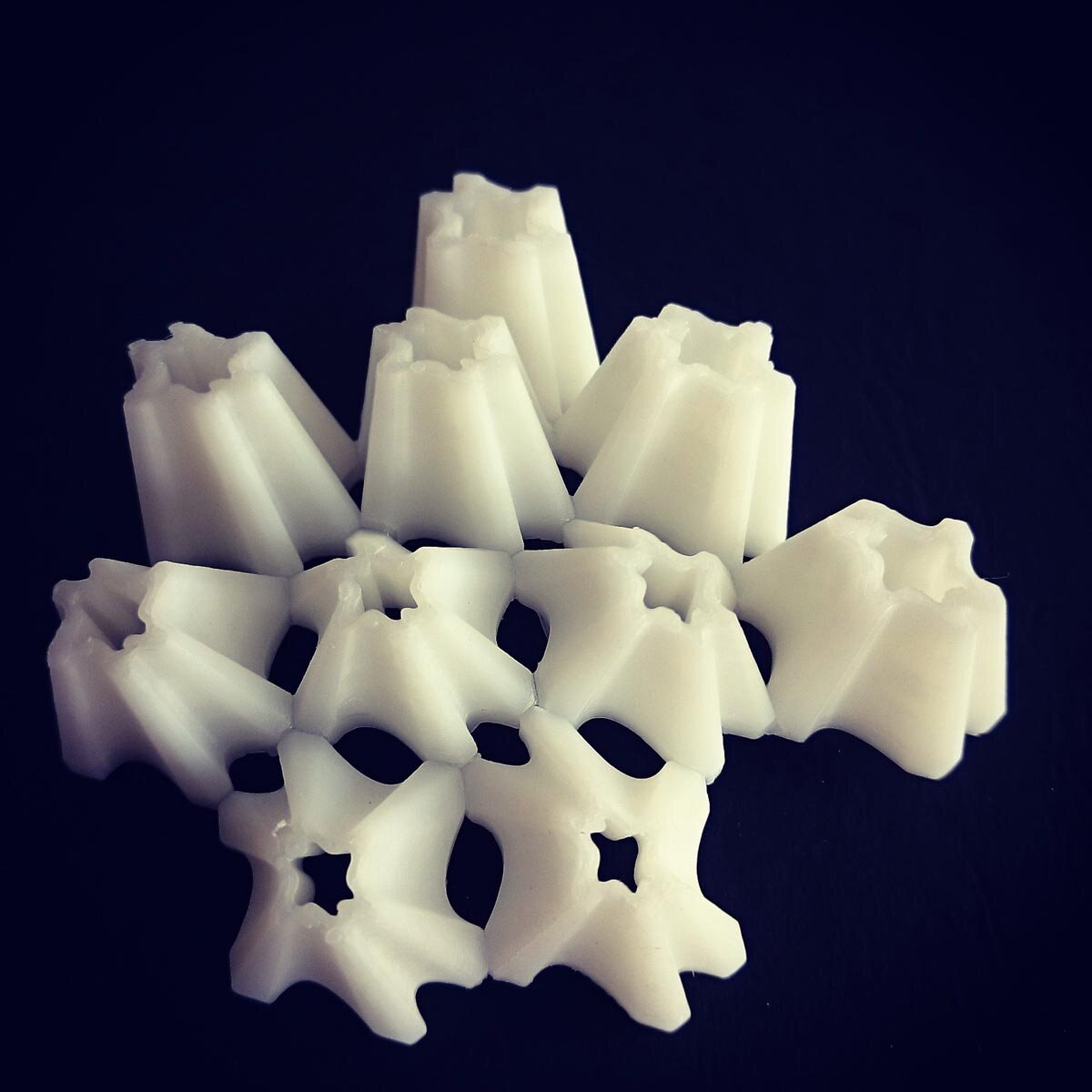
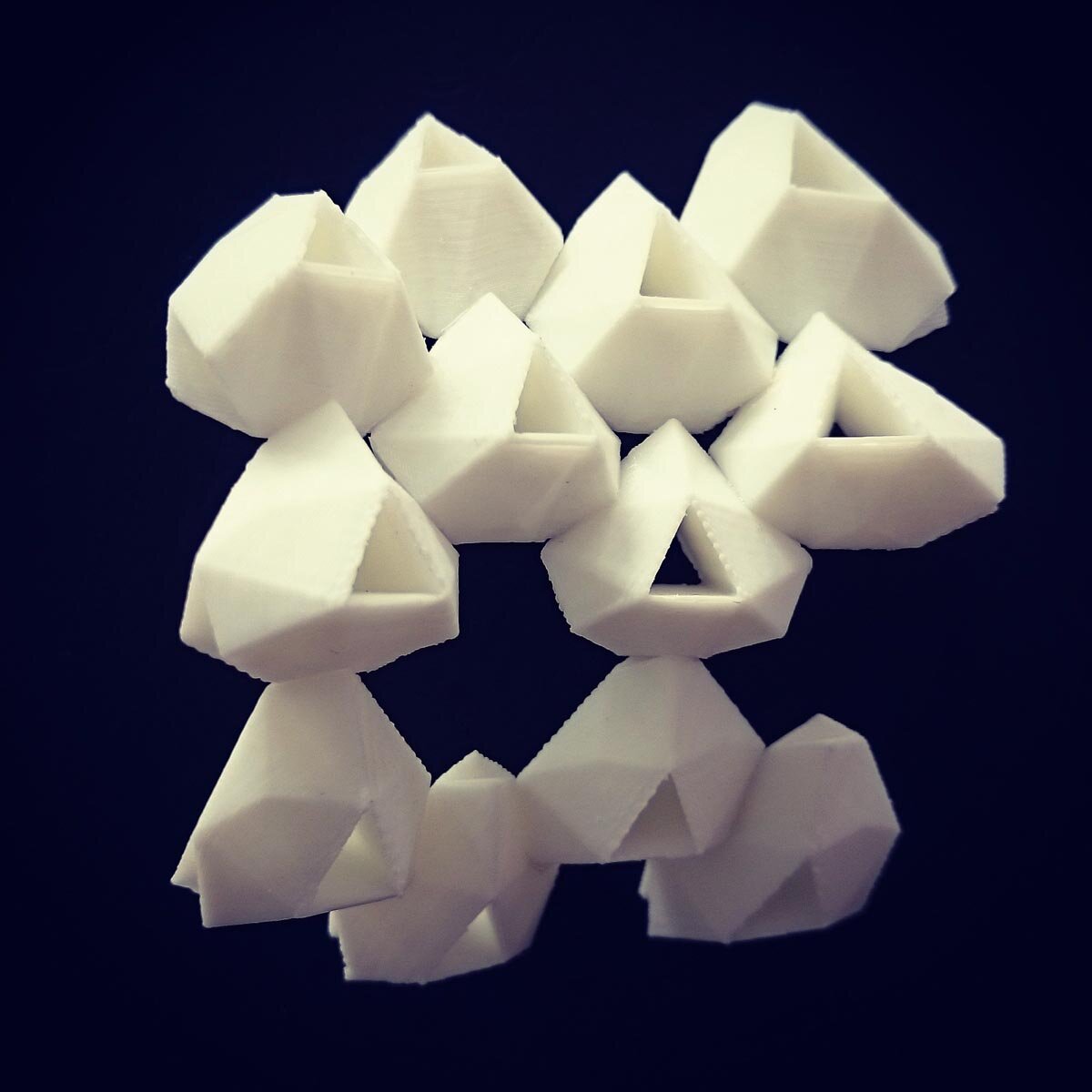
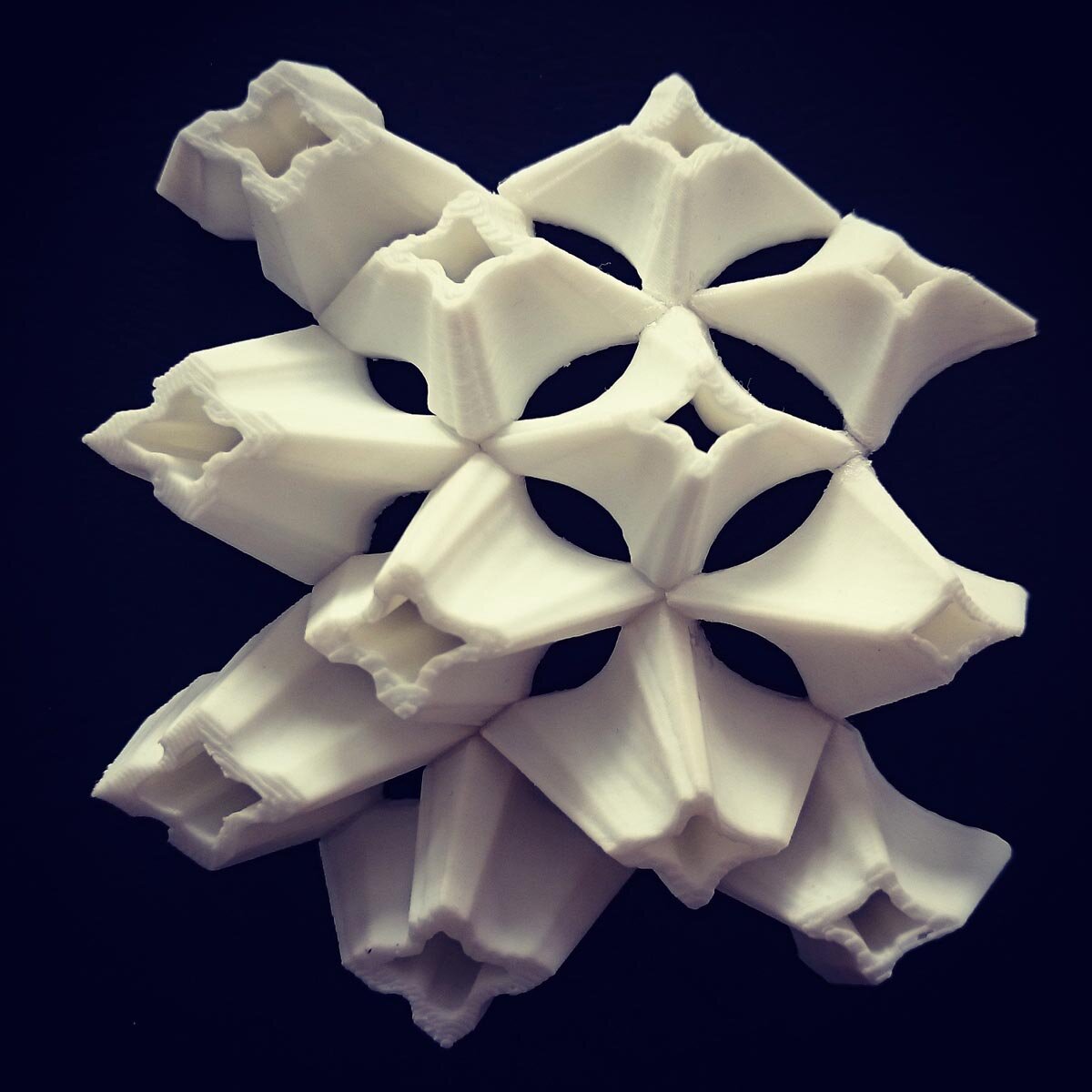
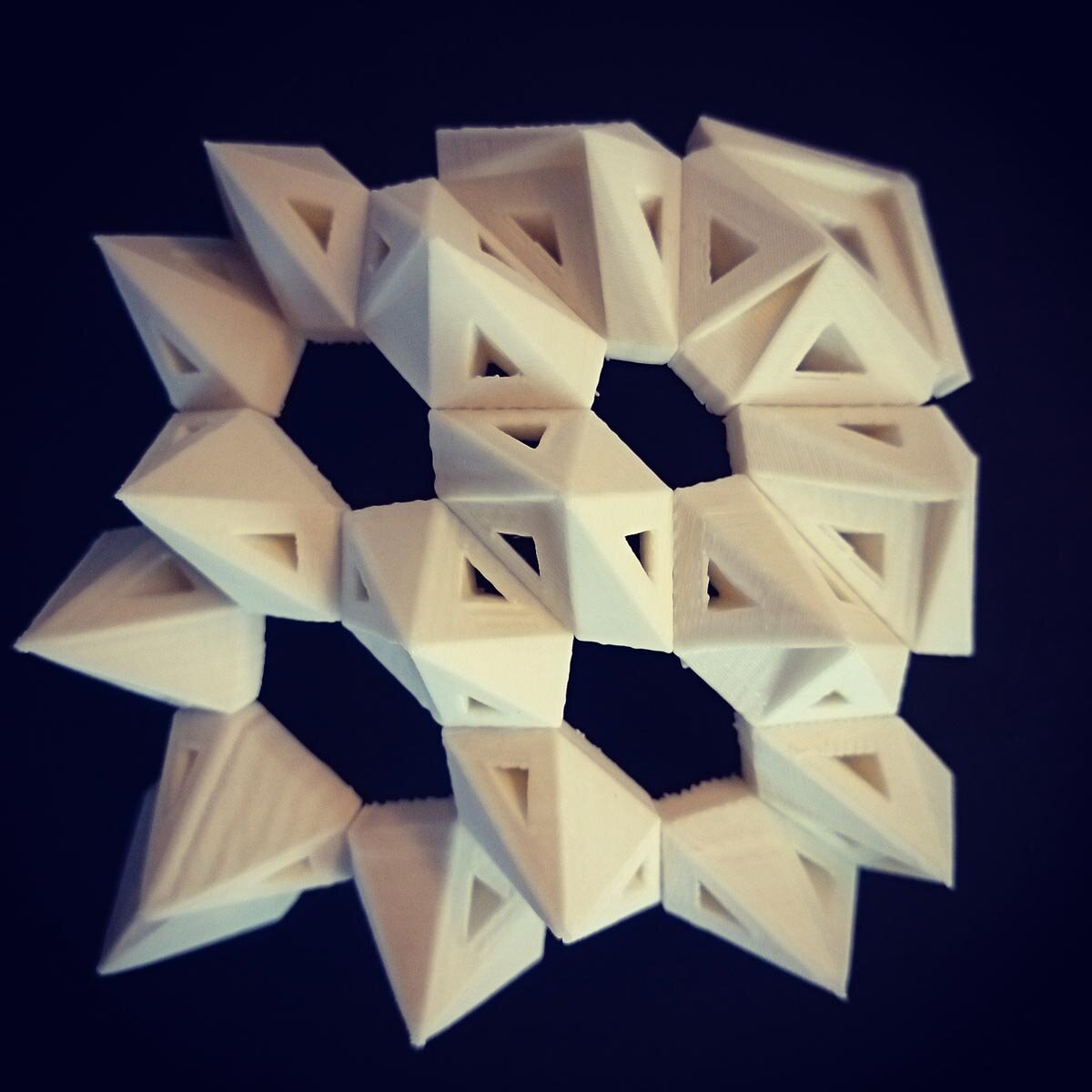
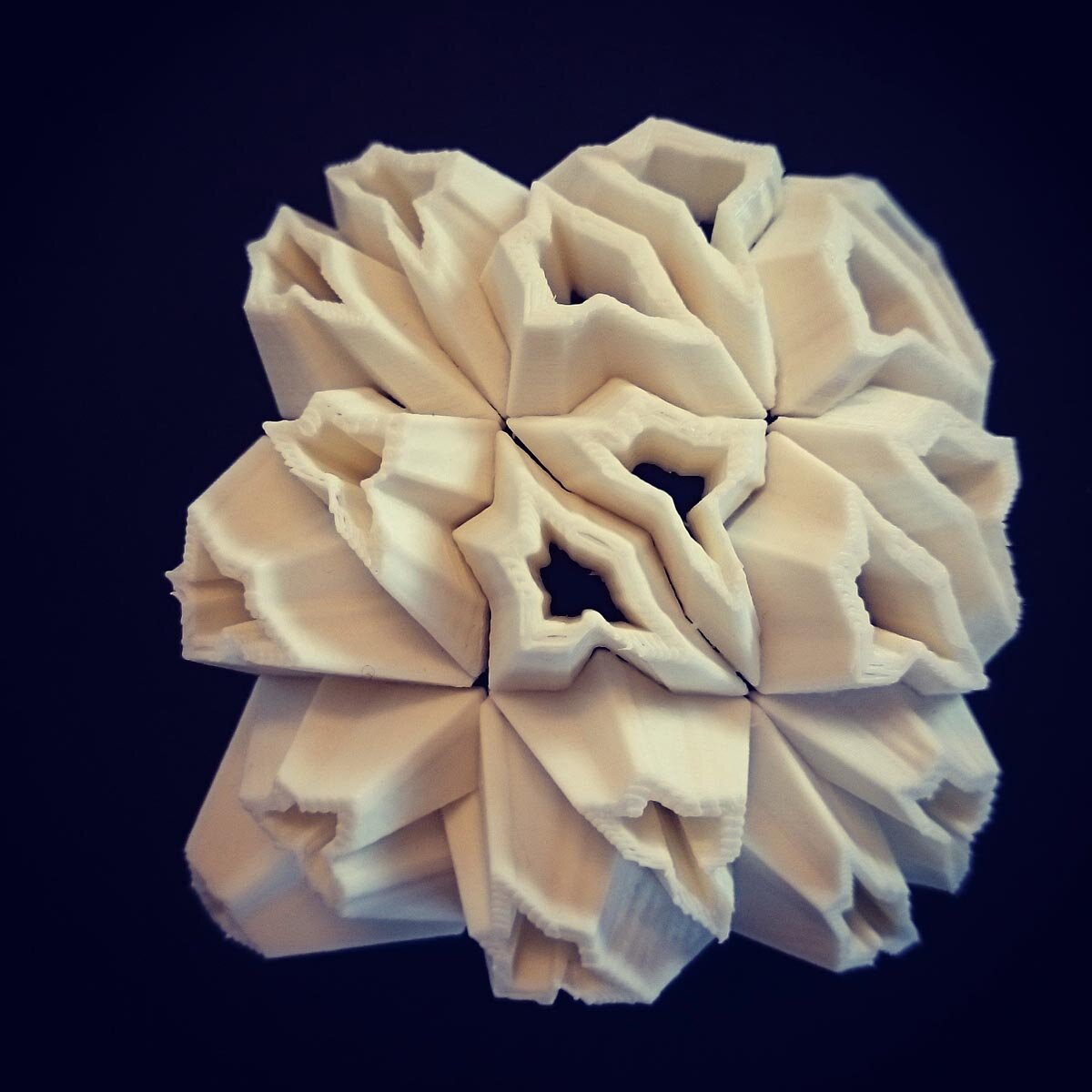
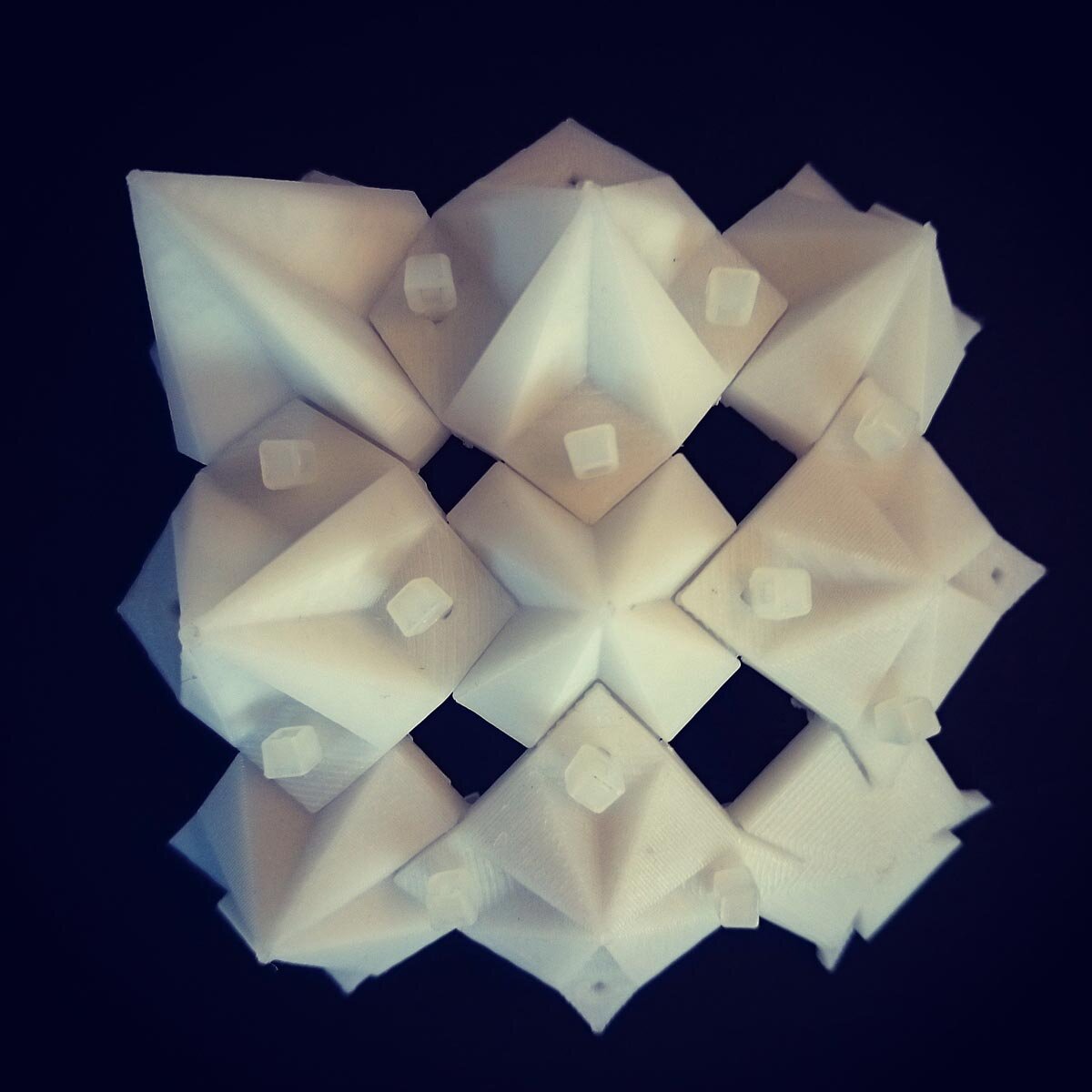
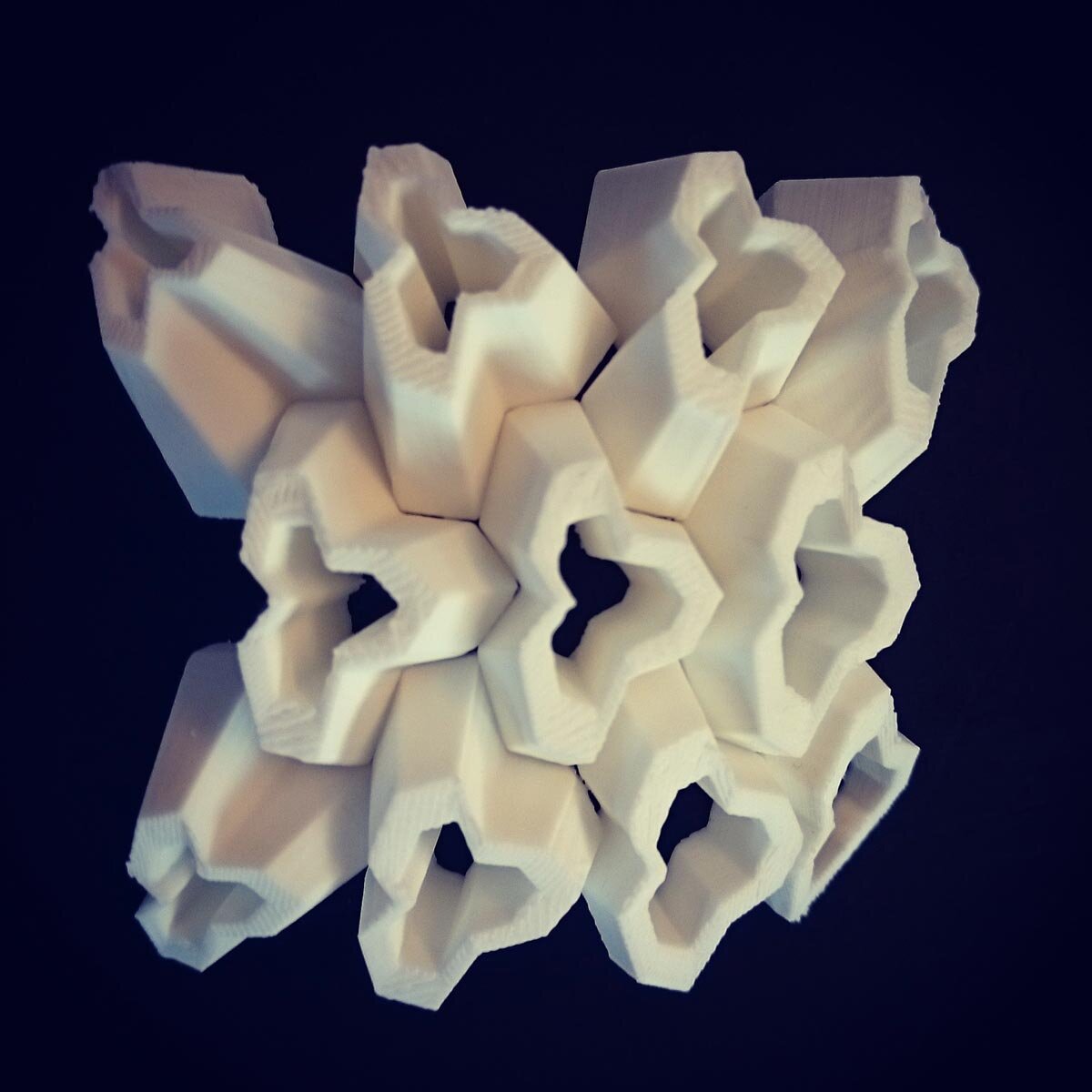
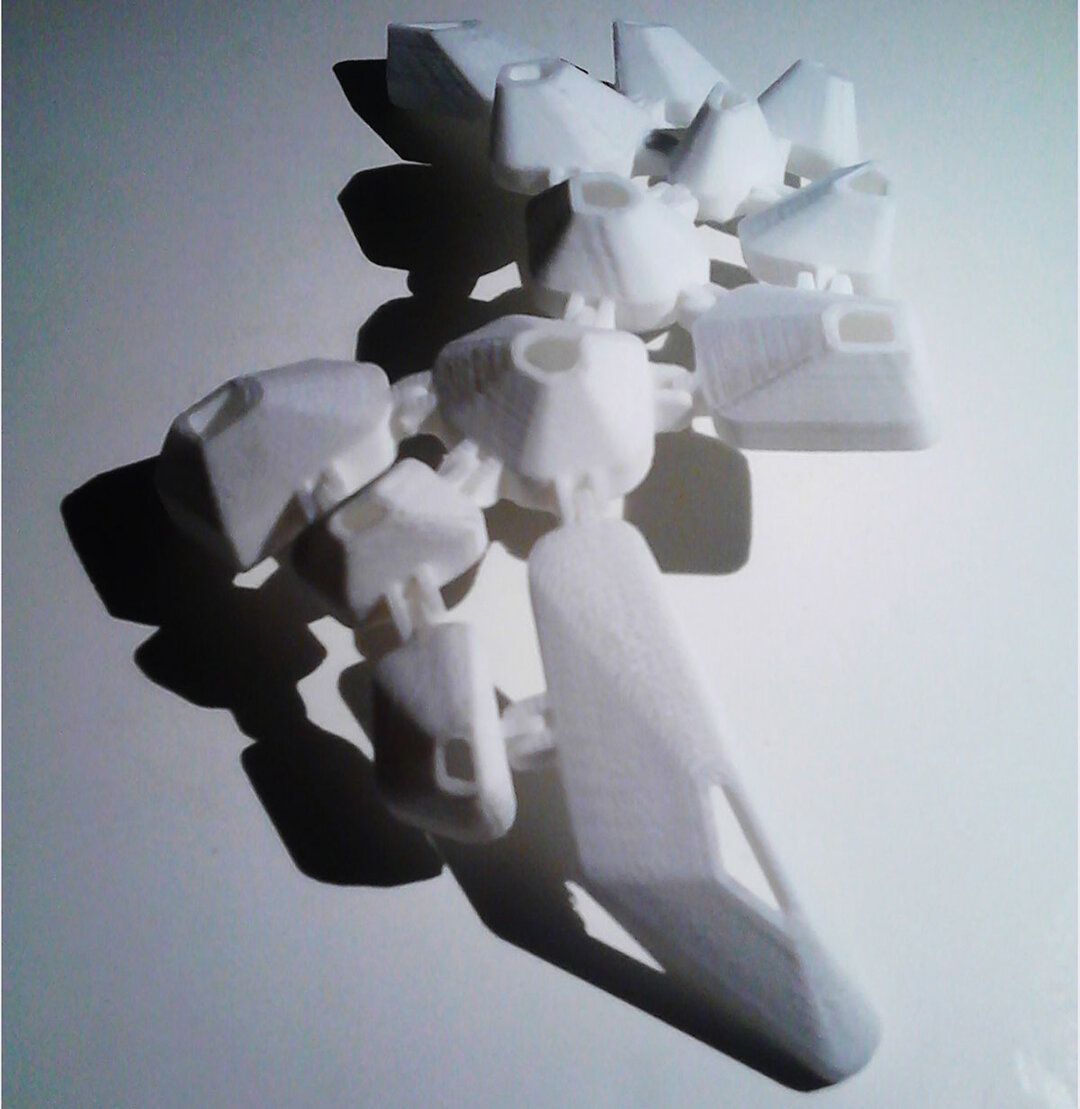
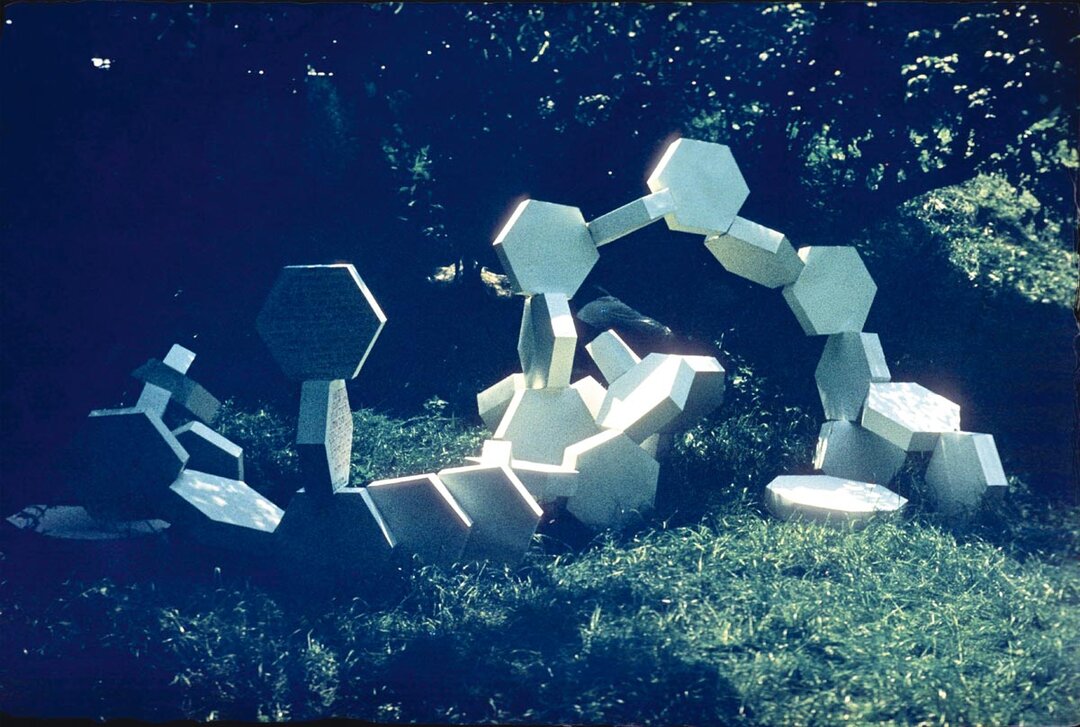
For the CELL_AGGREGATION collection the intention was to explore methods of building that no longer start from surfaces that are subdivided, but start from volumetric cells that aggregate. We also pursued different methods of representing these aggregated structures, in which we explored the relationship between negative and positive. This resulted in two very different variants that start from the same association principle, one that expresses the volume of the cells and a porous one that suggests the cell walls.
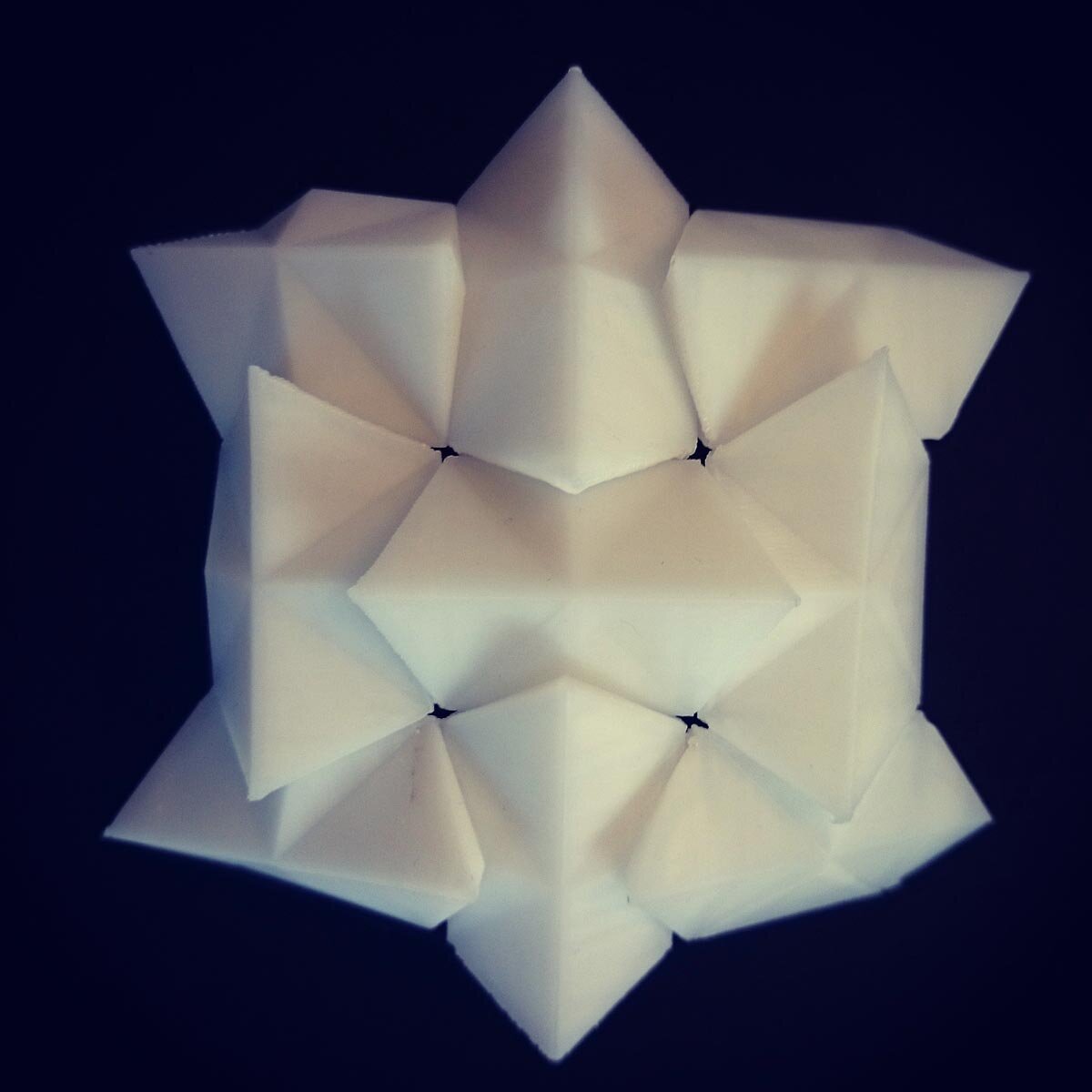
Also, through the project, we explored the geometry of cells, following deformation principles on regular polyhedra, which thus lose their symmetry character, but keep their geometric relations. By transforming geometrically stable structures, a familiar but altered image is obtained, emphasizing topological deformation, the relationships between elements.
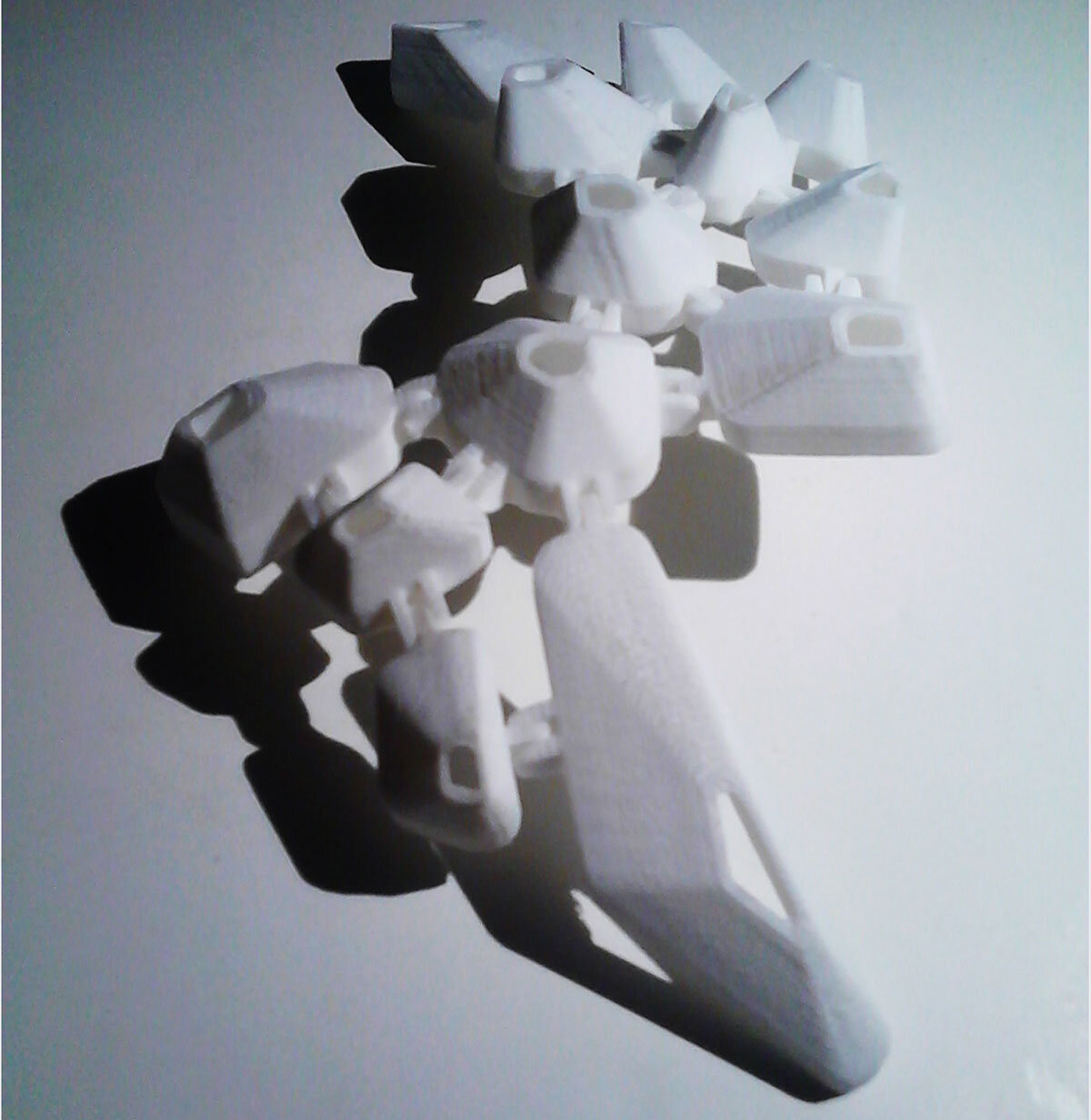
The jewelry design project explores methods of articulating cells, of obtaining heterogeneous structures, but also expressing a generative order. The resulting objects oscillate between random and ordered, between massiveness and fluidity. The material characteristics motivated the geometric transformations and are strongly influenced by the chosen method of fabrication.
The formal search process starts from the geometry of the cell and was an evolutionary process. Each cell is defined according to the Voronoi diagram. That is, a collection of points positioned in space generates facets that negotiate their geometry as an average of the position of these points. To each face corresponds a point that influences it. This algorithm has complex results when combined with the aggregation principle and applied on sets of cells, which are tangent and fill the space. Cell centers and influence points are defined, the geometry resulting by correlating these parameters.
In this case, the manufacturing technology is 3D printing. The geometry used is that of the edges and nodes of the faceted cells. Because 3D printing is well suited to shapes with complex structure, we aimed to transform the generated geometry so as to take advantage of the strengths of the manufacturing method. Therefore, the final geometry is wire-like and soft.
Workshop. ARTICULATION THROUGH PATTERN
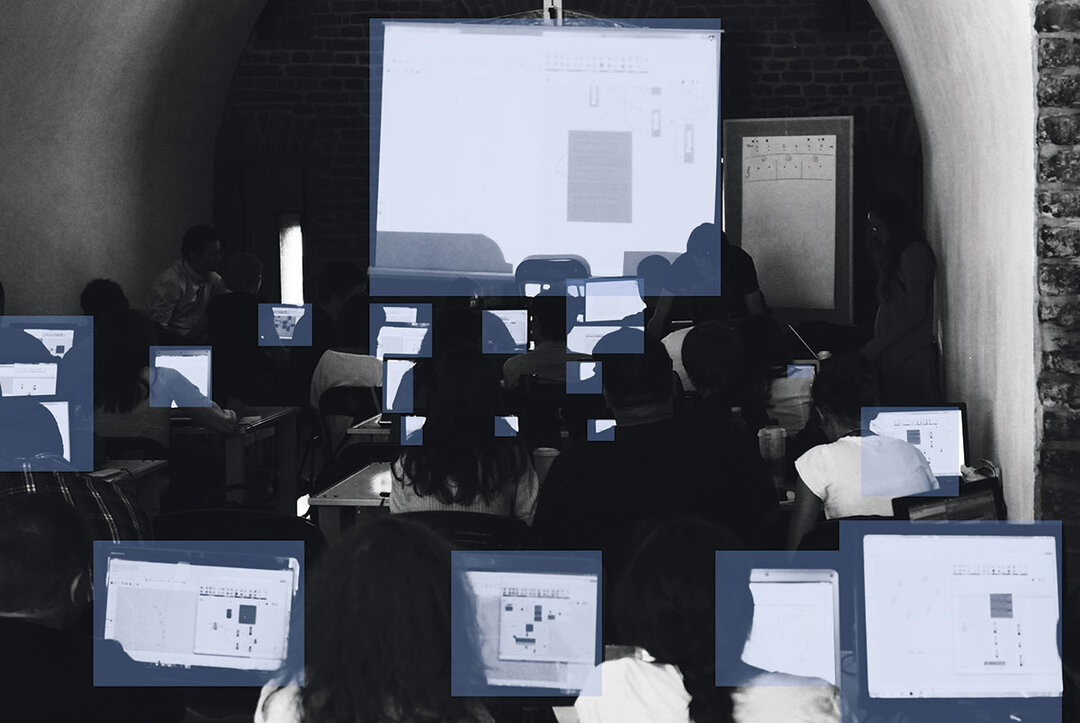
The workshops we organized were intended to give creative professionals the opportunity to test the capabilities of digital tools in design and fabrication. In that the workshops resulted in digitally generated and fabricated physical objects, they aimed to interweave material and digital aspects.
Both the development of the theme and the creative process during the workshops become a method of research by design, but which are delimited by the theme. Organizational aspects, related to short working time, accessibility to materials and digital fabrication technologies impose constraints that are addressed by the theme. This way of working is specific to architectural practice, which combines objective logic with creative thinking. Thus, the setting of the theme involves a period of documentation, the selection of fabrication method, material, scale of fabrication and, most importantly, relating these into a topic relevant to design practice. During the development of the theme, processes are envisioned, difficulties that may arise are anticipated, and the theme is constructed in such a way as to exclude some of the possible problems.
Workshops, although they have a clearly defined theme and clearly defined tools to be used, do not have a predetermined outcome. Using the tools provided, the participants have the opportunity to explore and test their own vision, thus the prototypes realized are different in that they are personal interpretations of them. Thus, the workshops become an exercise in research by design, testing how new digital tools can be used in architectural practice.
By having participants interact with materialization issues, they understand that the digital environment does not provide automatic tools that make it possible to realize any form efficiently. The whole process, from conception to fabrication, must be envisioned and abstracted by the designer.
Workshopping as a way of working proves to be a suitable means of knowledge transfer between the primary research, which we as tutors carry out, to the community of architectural practice. Thus, we aim to provide the community with a range of developed and tested working methods that can be further applied and adapted to their own practices. The aim is to show that new working tools are accessible, customizable and have the potential to develop the imagination.
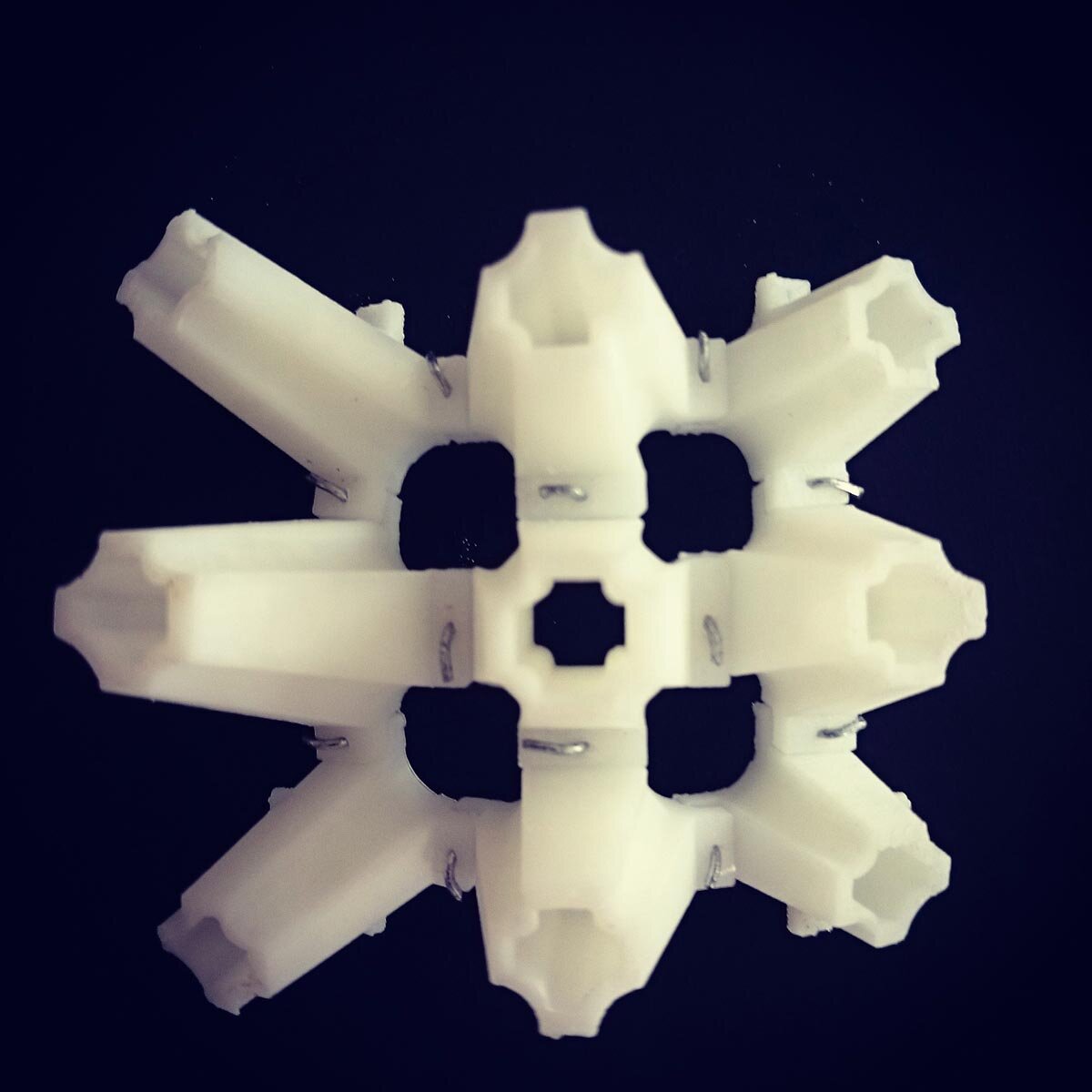
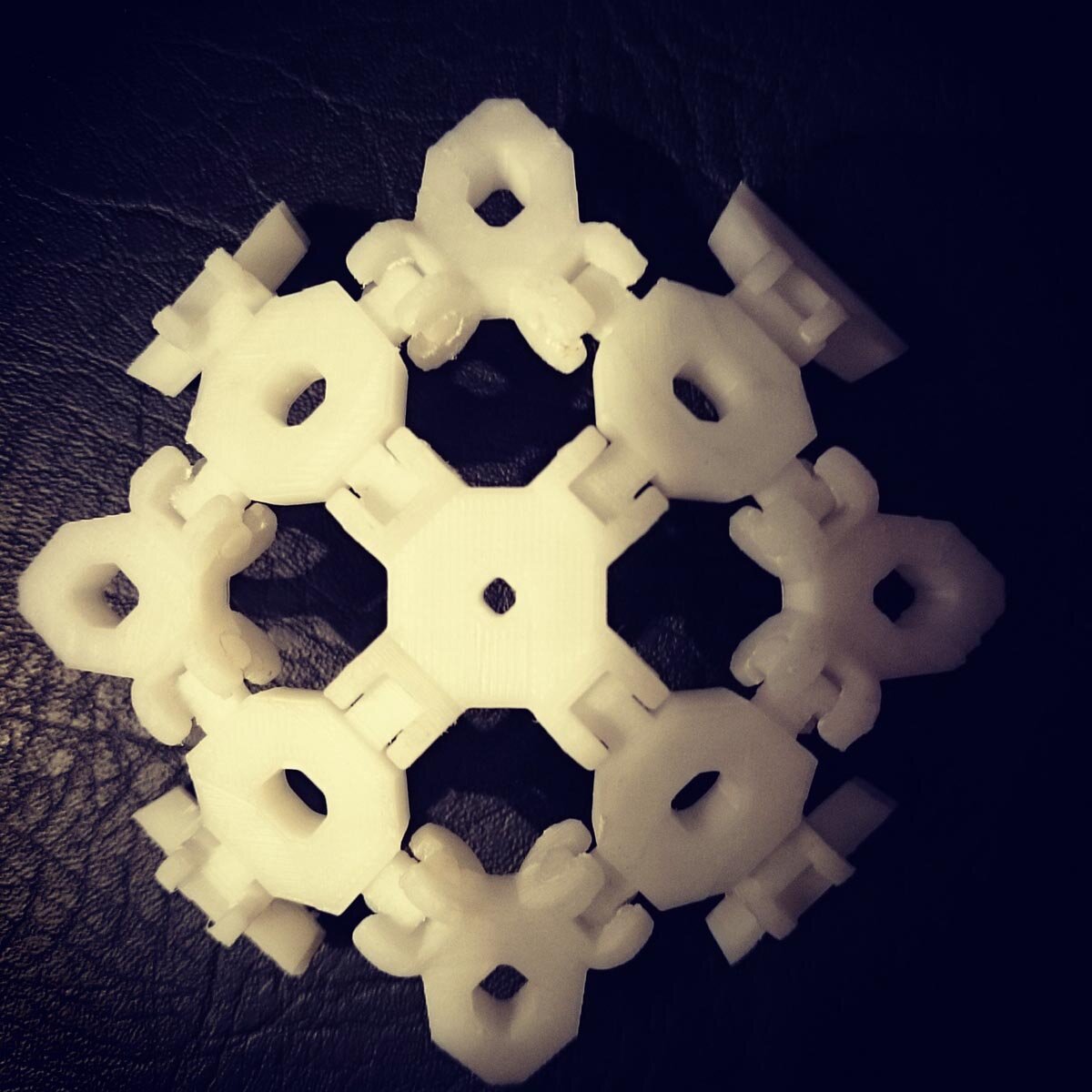
The "articulation_through_pattern" workshop aims to explore the concept of contemporary articulation that starts from a differentiated pattern generating volumetric components. The aim is to integrate the possibilities of 3D printing in design practice and in the realization of different construction elements that, articulated, determine the whole.
Participants, over three intensive days, will master the constraints of 3D manufacturing and develop scripts in Grasshopper to generate differentiated components. The workshop will result in a series of articulation strategies materialized through 3D 3D materialization.
The model assumes the existence of a geometric generation rule, it is not a random construction. The model expresses a logical sequence, a sequential thinking, governed by a set of rules, and thus approaches the algorithm. On the other hand, the pattern assumes the existence of a unity which is repeated and which multiplies and articulates to generate continuity.
Contemporary design attempts to move away from the top-down approach, in which geometry is imposed, and its decomposition into parts is necessary to construct it. In this case, fabrication only has a role in economic efficiency and is based on predetermined methods. Alternatively, the sub-division of the object is integrated into the design process as part of the concept. Thus, the design process becomes bottom-up, and the geometry of the assembly is generated by articulating the components, but this time they no longer have to be identical.
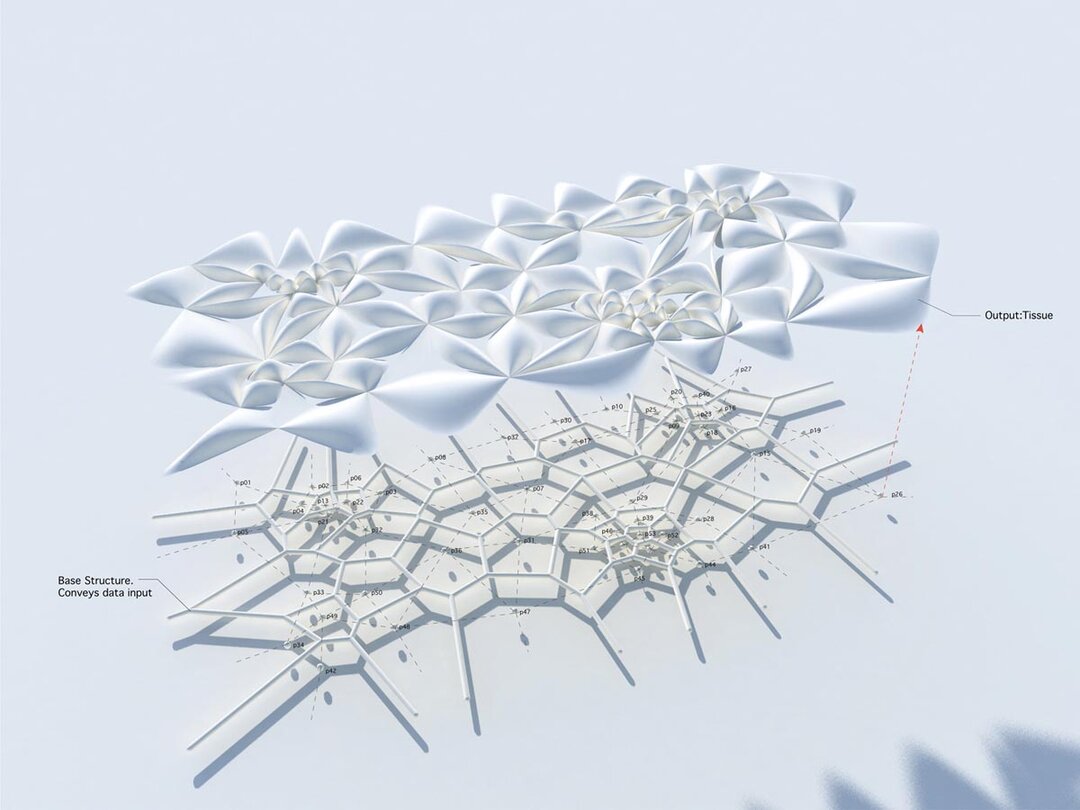
It is no longer about free surfaces but articulated structures, where differentiation serves as a mode of articulation. We thus speak of gradual passage as articulation, where form transforms itself in order to adapt to different situations in the whole. The generation of the variable form is the result of the correlation of conceptual, geometric or functional aspects, but the transition between different situations is not brutal. Thus articulation, at the level of the whole, reflects both a global logic and local character.
The contemporary articulation is part of the digital generation process, it is defined by algorithms and at the same time includes material aspects. The model becomes the result of abstraction of conceptual, material and manufacturing aspects. It is characterized by variability, weaving and assembly of different components. Articulation is defined as a component in itself or results from the intersection of neighboring components. A place where ambiguities are synchronized, a soft interaction, a connection, which defines the overall geometry but delimits the components.