VES-EL - Design: Gareth Neal & Zaha Hadid

The VES-EL is the result of a unique collaboration between Iraqi-born British architect Zaha Hadid and British designer Gareth Neal, as part of the unique project The Wish List. It was made possible with the support of the American Hardwood Export Council, Furniture Company Benchmark and Sir Terence Conran, as an opportunity for emerging designers to learn from and collaborate with renowned names in design. At the heart of The Wish List concept was the idea of combining traditional woodworking techniques with modern ones to create unique pieces to help designers and coordinators improve their woodworking skills and techniques and to "familiarize designers with the important concept of assessing the environmental impact of products throughout their entire life cycle".
Zaha Hadid was one of the ten design coordinators who named Gareth Neal as one of ten emerging designers. Among the other pairs in this incredible team of The Wish List were Terence Conran and Sebastian Cox, Alison Brooks and Felix de Pass, Norman Foster and Norie Matsumoto, Allen Janes and Lola Lely, Allen Janes and Lola Lely, Amanda Levente and Win Assakul, John Pawson and Studio Areti, Alex de Rijke and Barnby & Day, Richard & Ab Rogers and Xenia Meseley, Paul Smith and Nathalie de Leval.
Zaha Hadid expressed from the outset her simple desire to create "some objects of joy". She was very honest, as Neal admits, and gave "all the freedom to approach the theme, which was fantastic".
VES-EL was born out of Gareth Neal's desire to push the current boundaries of the concept of playfulness, namely its function and meaning. The choice was the result of a series of preliminary sketches and concepts developed by Neal with the office design team. The water carafe concept reflects the fluidity of his adopted design philosophy and the liquid nature of his entire body of work, now coupled with a functional object that is being reinvented.
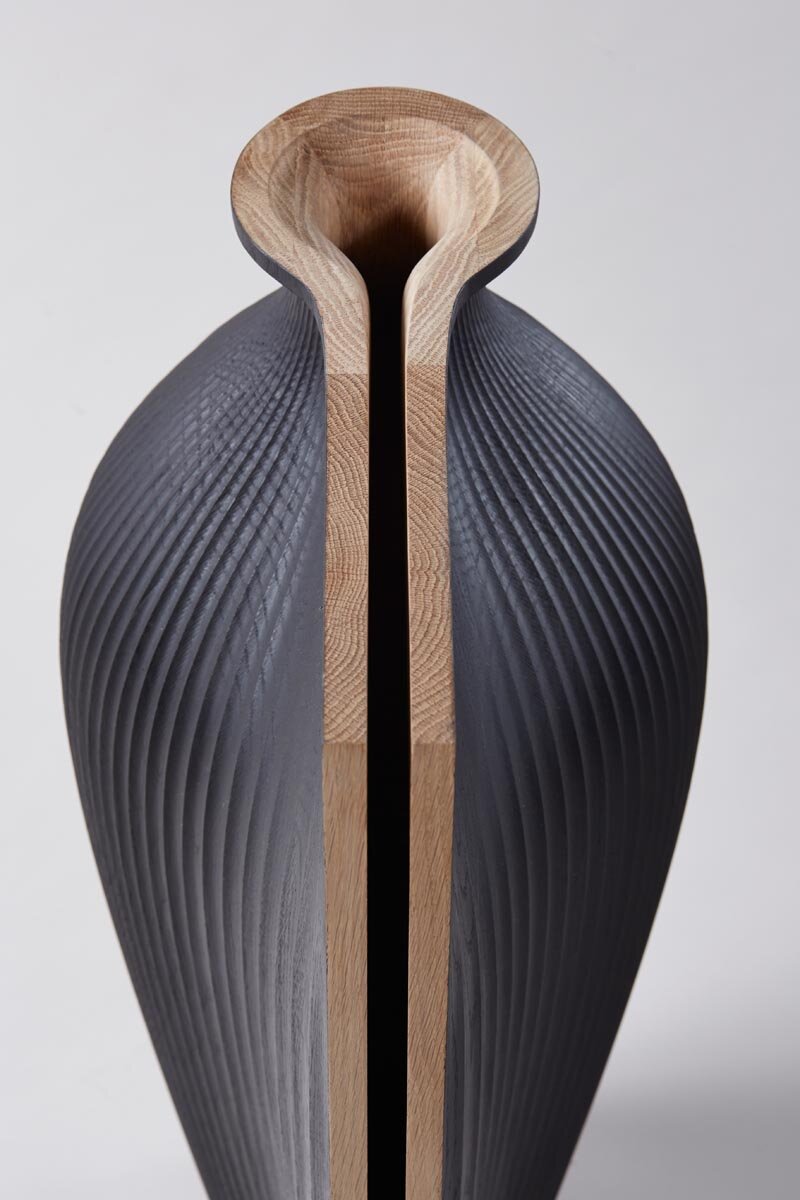
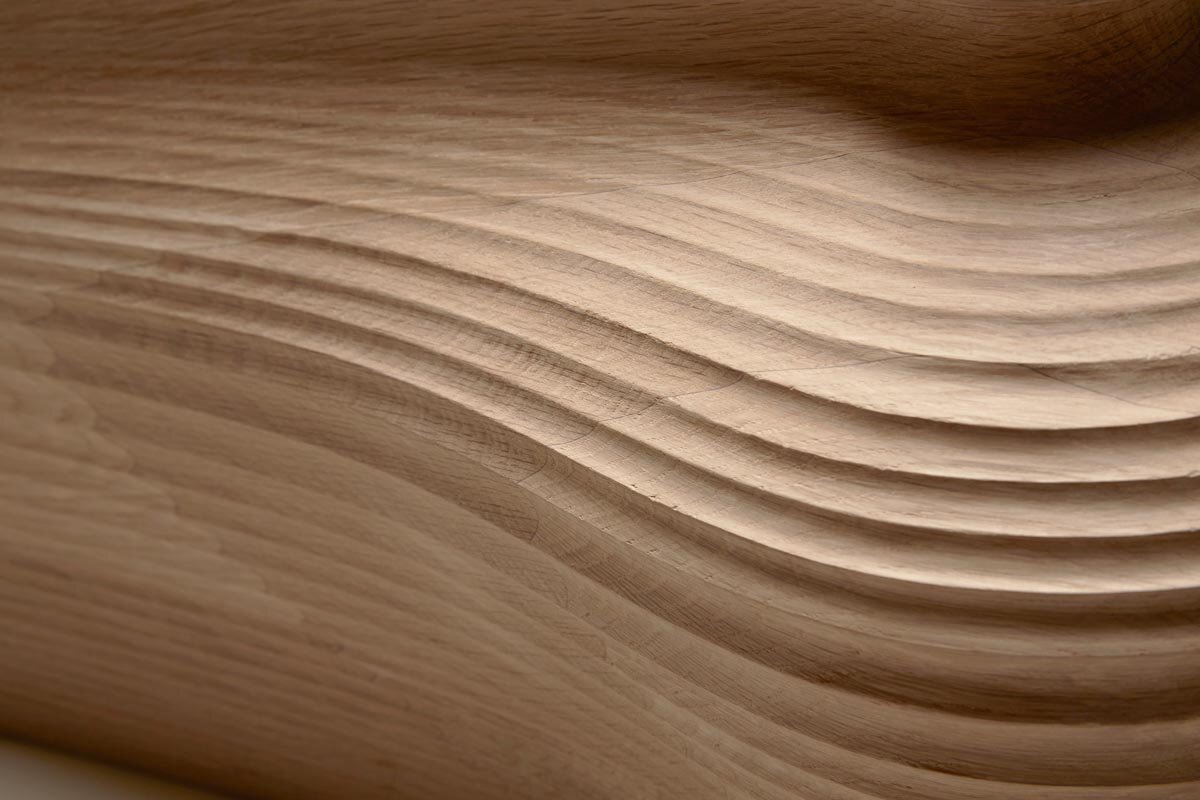
The concept of the linear extrusion is meant to emphasize the idea of flow, the result is comparable to Zaha Hadid's ideas of gradients and distortions, taking a traditional object and transforming it into a contemporary design object. The object is striated; these lines define and emphasize the fluidity and geometric rigor of the object and extend towards one end, creating a sense of infinity. The linear indentations on the carafe's hard surface emphasize its materiality, also highlighted by the contrasting play of light and shadow. The object is cut out at one end, a firm and precise opening through which the 'cathedral-like space' can be examined at the viewer's leisure.
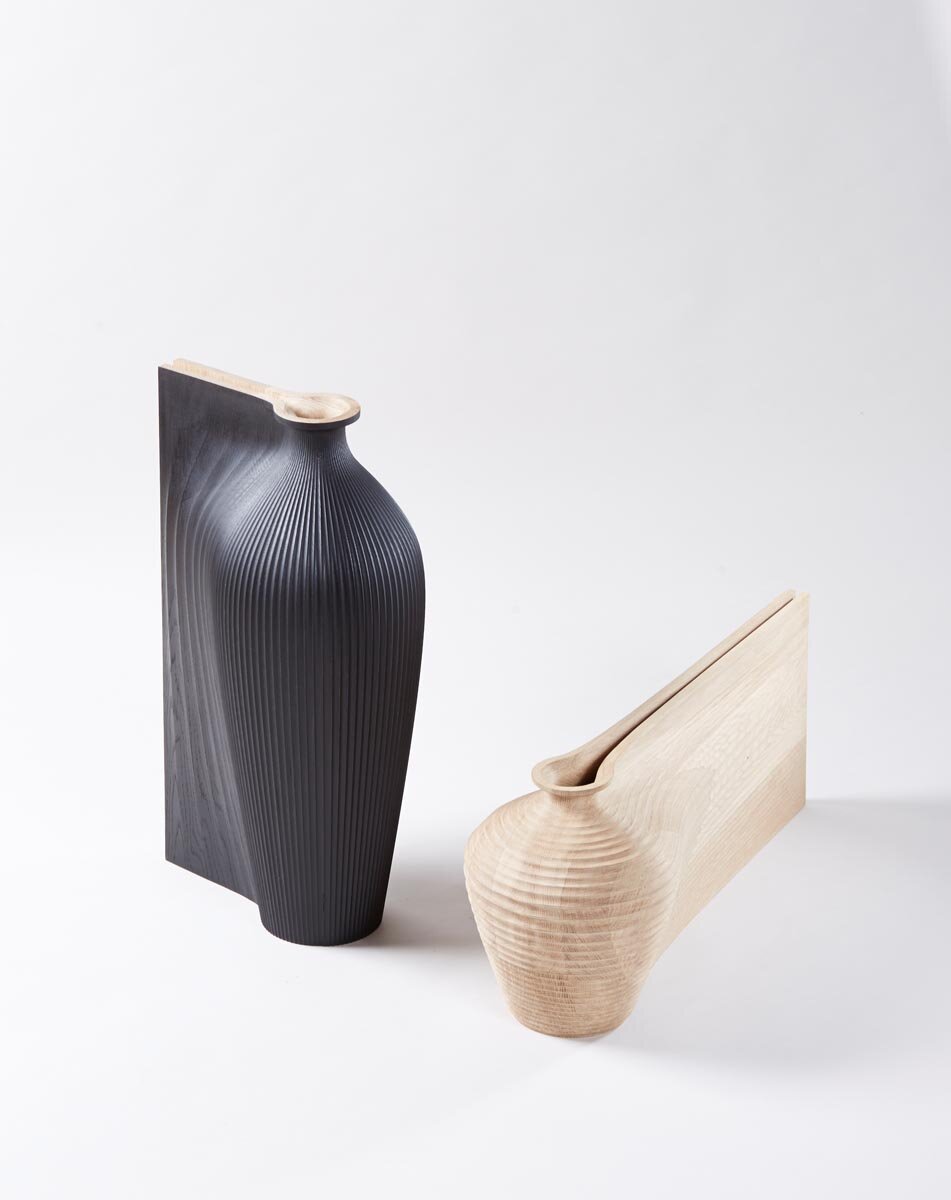
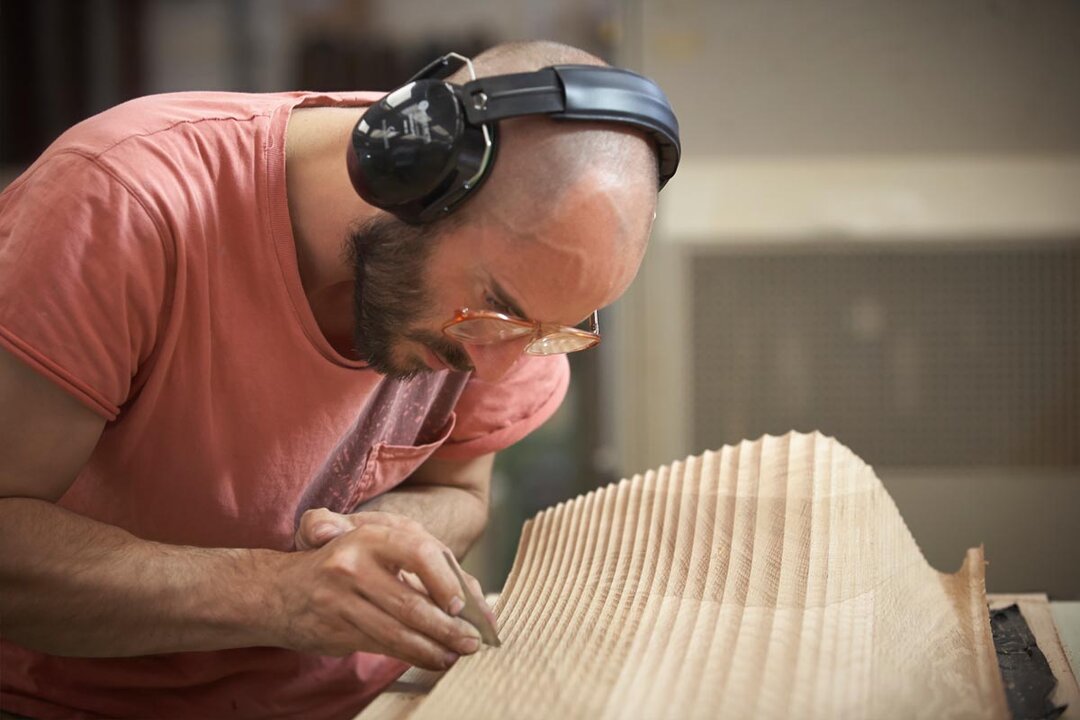
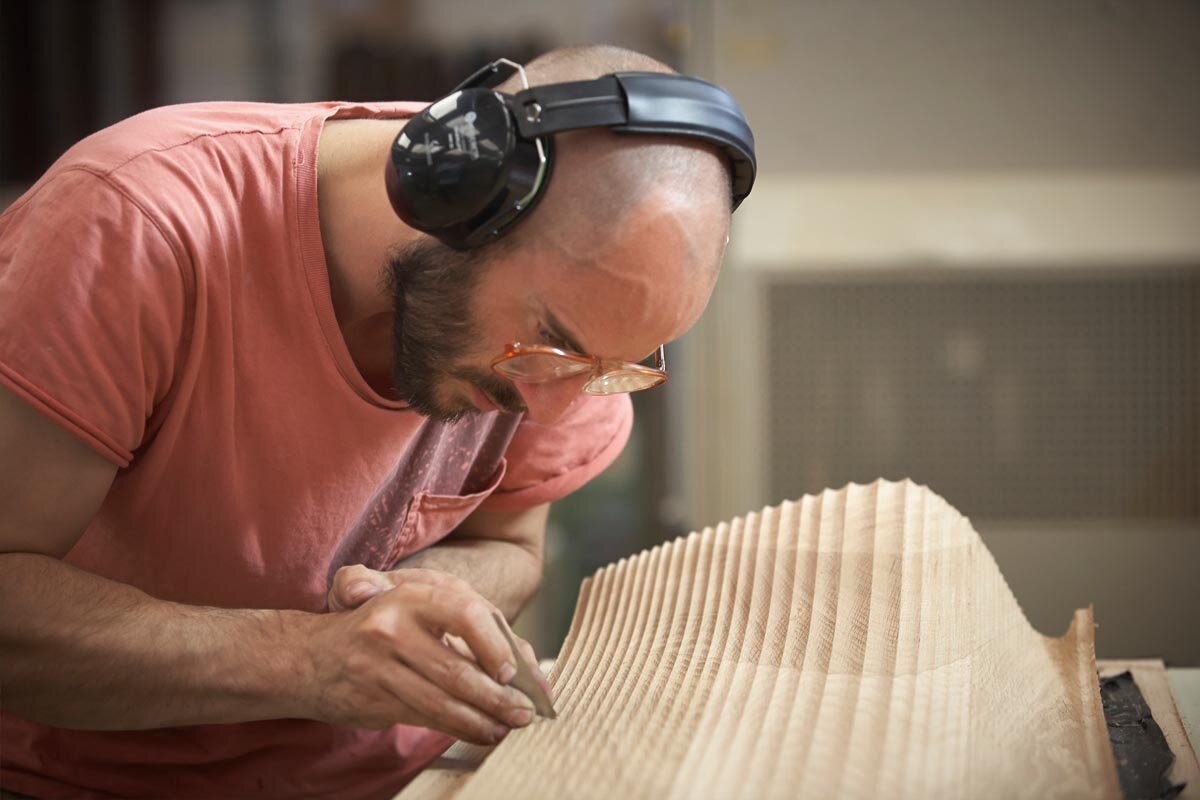
This concept has materialized in two objects, one - horizontal and the other - with a pronounced vertical silhouette. The manufacturing process is a combination of CNC and manual labor. A cut that is not properly made by machine is finished by hand with great precision by the designer. This collaboration has opened the way to new ways of interpretation and possible creative methods for both designer and coordinator.
VES-EL is the product of a unique collaboration between Iraqi-born, British architect Zaha Hadid and the British designer Gareth Neal, as part of the unique project "The Wish List". The Wish List was conceived, with the support of the American Hardwood Export Council, Furniture Company Benchmark and Sir Terence Conran, as a chance for up-and-coming designers to learn and collaborate with world-renowned design names. The Wish List concept was driven by the idea of combining modern and traditional woodcraft, to create unique design pieces that would enable designers and commissioners to improve their skills and techniques in working with wood and "to introduce designers to the important concept of life-cycle environmental assessment".
Zaha was one of the ten leaders in design who commissioned Gareth, as one of ten emerging designers. Other pairs in The Wish List incredible array, include Terence Conran and Sebastian Cox, Alison Brooks and Felix de Pass, Norman Foster and Norie Matsumoto, Allen Janes and Lola Lely, Amanda Levente and Win Assakul, John Pawson and Studio Areti, Alex de Rijke and Barnby & Day, Richard & Ab Rogers and Xenia Meseley, Paul Smith and Nathalie de Leval.
The design collaboration between Zaha and Neal began with Zaha's simple wish for "tableware". Zaha was very open as Neal admits, allowing for "lots of freedom to respond to the brief, which has been great".
VES-EL was born out of Neal's curiosity to push the boundary on what the function and meaning of tableware are. The choice emerged out of a series of sketches and preliminary concepts that Neal developed alongside Zaha's design team. The concept of the water carafe reflects the fluidity of Zaha's design philosophy and the liquid nature of her work, juxtaposed on a functional object which is reinvented.
The concept of the linear extrusion is meant to accentuate the idea of flow, the result being comparable to Zaha's idea of gradients and distortions, taking a traditional object and morphing it into a contemporary design object. The object is striated; these lines define and accentuate the object's fluidity and geometrical rigour, fading out towards one end almost as to create a feeling of infinity. These linear indentations on the hard surface of the carafe contrast its materiality, highlighting it further by a playful contrast of light and shadows. The Object is cut at one end, a sharp and precise cut; the cut allows for "a cathedral-like space" to open up for the viewer to gaze upon.
This concept was materialized in two objects, one horizontal and one more vertical silhouette. The process of making is a mixture between CNC and handcraft. A rough cut of the machine is finished by the accurate feeling of the designer. This collaboration opened up new views of interpretation and possible methods of conception for both designer and commissioner.
photo: Petr Krejčí