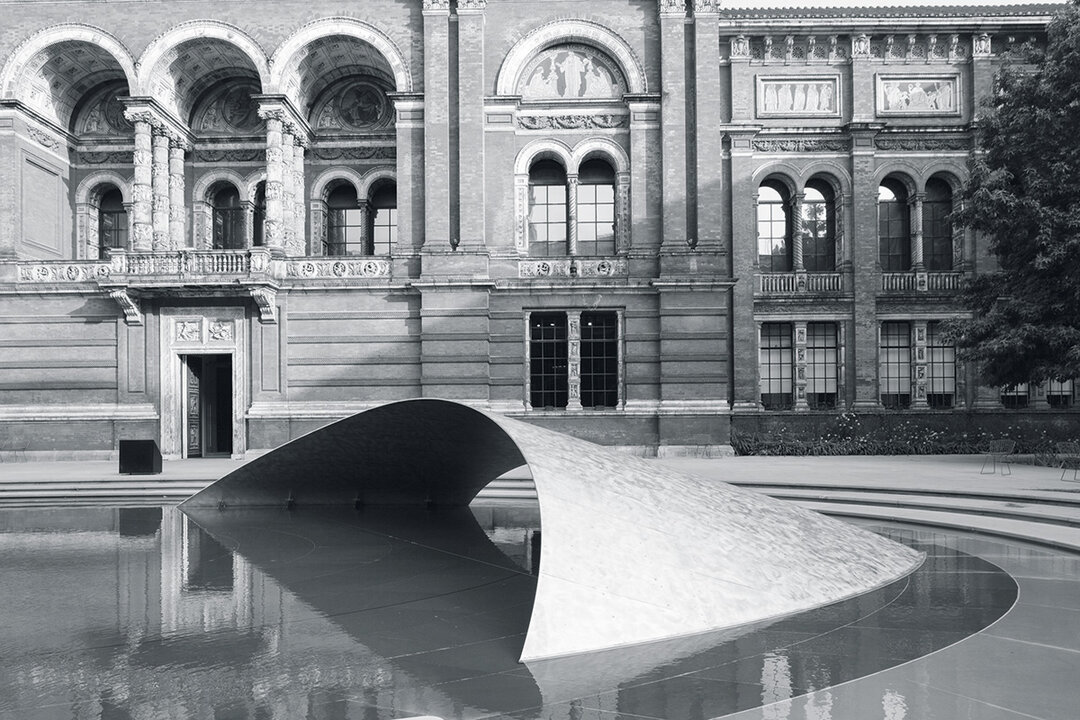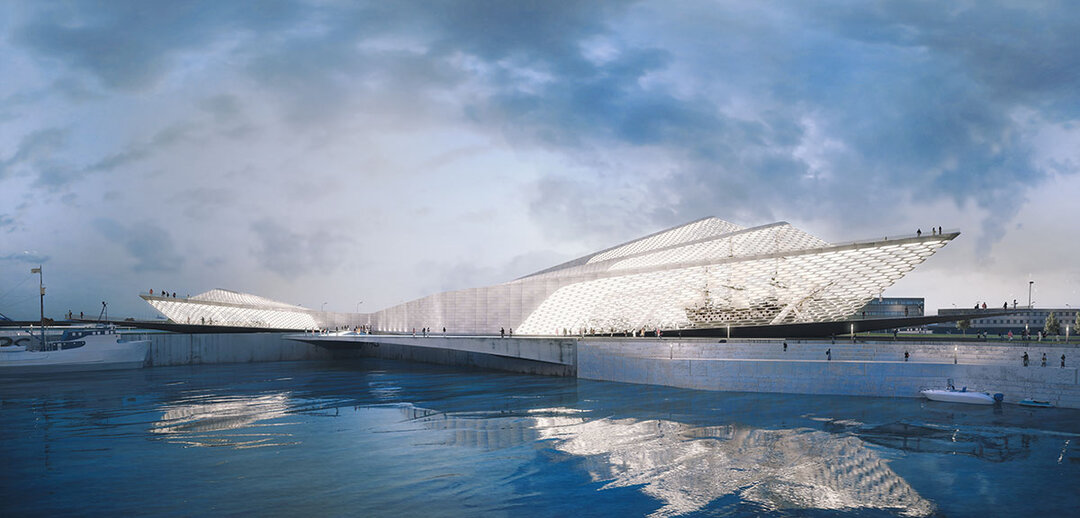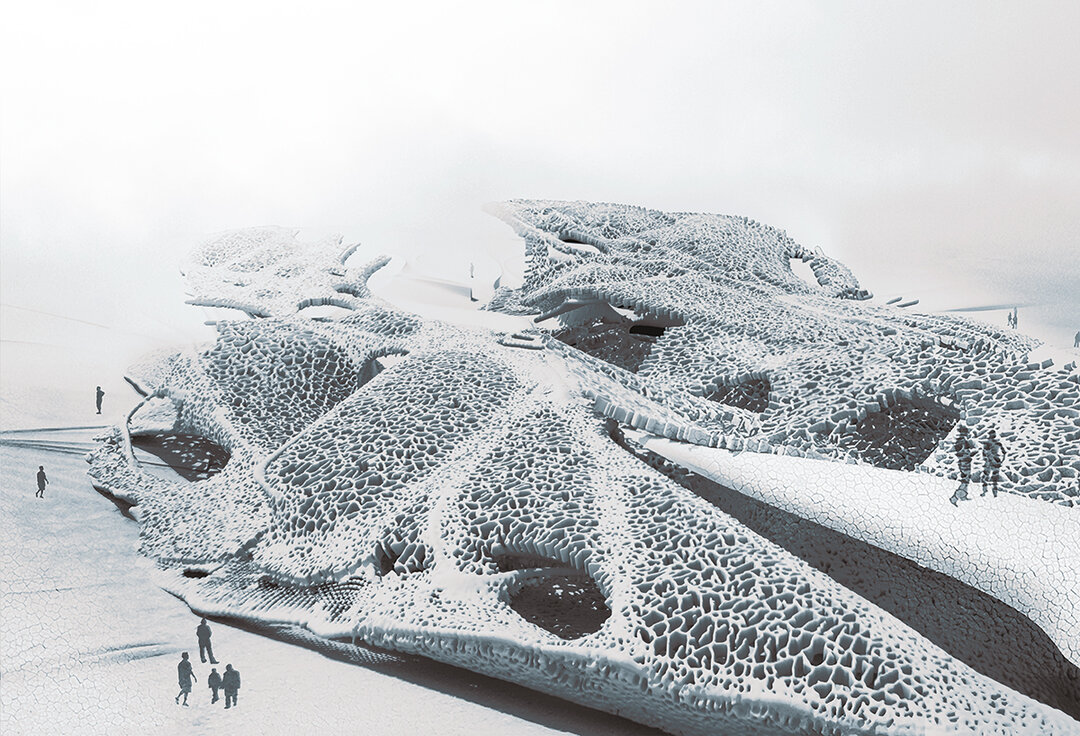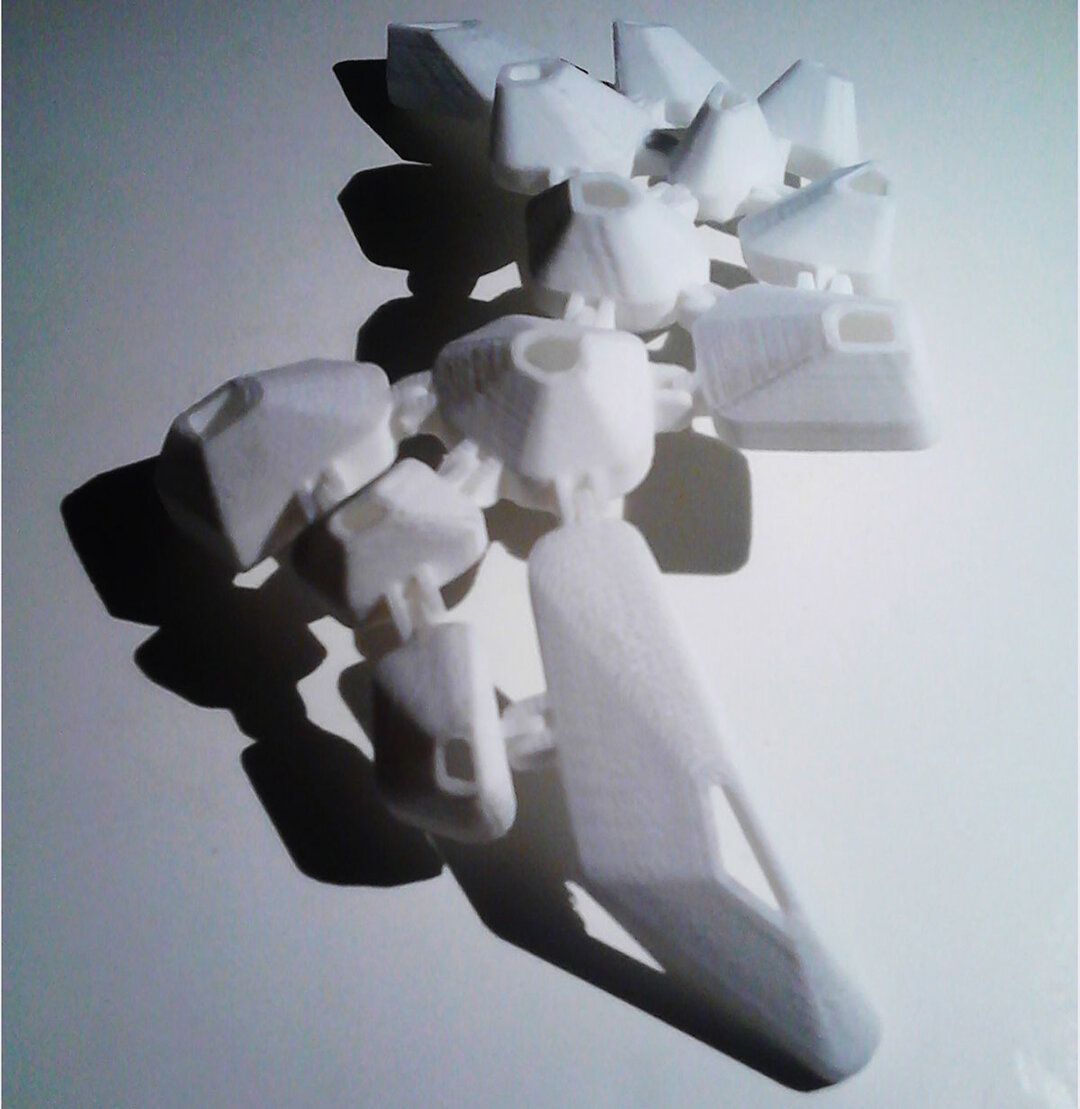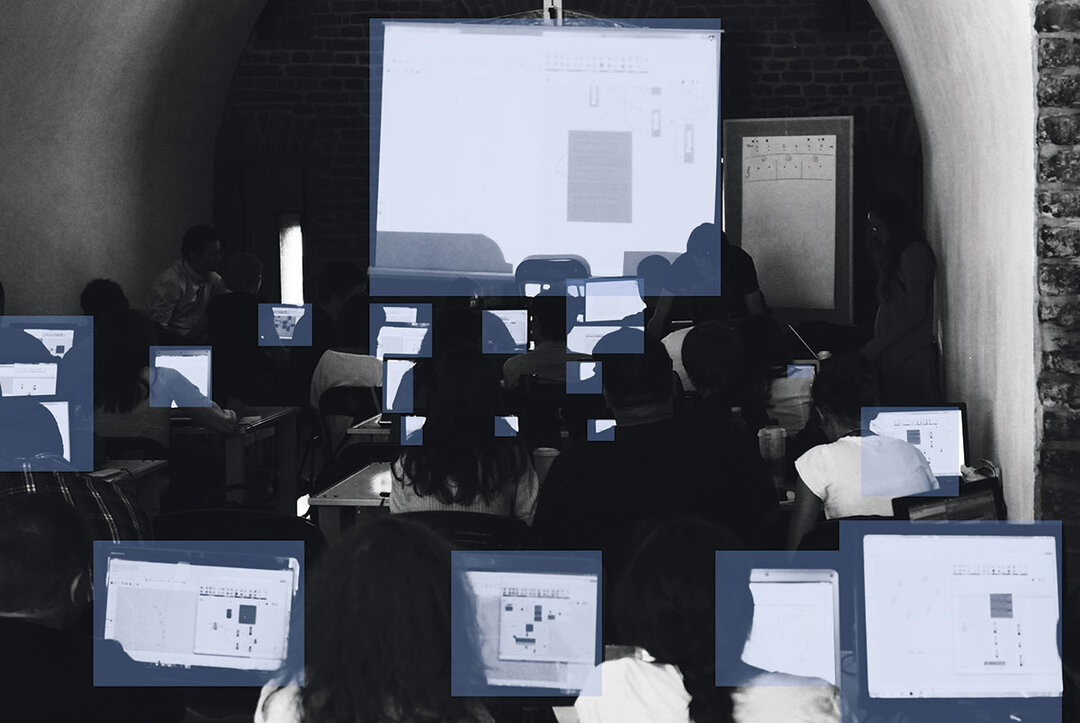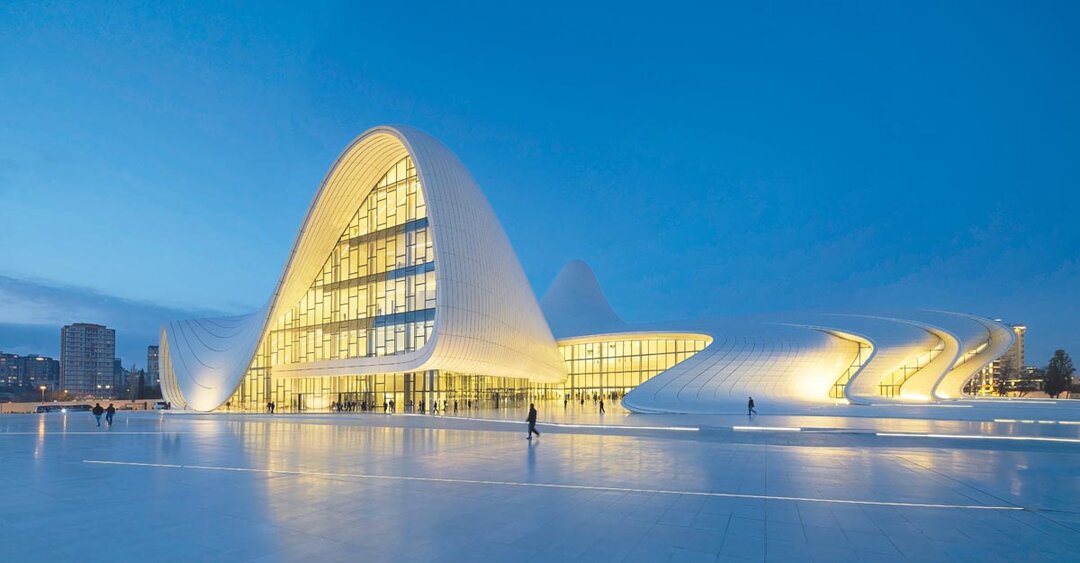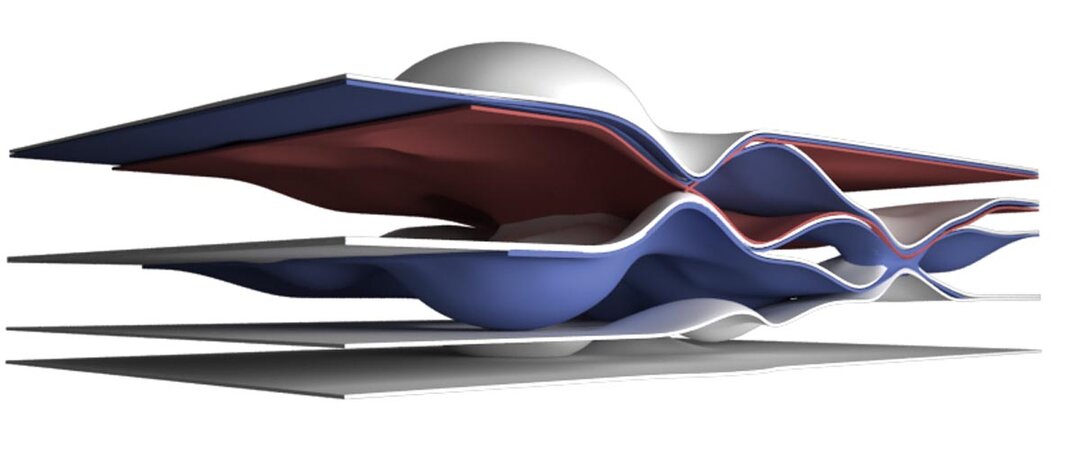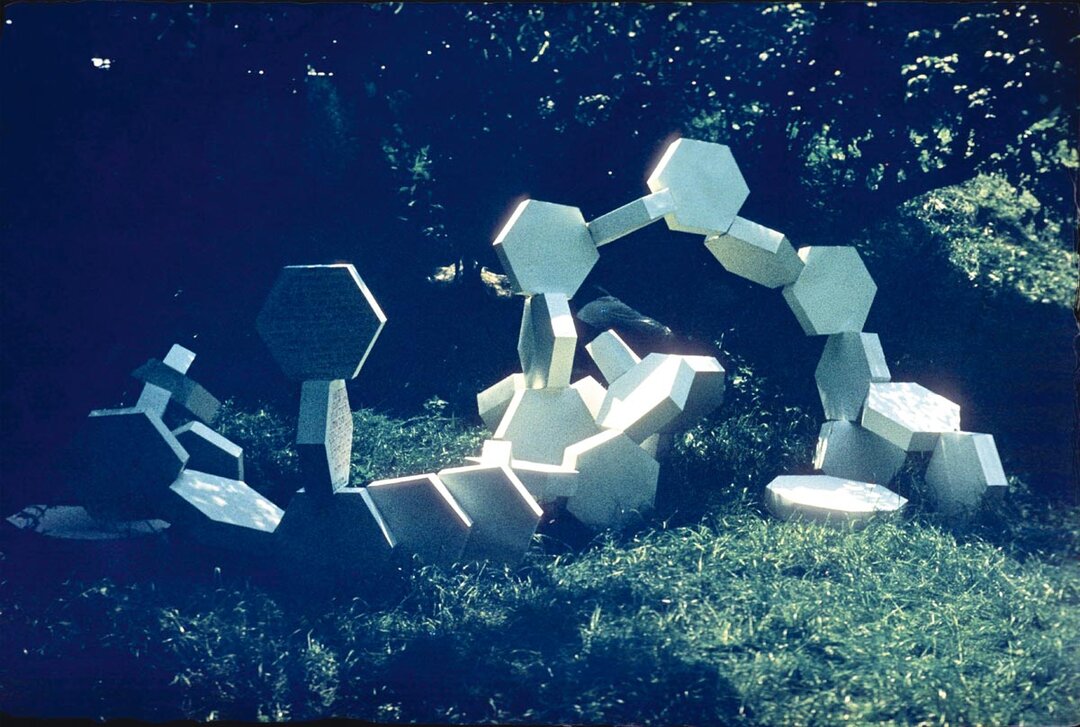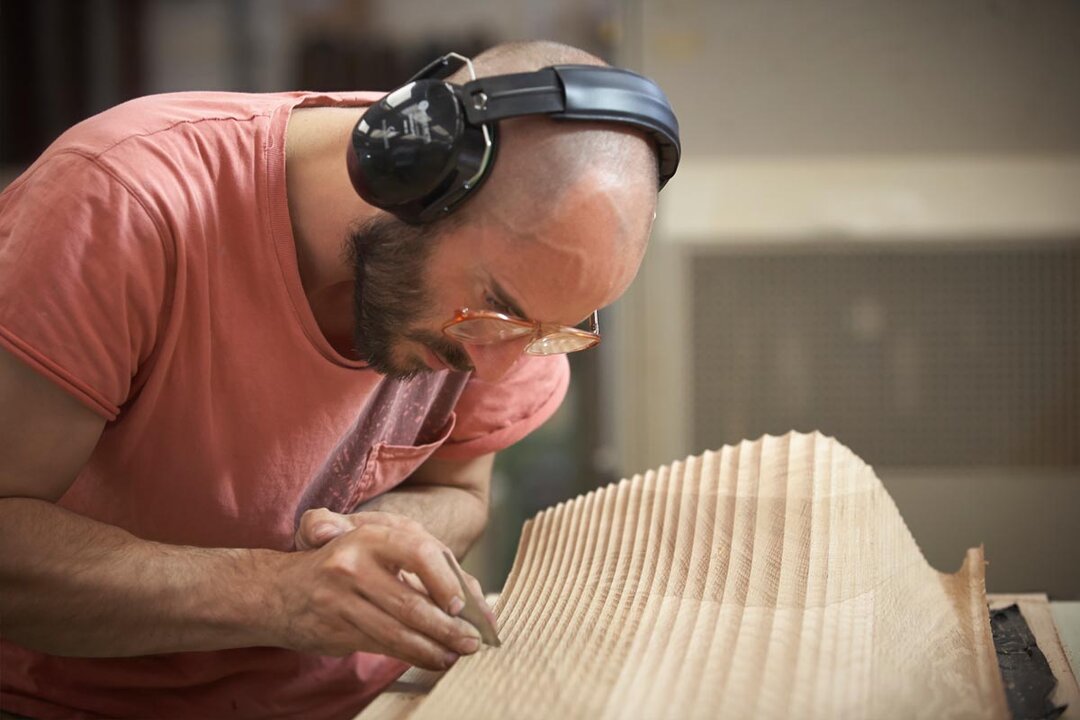
VES-EL - Design: Gareth Neal & Zaha Hadid

Following his forced resignation from the École des Beaux-Arts more than 130 years ago, Viollet-le-Duc declared that architects risked being labeled an endangered species like astrologers, alchemists and soldiers in armor if they did not adapt to the changes imposed by society. Viollet-le-Duc may have been the first to use the term species to refer to architects. Given that what was at stake was survival, I don't think the terminology was accidental. Mark Wigley (2002) goes so far as to assert that architects "are a species under permanent threat of extinction, so much so that they have developed a way of life around the threat, surviving by maintaining a constant distance from it".
Given that society and architecture interact in "parallel, mutually and dynamically constituting each other, each adapting to the changes of the other in a complex manner" (Fantini van Ditmar, 2011) we can talk about co-evolution. It can of course involve two species or a species and its environment. I will state, by abstraction, that society is the natural environment surrounding the architectural species. A documentation of the term species will reveal just under 30 biological definitions. However, according to John Wilkins' (2010) theory, there is a single concept that has spawned all other notions, namely a species is "that group of organisms that resemble their parents". Since architects acquire characteristics/skills/traits during their lifetime that are passed on to subsequent generations, the question of inheritance must also be considered. As these characteristics/skills/skills cannot be imprinted in DNA, the case of architecture thus falls under the second major inheritance system, the cultural inheritance system, which is capable of passing knowledge from generation to generation, developed through the acquisition of "the capacity to learn from each other, to copy, imitate and improve. [...] Unlike genes, these cultural elements (ideas, language, beliefs, beliefs, art and so on - n.t.t.) can jump from one mind to another, thus bypassing the normal genetic transmission pathways" (Pagel, 2012). This hereditary system is therefore exogenous and therefore Lamarckian, based on training, rather than Darwinian, based on selection.
As far as architecture is concerned, the two factors of this hereditary process are education and profession. Following the Renaissance, the two were dissociated for the first time. For the hereditary process to work, and thus to ensure the survival of the species, the relationships between the two agents have to be redesigned so that they work perfectly, like a software and hardware couple integrated into the same architecture. Given that survival is at stake, and given the moment of maximum dissociation in which the species finds itself, the stakes become adaptation. The architecture has so far only managed partial adaptations, leading to the permanent threat of extinction mentioned above. The digital age is, therefore, as Wigley (2009) argues, a more than opportune moment to radicalize the way we think about architecture, giving us, for the first time in history, the tools to do so.
We have invited 4 Romanian graduates from architecture schools abroad who, on their way to graduating, have either passed through or have previously graduated from Romanian schools of architecture. It would be absurd to pretend to concentrate the discussion on architectural education in this survey... but we can touch, in the very condensed space available to us, some more than interesting aspects.
Paul Mihai Moldovan: What was/were the reason(s) for studying architecture elsewhere than in Romania and what was/were the reason(s) for choosing Architecture Association School of Architecture (AA) - DRL (Design Research Laboratory), London, Institut für Computerbasiertes Design (ICD/ITKE) Stuttgart, IOA - Studio Hadid Vienna?
Oliviu Lugojan-Ghenciu: I was in love...
Karoly Markos: Personally, I don't believe in pursuing postgraduate studies right after university. When you promote your impressions of the profession of an architect, they are too sterile to make the right choice in terms of specialization or deepening your skills. In my case, the local context when I made the choice was characterized by a precarious economic-financial situation in the field of architecture, forcibly closing, to a certain extent, a chapter of 7 years of work as an architect. This led me to reconsider and evaluate my skills as an architect in a global market and to invest in my personal career. After careful research of the best schools at the top of avant-garde architecture, DRL (Design Research Laboratory) at The Architectural Association School of Architecture London stood out as the only program for developing design and innovation skills in architecture and urban planning, as well as with the best employment prospects. It was my only choice and luckily they accepted me.
Ștefana Parascho: I started studying architecture at the University of Architecture and Urbanism "Ion Mincu" in Bucharest. For two years I benefited from a well-founded basic education, a good quality introduction to architecture. The decision to study outside Romania came gradually, initially by deciding to participate in a university exchange in Stuttgart, and later by deciding to stay there for the rest of my studies. Germany had been my preferred direction for some time, due to the German language education I had received before my studies and the curiosity I had about the famous German engineering. Arriving in Stuttgart, I was quickly fascinated by the teaching methods and the mentality of the teachers. I took most of my courses at the Institut für Leichtbau Entwerfen und Konstruieren (ILEK, Institute for Lightweight Structures), founded by Frei Otto, where I had my first contact with digital thinking in design, not necessarily in the form of computational methods, but as a design mindset. Continuing my studies at ICD was just a logical step forward. Both the direct contact with Frei Otto's legacy and the different methods of teaching and imparting knowledge opened my curiosity from the first moment and led to the inevitable decision to stay for the rest of my studies and delve into a fascinating field. In particular, I was impressed by the study mentality, the independent work, the curiosity and desire for innovation always present in the studio and in the lectures, as well as the general atmosphere of research and questioning standard solutions. In Stuttgart, university education is not only about imparting knowledge, but also about developing a research mindset and searching for new and innovative solutions in architecture and engineering.
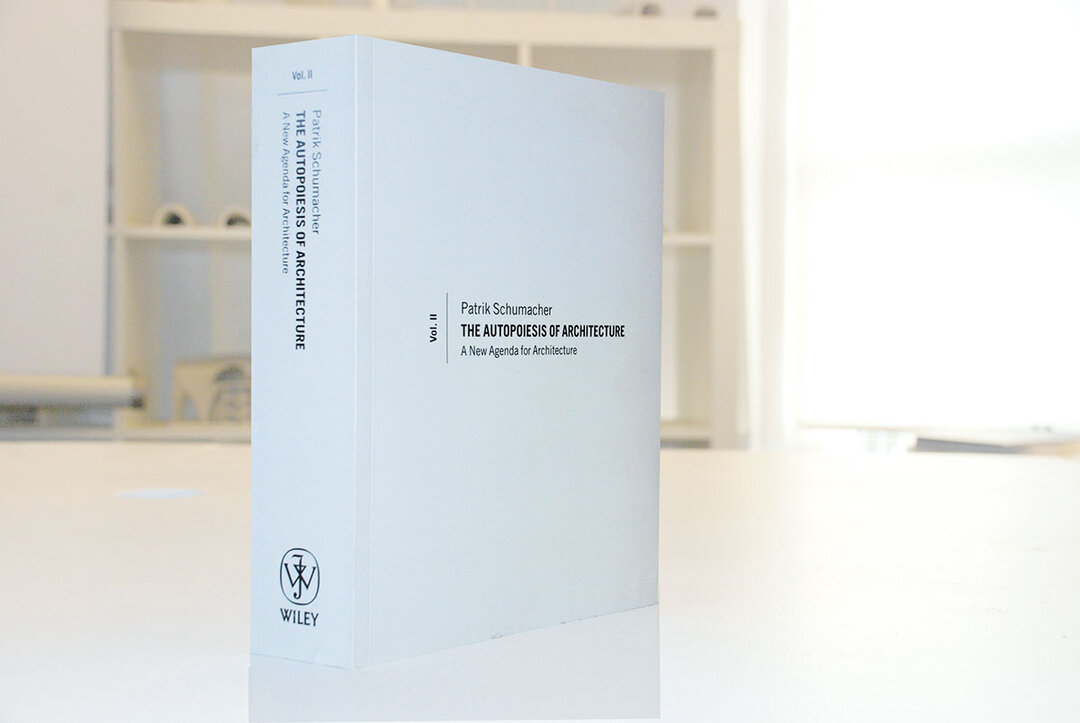
Bogdan Zaha: I started my university studies at UAUIM - Faculty of Architecture. After the first year at "Mincu", my instinct told me that it would be better to go west, and the first step was to continue my next years of study in Timișoara. The curiosity for more information came with the consequent visits to the Venice Architecture Biennale during the 6 years of study. It is somehow natural to search, it is natural to want more, the decision was not premised on leaving the country in a particular direction. Initially, I was looking to go to TU Vienna, but this process was interrupted by a book by Patrik Schumacher, Digital Hadid, which presented architecture and its role in a new, non-conventional, intriguing way through explicit designs and diagrams. Perhaps, the reason is as trivial as trivial can be, curiosity and the need for a bigger challenge.
P.M.M.: What do you think was the ratio between the skills developed at the Faculty of Architecture in Bucharest or Timisoara and those developed in the extracurricular environment during the same years in the selection process of the Architecture Association School of Architecture (AA) - DRL (Design Research Laboratory), London, Institut für Computerbasiertes Design (ICD/ITKE) Stuttgart, IOA - Studio Hadid Vienna? Can you elaborate?
O.L-G.: Probably the chemistry between them.
K.M.: The selection process was mainly based on portfolio and recommendation letters. In terms of portfolio, the content was largely based on projects realized at Westfourth Architecture, as well as collaborative research studies with other architects. Unfortunately, the projects done in the faculty had become irrelevant and I excluded them.
Ș.P.: I never liked the mentality of following one mentor throughout my education and professional life. I studied, worked and taught in Stuttgart for 8 years under the mentorship of Jan Knippers and Achim Menges, but I was always curious to follow the development of the rather narrow field outside the University of Stuttgart. When I decided to continue my studies with a PhD, Gramazio Kohler Research was my first choice. The institute runs the world's first laboratory for robotic fabrication in architecture, and their extensive experience in fabrication methods perfectly complemented the theoretical notions I developed in Stuttgart. I believe I am now closer to implementing the design methods in concrete architectural objects, and I owe much of this to the expertise of my colleagues and professors at ETH.
The experience at ICD/ITKE Stuttgart was the ideal basis for further research at Gramazio Kohler Research, mainly due to the design thinking and methods developed. How important it was in the selection process I cannot say, but I know that the study of architecture I received at Stuttgart ICD and ITKE, as well as the research and teaching experience were a great advantage for me to quickly integrate into the Gramazio Kohler Institute and made it easier to access their methods and projects.
B.Z.: It is quite clear, post-rationalizing the process I went through, that individual study played a major role in my admission process to the Hadid Studio in Vienna. After finishing my fourth year at FAT, I had my first attempt to get into IOA - Studio Hadid Vienna. This attempt culminated in my admission only after 2 years, following my second attempt.
The examination process was simple and unconventional. Interpretation and abstraction skills were the skills that I realized I had lost by the fourth year at the Romanian university. After the first failure, I put more and more emphasis on the need for conceptualization, this approach helped me to improve.
The skills from the 6 years of study in Romania were an advantage during the study program in Vienna, not necessarily an advantage in the selection process.
P.M.M.: What are the main competences you developed in Romania compared to London, Stuttgart or Vienna? In other words, what is the role of the AA, ICD or IOA trained architect compared to the FAT or UAUIM trained architect?
O.L-G.: I don't think they can be segregated.
K.M.: In the program we developed design skills by addressing a global research agenda through shared information based on diagrams, data, scripts and physical models. The collaborative structure of the DRL studio enables teams to address the research agenda of the program which is channeled towards recursive development, research and design methodologies through a sustained body of design work that is regularly assessed by teams of students, tutors.
Although in the offices where I have worked I have always worked in groups, contrary to expectations, teamwork has proved to be the biggest challenge. In an office there is a hierarchy within the group and ideas often come from the top down. In DRL, on the other hand, design work is carried out in a self-organized collective, and good ideas not infrequently scrape through the thicket of personal egos.
Ș.P.: I got in touch with the Institüt für Computerbasiertes Design (ICD, Institute for Computational Design) the year it was founded. Maybe that was one reason why the impact was decisive, being the first generation under Prof. Menges and having direct access to radically different design thinking. The main skill acquired, and the most important one in my view, is a different view of the design process and a "digital thinking" in relation to design. Basically, I have learned to stop thinking in architectural typologies and to stop separating the elements of a building and the designers (architect, engineer, builder). An integrative method of design in which the material, structure and function of the architectural object are equally treated and included from the very first moment in the design process is at the basis of the thinking developed at ICD. The programming and implementation of these methods were merely the results of the acquired mindset and not an imposed premise.
I believe that the ICD-trained architect has the curiosity to innovate, the desire to question classical design methods and to integrate the role of architect, engineer and builder into a whole. "Digital" thinking is not limited to programming, digital design can also be executed with analog methods alone. What is important is systematic thinking, analyzing parameters and the ability to integrate the diversity of characteristics of an architectural construction into the design process.
B.Z.: Probably the biggest difference between the two educational systems are the questions you are prepared to have an answer to. The two systems are not differentiated by localized cultural belonging, in other words, Romania is not a disadvantage in the personal curriculum.
The Angewandte studio system differs from the classical studio system, which are "vertical studios". A "vertical studio" has as its concept the transmission of knowledge from more experienced to novice students. In the studio process, which is the core discipline of the faculty, around which all adjacent courses are structured, regardless of the "year" of study, students are obliged to organize themselves in mixed teams. There is a single year project, a single agenda and a single 'year' of work. The students are not differentiated by 'year of study', so that information is passed on fluidly and with a strong interchange of ideas between the 'old' and 'new' students. The project is based on the development of research, abstraction, interpretation, processing and theoretical and technical argumentation of the solutions proposed by the students.
The classical or technical system of education has the potential to prepare you to answer the question "HOW?".
Studio Hadid Vienna's own educational system, developed by Zaha Hadid and Patrik Schumacher, is premised on the questions "WHAT?", "HOW?", "WHY?".
P.M.M.: What are the professional/academic perspectives that the Architecture Association School of Architecture (AA) - DRL, Institut für Computerbasiertes Design (ICD/ ITKE) Stuttgart or IOA - Studio Hadid Vienna have opened for you as an architect?
O.L-G.: The professional perspectives of each place are just a continuation of what I chose to learn from that context.
K.M.: Graduating with AA_DRL distinction came with an invitation for an interview at Zaha Hadid Architects, where I am currently working as Lead Architect, working closely with Zaha Hadid and Patrik Schumacher. Concurrently, I was offered the position of Software Tutor at the AA from 2013-2014. Looking around, most of my colleagues have positions at some of the biggest practices like: Foster + Partners, Heatherwick Studio, Rogers Stirk Harbour + Partners, etc. and a good chunk of colleagues have focused on academia, trying to make a name for themselves at high profile schools like the AA, The Bartlett, Sciarc.
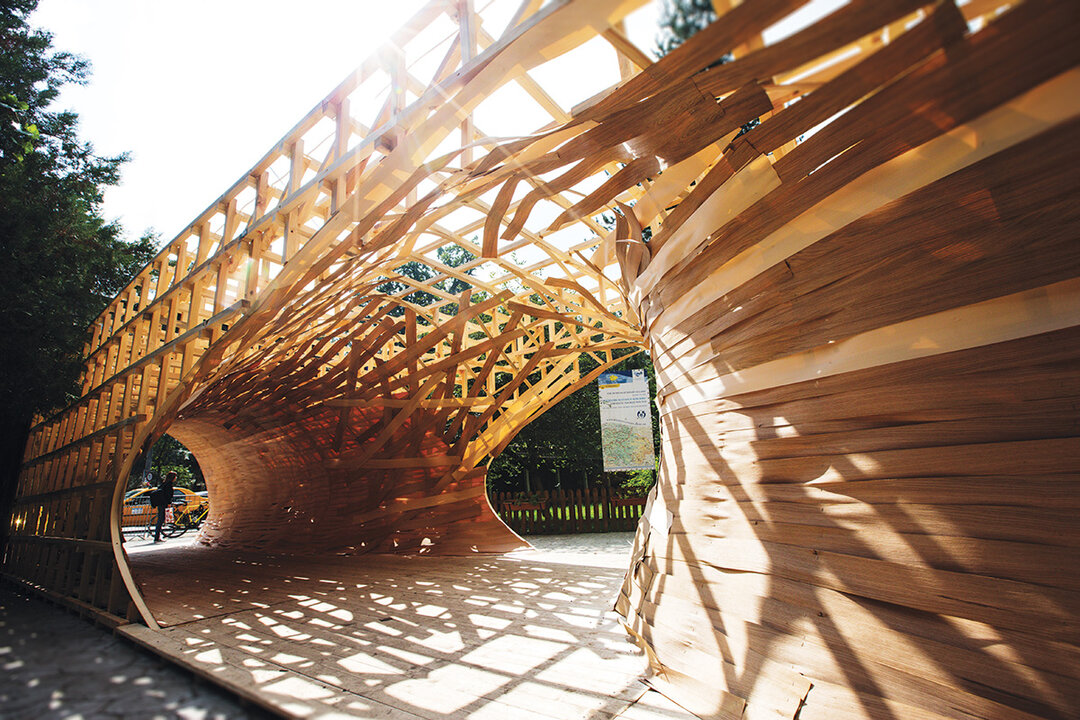
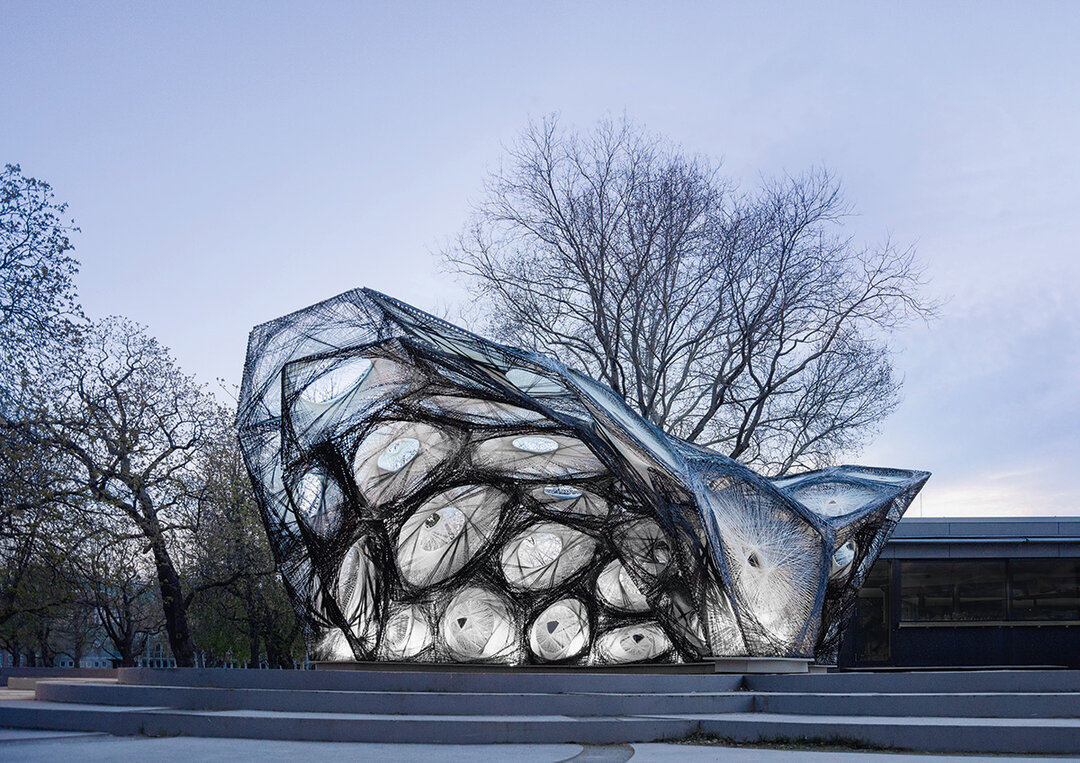
Ș.P.: I think my chosen career path has already opened up many professional and academic options that I would not have had elsewhere. The field in which I have specialized is still very narrow, and the opportunity to work with architects and engineers who are actively developing this field has and has had a huge contribution to my professional development. I had the opportunity to lead the ICD/ITKE 2013-14 pavilion from design to construction and to teach in the ITECH Master program in Stuttgart, I was able to gather experience in the field of engineering during my time at Knippers Helbig Engineering and I had the opportunity to work with Arnold Walz, one of the first architects to implement parametric design since the 80s.
My PhD at Gramazio Kohler Research I believe complements my experience by being able to focus on a project for 3 years and develop previous theories and practices. The interdisciplinary program of which the PhD is a part includes projects in the fields of robotics, engineering, materials studies, architecture and, together with the exceptional educational offer at ETH, gives me the opportunity to develop my knowledge in fields related to architecture. I believe that the main advantage an architect can have nowadays is the broadest possible knowledge in fields tangential to architecture. This is the only way to change something in the quality of today's design, and I believe that digital design is a first step towards a new, intelligent architecture, suited to today's needs. The field of digital architecture and fabrication is still in its infancy but it is developing very fast and I believe that the experience gained here will lay a very important foundation for a future academic and professional future.
B.Z.: The opening is definitely wide, the perspectives are multiple. Being part of the Zaha Hadid Architects Ltd London team is an achievement that would have been unlikely without this education. Academically, both in the studio in Vienna and in the series of workshops that I have given or been invited to, the education received in the studio has been the main factor in making these possible. The most important thing is to learn, to find unexpected solutions and to discover new issues through which to build a speech.
Academically, during my studies, I had the opportunity to attend several international exhibitions. I have taught a number of parametric modeling courses in the studio as part of the studio's lifelong learning program. Outside of academia, I had the opportunity to create a series of workshops in Romania, held by Studio Hadid Vienna, together with Robert Neumayr, Daniel Bolojan and Johann Traupmann.