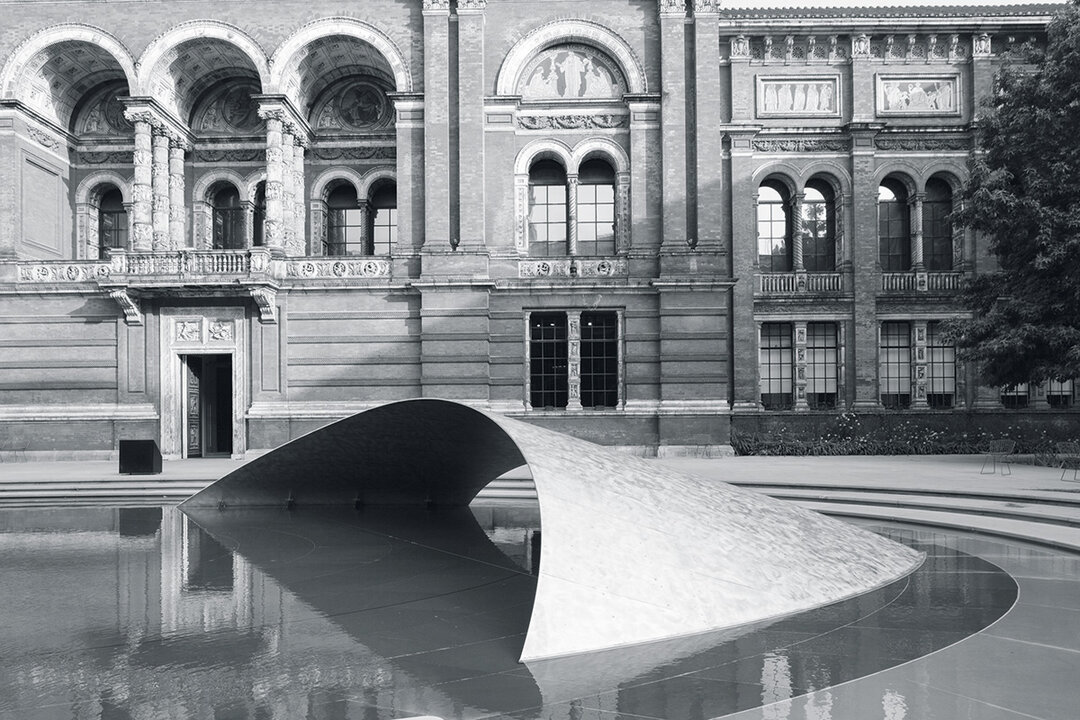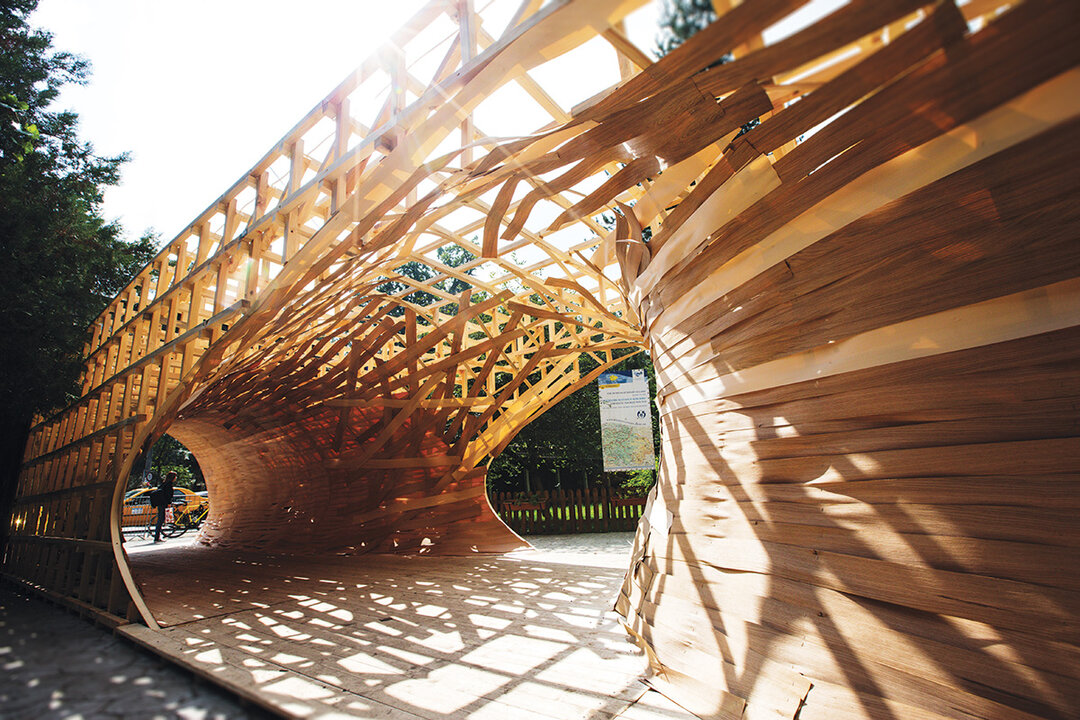
VES-EL - Design: Gareth Neal & Zaha Hadid

Supervisor: Alisa Andrasek
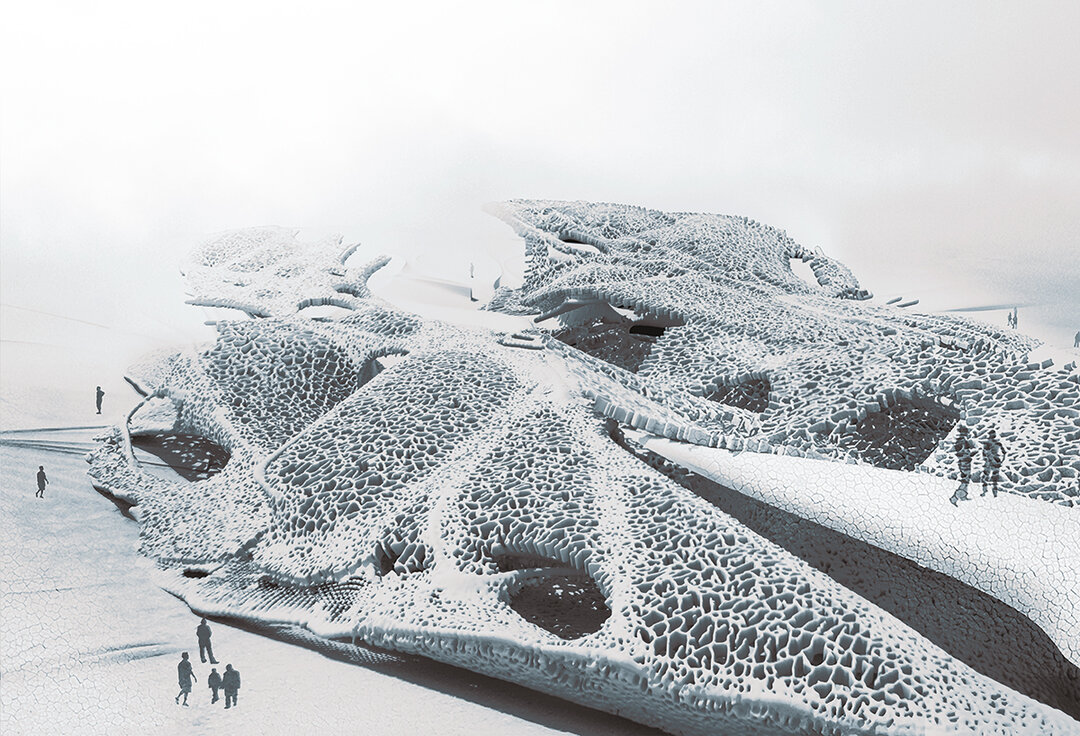
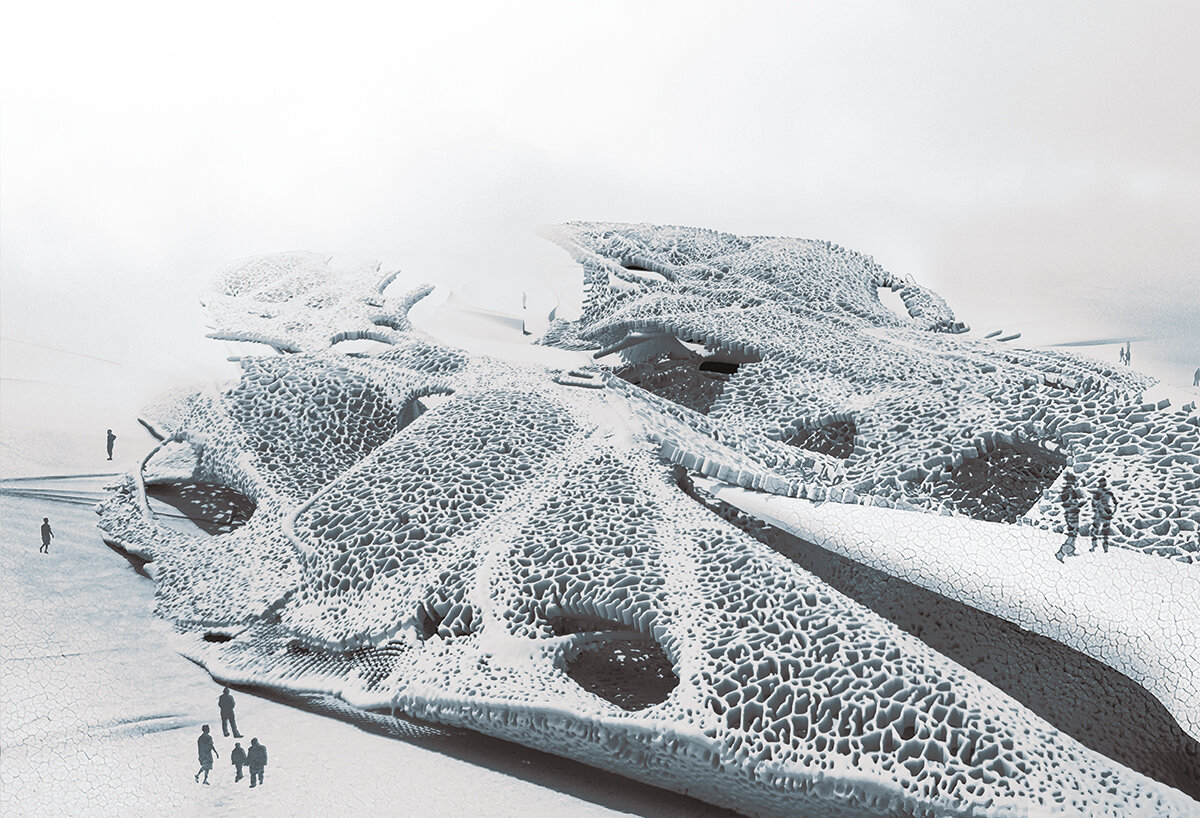
Current attitudes in the avant-garde of architectural discourse tend to move away from traditional ways of manufacturing the built environment and assume that new means of mass production, such as 3D printing as well as robotics, reconcile the problems inherent in the production of complex structures. The research project titled Endemic Interstices aims to bring to the table ways in which generative complex geometries in conjunction with traditional low-tech construction methods can generate viable proto-architectural entities by harvesting the physics of natural processes, not only as a design generator, but also as a tool for the fabrication of complex formations through matter computation. Moreover, in line with the Protoecologics agenda, this project avoids the classical reductivist ecological movement and has an attitude towards working with nature, accepting the conditions of dynamic stability.
The research started by investigating the self-organizing patterns visible in nature, due to the extensive possibility of infinite variations in the shape of patterns of interaction with the environment. The focus is on the ability of matter to organize itself into complex heterogeneous forms. Hence the need to study the field of nonlinear dynamics, more explicitly, the predisposition of matter to self-organize into complex ample patterns.
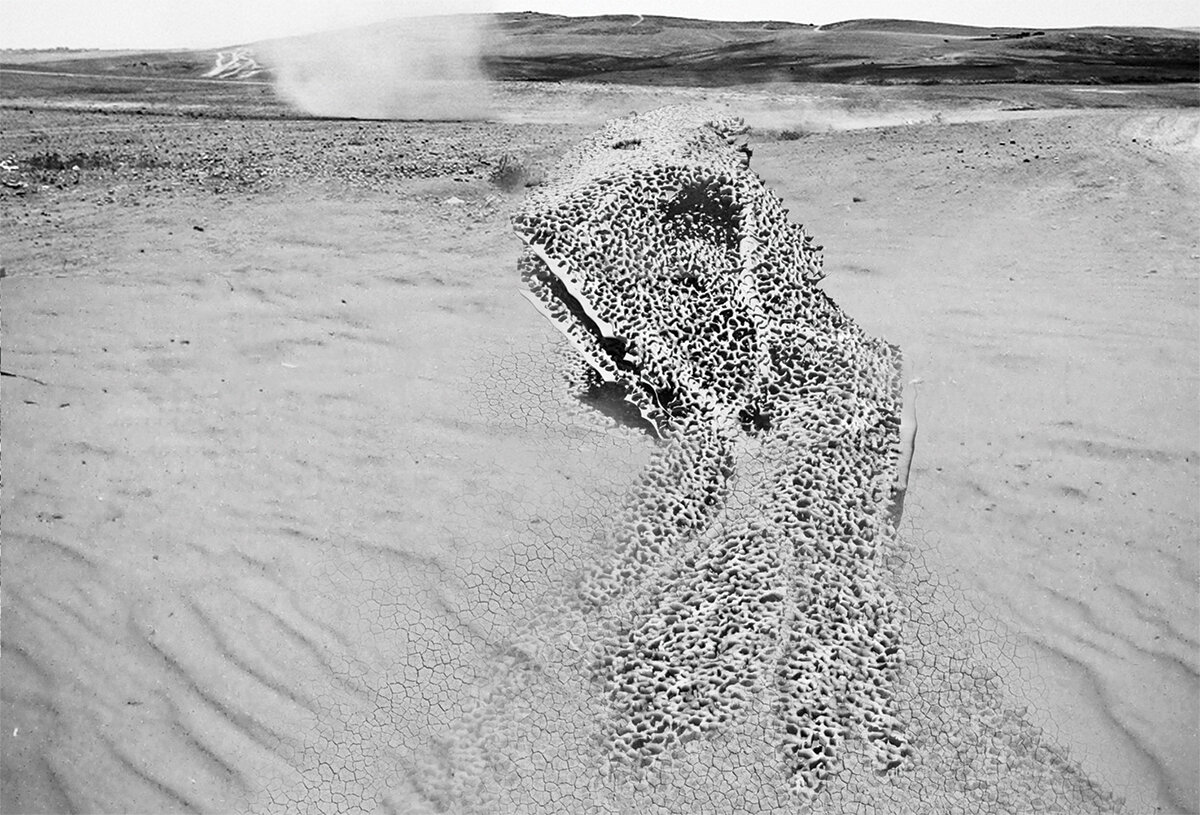
These patterns/motifs arise in nature under certain conditions of exchange of matter, energy and information with the environment. As a result, these phenomena are triggered by specific non-linear processes, such as: friction, contraction, cracking, leading to their flow reorganization. In the case of fractured matter, namely cracked patterns/motifs, the possibility arises to consider the derived interstitial space as a matter carrier. Therefore, the main driver of the thesis is a nonlinear fabrication process, which utilizes cracks in clay soil as a formwork for casting complex unique structures. By programming the material behavior and exposure to certain environmental conditions, we are able to control the emergence of a wide range of crack patterns/motifs that are responsible for different performative qualities such as structural stability, solar shading, and airflow modulation due to their morphological characteristics. Thus, to some extent, it can be argued that all cracks in clay soil store in their morphology the DNA of the potential built environment.
Cast on Crack
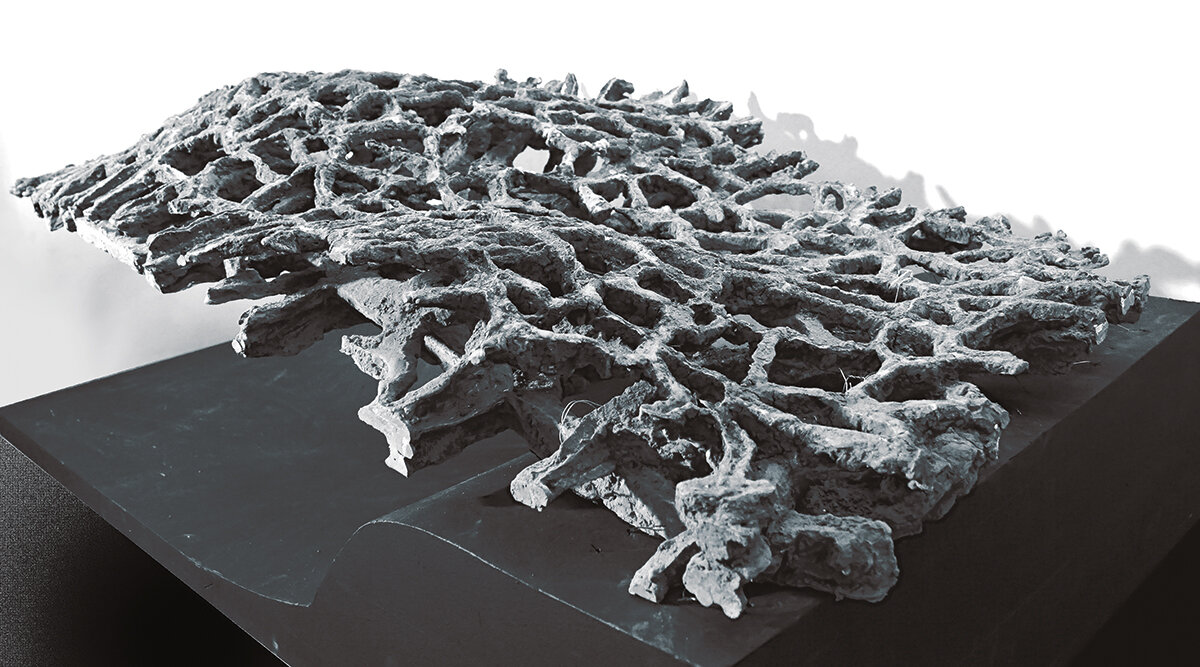
To pursue this hypothesis, a nonlinear fabrication technique called Cast on Crack has been developed, which utilizes the dynamics of cracks in clay soil as a self-calculating formwork for casting complicated porous formations useful in architecture.
To initiate the manufacturing process, certain conditions must be met. First, the existing soil must be prone to cracking, assuming that the environmental condition and geological composition of the soil allow the color phenomenon to occur. Once the cracks expand to a desired morphology, the interstitial space can be filled with a suitable material to stand and support the weight of the structure. A second layer of clay soil can be added to ensure better structural integrity later. Finally, the last step is the removal of the clayey formwork, which will be done in situ by processes of degradation, erosion, rain scouring.
In parallel with the analog experiments, crack physics in the digital environment was studied. An important part of our research was the development of a software allowing prediction of material behavior at full scale.
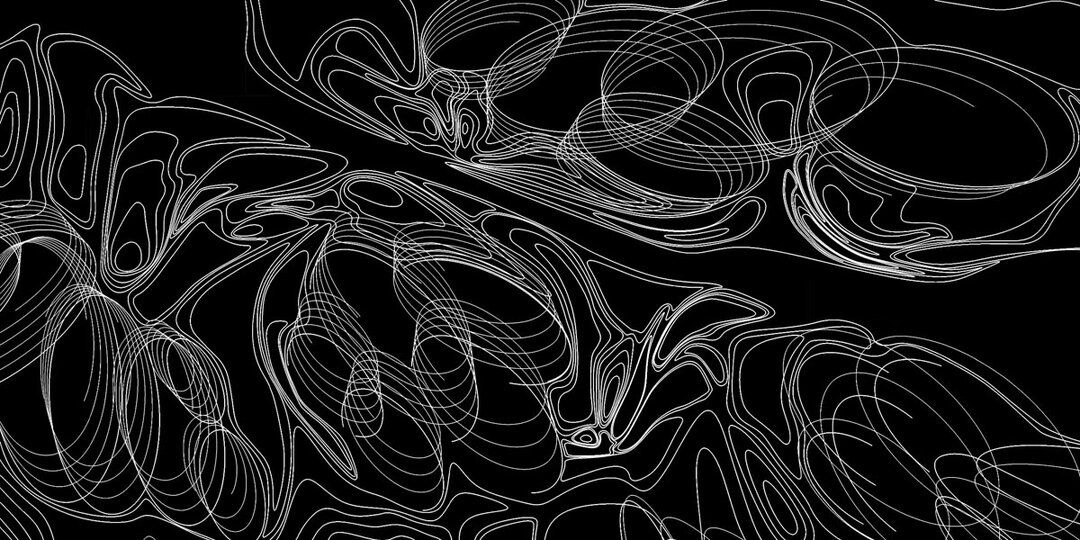
Thus, a wide range of cracked motifs were to be cataloged by varying parameters such as temperature, evaporation rate, friction, etc. By changing these parameters, we were able to realize a variety of cracks similar to natural ones, of different sizes, thicknesses and morphologies.
Prototypical implementation scenario
In order to test the prototypes in a real context, the implementation focused on the qualities of arid/desert territories and on re-evaluating the potential of local cultural heritage. Compatible locations were identified that incorporate specific features for successful implementation of Cast on Crack . The first characteristic that enables the construction process is the local climate while the second is similarly very much attached to the environment and concerned with soil quality. Finally, the third looks for vernacular building techniques to be readapted as a new construction method. The chosen location differs in many ways as a dynamic and rich territory in Morocco, located at the foothills of the southern slopes of the Atlas Mountains in the Ouarzazate province near Ait-Ben-Haddou, the most famous Ksar in the Ounila Valley.
The design intervention aims to address the problems identified in the analysis through a series of adaptation strategies. Although these procedures mainly address methods of extracting information from local conditions that allow for a systemic evolution between the built and the natural environment, the introduction of a new technology in a place that has a tradition of using clay in a certain way has the potential to radically change the current social environment as well as improve the sense of collective belonging.
The following section describes two adaptation strategies required in advance for the design of interventions: the construction cycle with respect to solar exposure; and strategies for implementing terracing/excavation protocols.
Climatic data from Ait-Ben-Haddou were extracted and analyzed in order to map the data from the sunshine analysis on the surface of a generic dome. From the analysis it was concluded that cracking patterns vary throughout the year due to variations in desiccation conditions. As a result, the same prototype exhibits small, dense cracks if exposure occurs in the summer months and large, sparse, deep cracks in the winter. By correlating this data with the deployment schedule we can, for example, cast structural layers in the winter and solar shading and ventilation layers in the summer months.
Excavation protocol
Relief form as scaffolding for the Cast on Crack system has proven to be the best low tech alternative. The most notable precedent with a similar approach to the construction system is illustrated in the Teshima Art Museum project, Japan, completed in 2010. The process consists of the formation of an earth mound generated by earthworks protocols (within the limits of the earth mound and structure constraints to be utilized), followed by the pouring of concrete over the created surface. Once the concrete is dry, the earth is excavated, revealing the final shape of the structure. The same technique is used by replacing the concrete slab with the Cast on Crack system.
Popping/ Sentencing
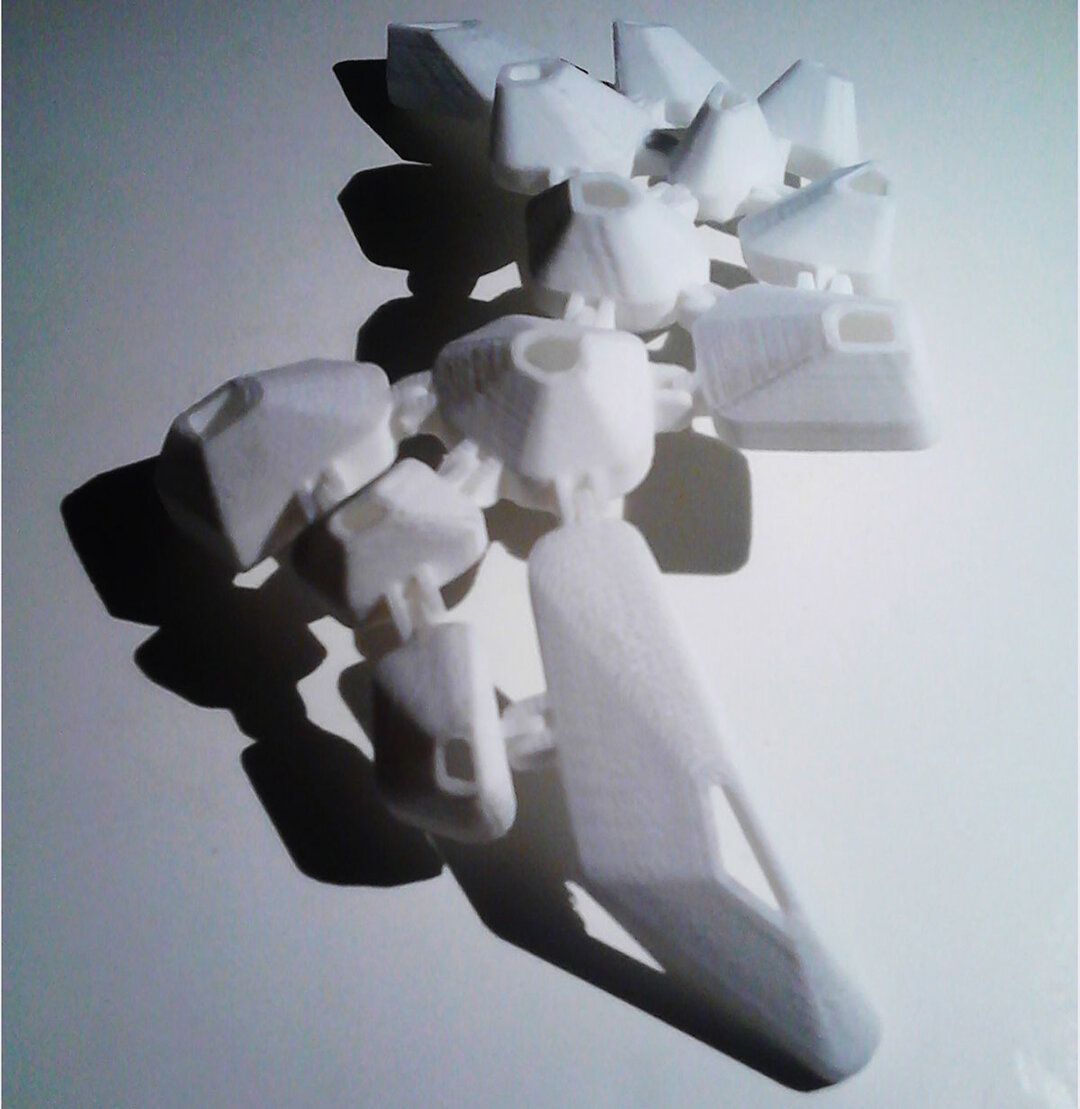
The idea of sentencing the deployment process was explored through this prototype to exemplify the viability of the system for large structures.
A staged casting technique on nested earth mounds was used to increase the size of the structure. This strategy leads to formations with varying densities in cracking as a result of solar input depending on the season. In this sense, nature is the main contributor to the project.
Team: Karoly Markos, Daghan CAM, Alexandre KURODA, Ulak HA
Architectural Association - Design Research Laboratory - London, January 2012